
Introduction
Best Ajo Blanco Near Me is a useful search for anyone who wants to enjoy a refreshing bowl of traditional Spanish almond soup at a nearby restaurant. This chilled specialty is known for its smooth texture, mild garlic flavor, rich almonds, and high-quality olive oil. Unlike many other soups, ajo blanco is served cold, making it especially appealing during warm weather.
Finding authentic ajo blanco may take a little research because not every Spanish or Mediterranean restaurant includes it on the menu. Some restaurants serve it as a seasonal starter, while others offer their own versions with fresh grapes, melon, or toasted almonds. Knowing what makes this soup special can help you choose a restaurant that prepares it well.
Whether you are visiting a Spanish tapas bar, exploring a Mediterranean restaurant, or searching through local food delivery apps, a few simple checks can make your search easier. This guide explains what ajo blanco tastes like, which ingredients matter, where to look for it, and how to compare restaurants before placing an order.
What Is Ajo Blanco?
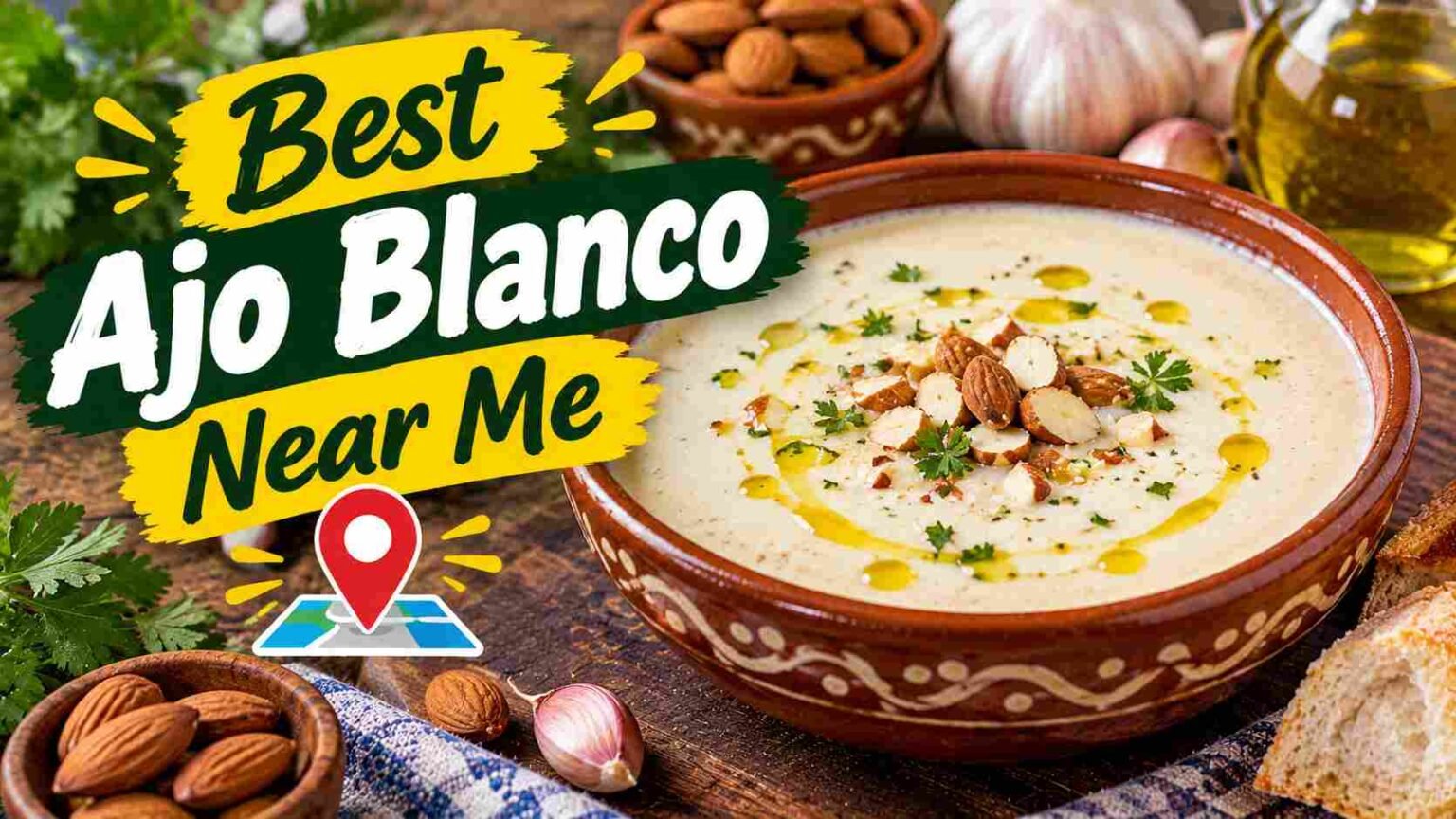
Ajo blanco, also spelled ajoblanco, is a traditional Spanish cold soup closely associated with Andalusia, especially the regions around Málaga and Granada. Its main ingredients are almonds, bread, garlic, olive oil, water, and vinegar. When blended properly, these ingredients create a pale, creamy soup with a smooth consistency and a refreshing taste.Although its appearance may resemble cream-based soups, traditional ajo blanco does not need dairy to achieve its rich texture. Ground almonds provide much of its body, while bread helps thicken the mixture. The result is a dish that feels satisfying without being heavy.Ajo blanco is often served as a starter during warm weather. Its chilled temperature and balanced flavors make it a popular choice for people who enjoy Mediterranean food. Restaurants may serve it in a small bowl, a glass, or a shallow plate, depending on their style.
The History and Origins of Ajo Blanco
Ajo blanco has a long history in Andalusian cooking. Almonds have been an important ingredient in southern Spanish cuisine for centuries, and traditional cooks developed different ways to use them in sauces, drinks, and soups. Ajo blanco reflects this culinary tradition through its simple ingredients and careful preparation.Today, the soup remains connected to regional Spanish food culture. Traditional recipes are still enjoyed alongside modern restaurant versions that may include creative garnishes or updated presentations.
What Does Ajo Blanco Taste Like?
Ajo blanco has a gentle nutty flavor from the almonds, a mild sharpness from garlic, and a slight tang from vinegar. Olive oil adds smoothness, while the bread creates a fuller texture.The flavor should feel balanced rather than strongly acidic or overly garlicky. Sweet grapes or melon often provide a pleasant contrast to the savory soup. If you enjoy chilled soups but prefer something less tomato-focused than gazpacho, ajo blanco is worth trying.
What Ingredients Make Authentic Ajo Blanco?
The quality of ajo blanco depends on its ingredients and how carefully they are combined. Since the traditional recipe uses a relatively small number of ingredients, each one plays an important role in the final taste. When looking for the best version at a restaurant, understanding these ingredients can help you recognize a well-prepared dish.
Almonds, Bread, Garlic and Olive Oil
Almonds are the main ingredient and give ajo blanco its distinctive nutty taste. Blanched almonds are commonly used because their skins can affect the soup’s color and texture. Fresh, good-quality almonds usually produce a cleaner flavor.Bread helps create a thicker consistency. Many traditional recipes use white bread that has been soaked before blending. The amount of bread varies, so some versions feel thicker than others.Garlic adds a sharp flavor, but it should not overpower the almonds. Olive oil brings the ingredients together and gives the soup a smooth finish. A good-quality extra-virgin olive oil can add fruity or slightly peppery notes.
Vinegar, Water, and Seasoning
Vinegar provides acidity and prevents the soup from tasting too rich. Sherry vinegar is a suitable choice for many traditional recipes, although other vinegars may also be used. Water adjusts the consistency, helping create a soup that is easy to pour and enjoy.Salt brings out the flavor of the almonds and balances the garlic and vinegar. The proportions depend on the recipe, so ajo blanco can range from thick and creamy to relatively light.
Traditional Garnishes: Grapes and Melon
Fresh grapes are a classic accompaniment because their sweetness contrasts with the savory almond base. Melon is another popular choice, adding freshness and a juicy texture.Some restaurants use toasted almonds, apples, herbs, or a small drizzle of olive oil. These additions can work well, but the garnish should complement the soup rather than hide its flavor.
Best Ajo Blanco Near Me: Where Should You Look?
Finding the best ajo blanco near you starts with choosing the right type of restaurant. Because this soup is a regional Spanish specialty, it may not appear on every restaurant menu. Searching carefully and checking availability before visiting can save time.
Spanish Restaurants and Andalusian Restaurants
Spanish restaurants are often the best starting point. Establishments that focus on regional Spanish cooking may be more familiar with traditional ajo blanco and its common accompaniments.Look for menu descriptions containing “ajo blanco,” “ajoblanco,” or “white gazpacho.” However, white gazpacho can sometimes refer to other soups, so check the ingredients before ordering if you specifically want the almond-based dish.Restaurants with seasonal menus may offer ajo blanco only during certain months. Calling ahead can help you confirm whether it is available that day.
Tapas Bars and Mediterranean Restaurants
Tapas bars are another useful option because they serve smaller Spanish dishes designed for sharing. Ajo blanco may appear as a starter or part of a seasonal tapas selection.Mediterranean restaurants are also worth checking, particularly those with a Spanish menu. However, Mediterranean food covers many different culinary traditions, and not every establishment serves Andalusian dishes.
Seasonal Menus, Food Markets and Specialty Dining
Ajo blanco is especially appealing during warm weather, so chefs may include it on summer menus. Specialty food markets and Spanish culinary events can also be places to discover regional dishes.Because availability changes, avoid assuming that a restaurant serves the soup simply because it offers Spanish food. Check its current menu or contact the staff before making a special trip.
How to Find Ajo Blanco Using Google Maps and Restaurant Apps?
Search for “Best Ajo Blanco Near Me” along with your city or neighborhood. You can also try “Spanish almond soup near me” or “Spanish tapas restaurants near me.”Review recent menu photographs, restaurant websites, customer comments, and delivery listings. Search results may show restaurants that serve Spanish cuisine without offering ajo blanco specifically, so confirm the dish directly.
How to Choose the Best Ajo Blanco Near Me?
Once you find restaurants that offer ajo blanco, compare the quality of the dish rather than relying only on overall ratings. A popular restaurant may serve excellent food but still prepare a version that does not match your preferences.
Check Freshness, Texture and Flavor
A well-made ajo blanco should be properly chilled and blended until smooth. Its texture may be slightly thick, but it should not feel unpleasantly gritty. The almond flavor should be noticeable, with garlic and vinegar providing balance.Fresh garnishes can also improve the experience. Grapes or melon should taste fresh, while olive oil should add flavor without making the soup feel excessively oily.Remember that small differences between recipes are normal. Some chefs prefer a thicker soup, while others create a lighter version. What matters most is that the ingredients work well together.
Read Restaurant Reviews Carefully
Customer reviews can provide helpful information, especially when they mention ajo blanco by name. Look for recent comments about taste, freshness, portion size and presentation.General praise such as “great food” is useful but does not tell you much about a specific dish. Menu photographs may offer additional clues, although appearances alone cannot confirm quality.
Compare Prices, Portions and Overall Value
Compare the serving size, ingredient quality, and menu price. A smaller portion may be suitable as a starter, while a larger serving could work as a light lunch.Check whether bread, garnishes, or other accompaniments are included. Restaurant prices vary by location, so use current menus rather than relying on outdated online information.

Ajo Blanco vs. Gazpacho: What Is the Difference?
Ajo blanco and gazpacho are both traditional Spanish chilled soups, but their ingredients create very different flavors. Understanding the difference can help you order the dish you actually want.
| Feature | Ajo blanco | Traditional red gazpacho |
| Main ingredients | Almonds, bread, garlic | Tomatoes and vegetables |
| Color | White or pale cream | Red |
| Main flavor | Nutty and mildly garlicky | Fresh and tangy |
| Texture | Smooth and creamy | Usually light and blended |
| Serving temperature | Cold | Cold |
| Common accompaniments | Grapes or melon | Chopped vegetables or croutons |
Ajo blanco gets its richness mainly from almonds and olive oil. Traditional red gazpacho, by contrast, is centered on tomatoes, often combined with cucumber, peppers, garlic, and olive oil.Both dishes are refreshing, but their flavor profiles are different. Ajo blanco is a good option for people who enjoy nutty flavors, while gazpacho may appeal more to those who prefer a bright tomato taste. Recipes can vary, so it is always helpful to check a restaurant’s description.
Is Ajo Blanco Healthy? Nutrition and Dietary Considerations
Ajo blanco can be part of a balanced diet, depending on the recipe and serving size. Its ingredients provide useful nutrients, but its overall nutritional value depends on how much almond, bread and olive oil the cook uses.
Almonds and Olive Oil
Almonds provide protein, fiber, vitamin E, and unsaturated fats. Olive oil is also a source of unsaturated fats. Together, these ingredients contribute to the soup’s rich flavor and satisfying texture.However, ingredients that provide beneficial nutrients can still contribute significant calories. A larger portion or a recipe containing generous amounts of almonds and oil may be more energy-dense than a lighter version.
Calories, Allergens and Dietary Needs
There is no single calorie count for ajo blanco because recipes and portion sizes differ. Ask the restaurant for nutritional information if you need an accurate estimate.Almonds are tree nuts and can cause serious allergic reactions. Anyone with a tree-nut allergy should avoid the soup unless a qualified professional has confirmed it is safe for them.Traditional recipes often contain bread, which means they are not automatically gluten-free. Many versions are dairy-free, but ingredients can vary. Vegans should also confirm that no animal-derived ingredients have been added.
How Is Ajo Blanco Traditionally Served?
Ajo blanco is generally served cold as a starter or part of a larger Spanish meal. Its refreshing character makes it suitable for warm days, and its mild flavor pairs well with several Mediterranean foods.
The Best Temperature and Garnishes
The soup should be chilled before serving. Cooling allows the flavors to settle and gives the dish its characteristic refreshing quality. Restaurants commonly garnish it with grapes, melon, sliced almonds, or a little olive oil.Presentation varies between traditional and modern restaurants. Some serve a simple bowl, while others create a more elaborate plate with seasonal ingredients. Neither approach automatically guarantees better flavor; the balance of the soup matters most.
What to Eat With Ajo Blanco?
Crusty bread is a simple accompaniment, especially if you want to enjoy the soup as a light meal. Fresh salads, grilled vegetables, and other tapas can also complement its nutty taste.If you are ordering several dishes, choose foods with contrasting textures and flavors. Crisp vegetables or lightly grilled ingredients can balance the soup’s smooth consistency without overwhelming it.
Can You Make Ajo Blanco at Home?
If you cannot find a restaurant serving ajo blanco, preparing it at home is another option. The recipe uses common ingredients, although good almonds and olive oil make a noticeable difference.
Basic Ingredients and Preparation
Blend blanched almonds, soaked bread, a small amount of garlic, olive oil, cold water, vinegar, and salt until smooth. Adjust the water gradually until the soup reaches your preferred consistency.Taste the mixture and adjust the salt, garlic, and vinegar as needed. Chill it thoroughly before serving, then add grapes, melon, or toasted almonds.
Tips for Restaurant-Quality Results
Use fresh almonds and add garlic gradually so it does not overpower the soup. Blend the ingredients thoroughly for a smooth texture, and balance the vinegar carefully. If the soup becomes too thick after chilling, stir in a little cold water.Add garnishes shortly before serving to preserve their freshness. Keep the finished soup refrigerated and handle it safely, particularly if preparing it in advance.
Frequently Asked Questions
1. Can I Find Ajo Blanco Outside Spain?
Yes, some Spanish restaurants and tapas bars in other countries serve ajo blanco. Availability depends on the local food scene, and the soup may appear only on seasonal menus.
2. Why Is My Ajo Blanco Different From a Restaurant’s Version?
Recipes vary in the amount of almonds, bread, olive oil, and vinegar used. Some versions are thick and rich, while others are lighter. Garnishes and blending methods can also change the final result.
3. Can Children Enjoy Ajo Blanco?
Children may enjoy its mild, creamy texture, but taste preferences differ. Because almonds are a major ingredient, check for nut allergies before serving it. Young children should also be given food in an age-appropriate form.
4. How Can I Tell Whether a Restaurant’s Ajo Blanco Is Authentic?
Check whether the menu describes almonds, bread, garlic, olive oil, and vinegar as the main ingredients. A restaurant’s regional cooking background may offer useful context, but asking about the preparation is the most reliable way to understand its version.
5. How Far in Advance Should I Check Availability?
Checking on the same day is sensible, especially during busy periods or when the soup appears on a seasonal menu. If you are traveling a long distance, contact the restaurant before leaving.
Conclusion
Finding the Best Ajo Blanco Near Me is easier when you know what makes this traditional Spanish soup special. Look for Spanish restaurants, Andalusian menus, and tapas bars, then confirm that ajo blanco is available before visiting. Pay attention to its almond flavor, smooth texture, balanced seasoning, and fresh garnishes.Recent dish-specific reviews can help you compare options, while menu descriptions can clarify ingredients and dietary suitability. If local restaurants do not offer it, making ajo blanco at home is a practical alternative.Whether you try it as a light starter or enjoy it alongside other Spanish dishes, ajo blanco offers a refreshing way to explore Andalusian food. Check local menus, ask questions and choose the version that best matches your taste.
