
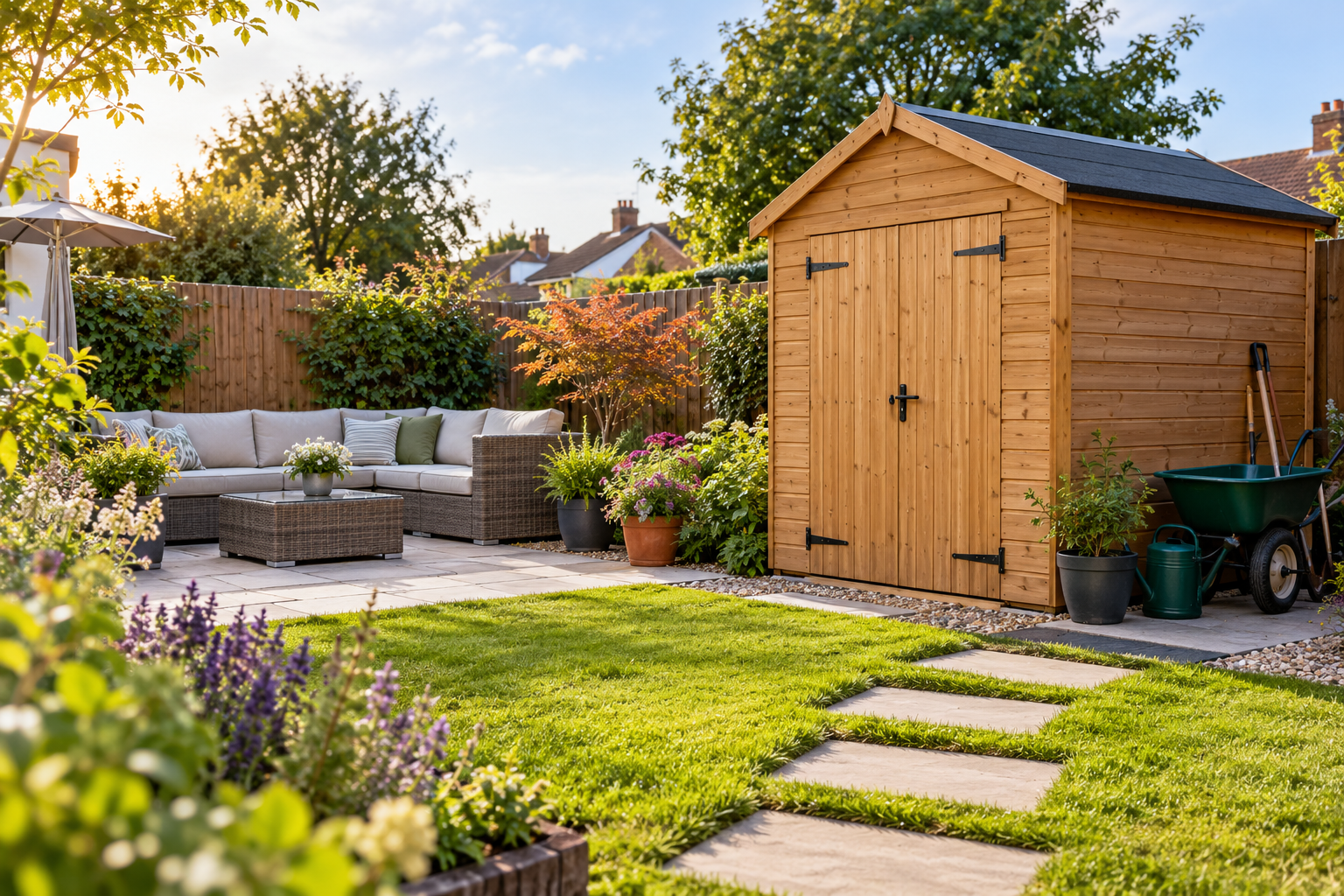
A garden has to accommodate more than plants. Tools, outdoor cushions, bicycles and children’s equipment all need somewhere to go, but adding storage can make a small space feel even smaller. A building that looks compact in a catalogue may still interrupt a useful route, shade a seating area or leave its doors opening into a flower bed.
The best starting point is not a shed size. It is a clear picture of what you need to store and how you want to use the garden. With a little planning, storage can support the outdoor space rather than take it over.
Start with the items, not the building
Empty the corners where equipment tends to collect and make an inventory. Separate frequently used items from seasonal ones. A watering can should be easy to reach; folded furniture may only need access a few times a year.
Measure awkward objects such as a lawnmower, bicycle or wheelbarrow. Allow room to move them through the door and turn them inside. External building dimensions are not the same as usable internal floor space, and door openings can be narrower than they appear in photographs.
Then decide what genuinely belongs outdoors. Paint, fuel, batteries and chemicals have different storage requirements. Follow their labels and the equipment manufacturer’s instructions rather than assuming that any enclosed shed is suitable.
Protect the routes you already use
Draw a simple plan showing the house, boundaries, gates, patio and planting beds. Mark the routes between them. Think about carrying a full watering can, wheeling a bicycle and moving a bin to the street.
A storage building should not force every trip through a narrow gap. Check the space needed for doors to open fully without blocking a path or striking a fence. If equipment will travel through a side gate, measure that opening as well.
Mark the proposed footprint on the ground with string or removable markers. Walk around it over several days before ordering. This makes it easier to spot a route that works on paper but feels cramped in everyday use.
Choose a shape that fits the available space
A narrow strip beside the house may suit a different building from an open corner at the end of the garden. For that kind of side-space layout, browsing lean-to sheds can help you compare a more space-conscious form with a conventional freestanding building.
Do not assume that a lean-to roof means the structure should be fixed to the house. Check the particular product’s installation instructions, required clearances and drainage arrangement. Keep access available for inspecting and maintaining nearby walls, gutters and services.
For a larger equipment collection, compare purpose-built storage sheds against the inventory you made earlier. Useful dimensions, door access and shelf capacity matter more than choosing the largest footprint your budget allows.
Plan the base and water management together
An attractive building will still be frustrating if the doorway sits in a puddle. Assess how water moves through the proposed location, especially after rain. Avoid placing storage in a low point without resolving the drainage issue first.
Use the base specified for the building and the conditions on your site. It should support the structure properly and help keep it level. Do not improvise foundation or anchoring details where the manufacturer requires a particular method.
Consider where roof water will discharge and how gutters can be maintained. Water should not be directed towards the house, a neighbour’s property or a busy path. Keep ventilation openings clear and allow the access recommended for the building’s exterior maintenance.
Use the walls before adding floor space
Good interior organisation can make a modest building easier to use than a larger cluttered one. Put frequently used tools near the entrance. Store smaller items in labelled containers and group supplies by task.
Wall hooks can keep long-handled tools out of the way, while shallow shelves make contents easier to see. Use fixings and storage systems suited to the building’s construction, and respect the manufacturer’s load limits. A lightweight wall panel is not automatically suitable for a heavily loaded rack.
Keep heavy objects low and secure anything that could fall. Leave a clear route from the door to the items you use most. If reaching a bicycle requires moving three boxes and a lawnmower, the layout needs changing.
Make storage part of the garden design
A shed does not have to dominate the view from the house. Its position, finish and relationship with surrounding planting all affect how it feels in the space.
Choose exterior colours and materials that work with existing fences, paving and furniture. A simple planting bed nearby can soften a hard edge, provided plants do not obstruct ventilation or create persistent damp against the building.
Preserve a comfortable seating area and a useful patch of open ground. Those spaces are often the reason for having a garden in the first place. Storage is successful when it makes outdoor living easier, not when it becomes the garden’s main feature.
Thoughtful garden design is about creating a balance between practical storage and comfortable outdoor living. For more ideas on making your home and outdoor spaces both stylish and functional, explore Clouds Magazine for home improvement and lifestyle inspiration.
Check the rules and the delivery route
Planning, building and boundary requirements vary by location and by the structure proposed. Check the rules that apply to your property before buying, including any lease, homeowners’ association or other relevant restrictions. Do not rely on a size threshold quoted for a different jurisdiction.
Ask the supplier how the building arrives: assembled, in panels or as a kit. Confirm the required unloading access and whether installation is included. Steps, tight corners, overhanging branches and narrow side passages can all affect delivery.
A clear plan brings these decisions together. Choose storage around your equipment, protect everyday access, prepare the site correctly and leave room to enjoy the garden. The result is not simply somewhere to put things, but an outdoor space that works better throughout the year.
