

In recent years, prediction markets have taken over and have fueled the largest expansion of gambling in U.S. history over the past 18 months. Kalshi and Polymarket, two industry giants, argue that their markets are not subject to gambling laws and taxes, their products being distinct from traditional gambling and therefore should be regulated as swaps by the Commodity Futures Trading Commission (CFTC).
All of these disputes concern the sports betting action, which is legal in 39 states and Washington, D.C., and available to bettors in those markets. The problem is that prediction-market companies allow people to bet even in states that haven’t made sports betting legal.
For this reason, there are now gambling apps introducing prediction market products. Some alternatives like these might be available for review on aggregator sites, the team at SlotsCalendar being one that makes sure to offer gamblers as many gambling options as possible.
But before checking that one out, reading the following sections will offer more insights into how the prediction market companies are handling the event, what decisions some entities took and other details.
The circuit split for Kalshi
Kalshi, previously mentioned as well, is one of the most prominent prediction market companies in the industry. At the moment, the U.S. Court of Appeals established a circuit split over whether the Commodity Exchange Act (CEA) grants the CFTC exclusive jurisdiction to preempt state gambling and sports-betting laws on prediction markets like Kalshi.
The Third Circuit took place in April 2026, with Kalshi v. New Jersey Division of Gaming Enforcement, where Kalshi won, the Court siding with the prediction market, and New Jersey authorities being temporarily blocked. The Ninth and Sixth Circuits held in August and September 2026, in Kalshi v. Nevada and Ohio and Tennessee, ruled that states retain the right to police and restrict sports-event prediction contracts under local gaming laws.
New Jersey’s Supreme Court petition docket 26-299
This docket, precisely Mary Jo Flaherty, et al. v. KalshiEX, LLC, represents New Jersey’s official petition that asks the high Court to overturn the Third Circuit’s decision protecting Kalshi under federal preemption. Moreover, this official docket reflects heavy participation by gambling opponents, state coalitions, and major sports entities seeking to pressure the Court to take the case.
Even though New Jersey filed the petition on September 2, 2026, and Kalshi’s original response deadline was October 8, 2026, the Court granted Kalshi’s motion to extend its response deadline to November 9, 2026.
Multiple states in federal litigation
If it all began as localized disputes, these conflicts have now turned into a massive, war-like situation involving multiple states. Because of impatience and a need for righteousness, states are moving ahead with local enforcement rather than waiting for the Supreme Court to rule on New Jersey’s petition.
At the same time, CFTC, which has the backing of the Trump administration, is actively counter-suing states to defend federal preemption. Some states targeted by them include Utah, Illinois, New York, Connecticut, Rhode Island, Wisconsin, Minnesota, New Mexico, Kentucky, and Arizona.
The NBA signed with Kalshi and Polymarket on October 26Polymarket on October 26
The date of October 26, 2026, came with the NBA officially naming Kalshi and Polymarket its “Preferred Prediction Market Exchanges” and also signing a landmark Memorandum of Understanding (MOU) with the federal Commodity Futures Trading Commission (CFTC).
The timing of this announcement is more of a political and public relations move, given the multi-state litigation. Basically, the NBA chose to align directly with the CFTC and the prediction markets, a completely different approach from the NFL, a topic discussed later.
But the NBA forced Kalshi and Polymarket to accept rigid restrictions in exchange for using official NBA branding. Both platforms must share user data and trading logs with the NBA and the CFTC if suspicious trading patterns appear, and the NBA has direct veto power over which types of betting the public can access.
The NFL filed for state regulation
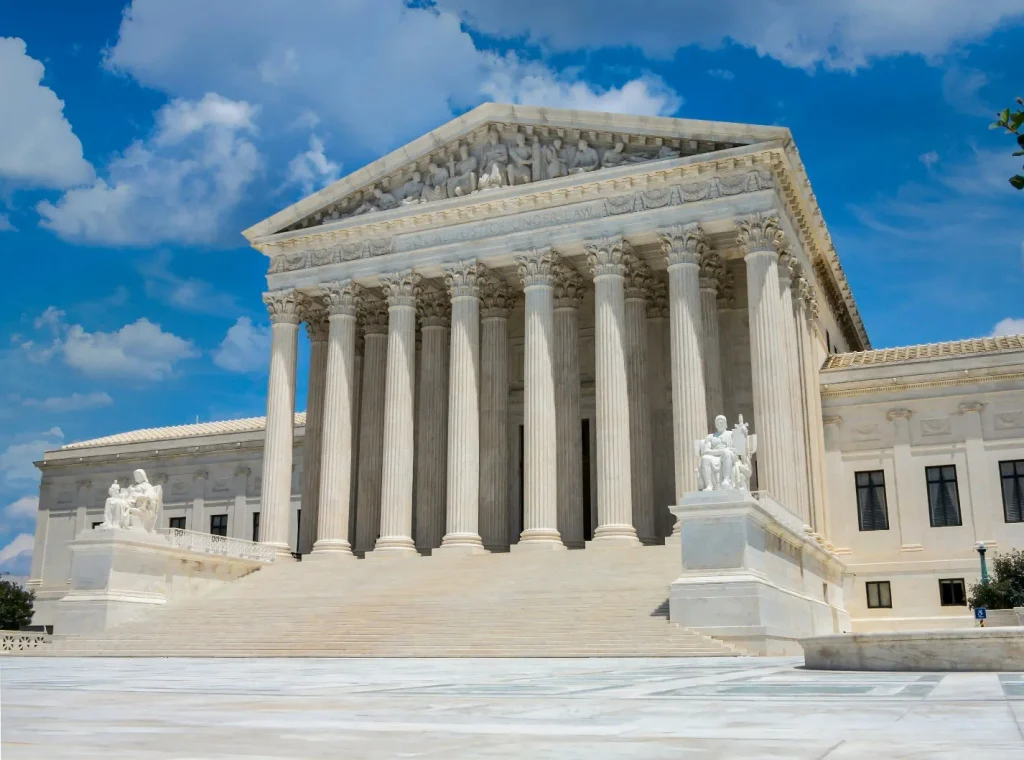
Compared to the NBA and also MLB and NHL, the NFL filed a brief with the U.S. Supreme Court, firmly aligning itself against prediction market firms, backing the states’ rights to regulate them as gambling. The NFL considers these markets to be a major threat to the integrity of its games.
Their core arguments are that, first, football wagers drive more than half of their ecosystem, so there is a significant risk to the sport. Then, they have also accused the CFTC of not being competent to police sports betting, given its small number of employees. Another of their concerns is consumer protection, specifically the legal age limits, because Kalshi operates as a federally regulated financial market, where the age limit is 18, not 21.
The casino industry and tribal nations opposing
The casino industry and tribal nations have formed a coalition to oppose Kalshi and the CFTC, filing a series of briefs to support New Jersey’s Supreme Court petition from September to October 2026. It is a known fact that before this situation, casinos and tribal nations were against each other. But now both have concluded that they must unite their powers to fight prediction markets that treat sports-event prediction contracts as federal “swaps” and pose a threat to the heavily regulated markets and state tax revenues.
Conclusion
The conflicts between prediction markets and casinos will continue to unfold, as the entities implicated in this “war” bring more and more evidence and pressure for the Supreme Court to make a final decision. Until then, people can only watch everything progress and be careful where they play.
