
By Janet Howie
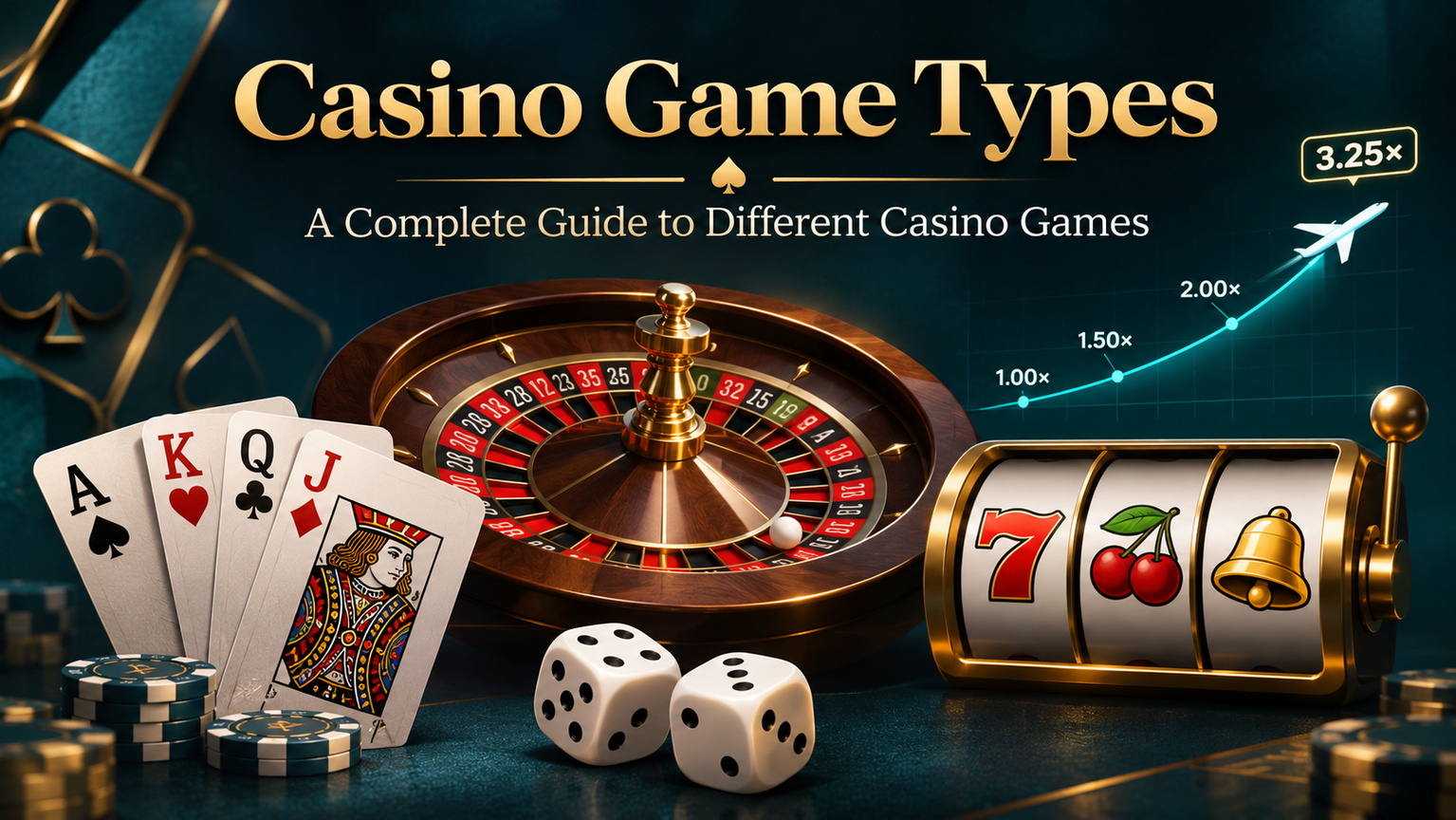
Casino games come in many forms. Some use playing cards, while others rely on spinning reels, dice, or roulette wheels. Each game has its own rules, winning conditions, and level of player involvement. Traditional games such as blackjack and baccarat remain popular, but newer formats have also appeared. For example, the jetx game belongs to the crash game category, where players watch a rising multiplier and decide when to cash out. Understanding the different casino game types makes it easier to compare their rules and features. This guide covers the main categories, explains how they work, and introduces important terms such as RTP, house edge, and volatility.
What Are the Main Types of Casino Games?
Casino games are commonly divided into slots, card games, table games, live dealer games, crash games, and specialty games. Each category uses different mechanics to determine results. Some games, such as roulette and slots, depend almost entirely on chance. Others, including blackjack and poker, involve decisions that can affect the outcome or expected return. Here is a quick comparison of the main casino game types.
| Casino Game Type | Popular Examples | Main Gameplay |
| Slot games | Classic slots, video slots | Spin reels to match symbols |
| Card games | Blackjack, baccarat, poker | Play with cards and follow specific rules |
| Table games | Roulette, craps, Sic Bo | Predict outcomes involving wheels, dice, or cards |
| Live dealer games | Live blackjack, live roulette | Play games hosted by real dealers |
| Crash games | JetX, Aviator | Cash out before a rising multiplier crashes |
| Specialty games | Bingo, keno, scratch cards | Match numbers or reveal symbols |
These categories can overlap. For example, blackjack is both a card game and a table game. Live blackjack follows similar rules but uses a video stream with a real dealer.
Slot Games: Classic and Modern Slots
Slot games use spinning reels with different symbols. Players select a stake and start a spin. Winning combinations depend on the game’s paytable and rules. Modern slots use random number generators (RNGs) to determine results. Each spin is independent, so previous outcomes cannot predict the next result. Slots may also include Wild symbols, Scatters, free spins, and bonus features.
Classic Slots
Classic slots usually have three reels and a small number of paylines. Common symbols include fruits, bells, bars, and sevens. Their rules are often simple. Players spin the reels and receive a payout when matching symbols appear in an eligible combination. Classic slots generally have fewer special features than modern video slots.
Video Slots
Video slots often have five reels, although other layouts exist. They may use paylines, ways-to-win systems, or cluster-based payouts. Many include bonus rounds, expanding Wilds, free spins, or special multipliers. For example, a game may award free spins after three Scatter symbols appear. The number of free spins and their rules depend on the specific title.
Progressive Jackpot Slots
Progressive slots offer jackpots that increase as qualifying bets contribute to a prize pool. Some jackpots connect several games or casinos, while others operate within a single game. A large jackpot does not mean it is easy to win. Players should check the jackpot rules, contribution requirements, and available RTP information.
Casino Card Games: Blackjack, Baccarat, and Poker
Card games are among the oldest types of casino games. They use standard playing cards, but their objectives and rules differ. Some require decisions about which cards to draw. Others focus on predicting the result of a hand.
Blackjack
Blackjack is a card game where players compete against the dealer. The goal is to finish with a hand value closer to 21 than the dealer without going over 21. Number cards count at face value. Face cards count as 10, while an Ace usually counts as 1 or 11. Players can make several decisions during a round. They may hit to receive another card, stand to keep their current hand, double down, or split matching cards when allowed. These decisions matter because different choices have different expected results. Basic strategy can reduce the house edge, but it cannot remove the risk of losing.
Baccarat
Baccarat compares two hands called Player and Banker. The winning hand is the one closest to nine under the game’s scoring rules. Cards from 2 to 9 count at face value. Tens and face cards count as zero, while Aces count as one. Only the final digit of the total is used. For example, a hand containing 7 and 8 has a value of five. Players usually bet on Player, Banker, or Tie. They do not control how the cards are drawn. Additional cards are dealt according to fixed rules.
Poker
Poker differs from many other casino card games because traditional versions involve competition between players. In Texas Hold’em, participants use two private cards and five community cards to form the best five-card hand. Players make decisions based on their cards, betting patterns, and possible hands. Casino poker variants work differently. In Three Card Poker and Caribbean Stud, players generally compete against the dealer rather than other participants. The rules and hand rankings vary between poker formats.
Roulette and Other Casino Table Games

Table games use physical or digital equipment such as wheels, dice, and playing cards. The most familiar examples are roulette, craps, and Sic Bo.
Roulette
Roulette uses a numbered wheel and a small ball. Players place bets before the dealer spins the wheel. The winning number is determined by where the ball stops. Common bets include red or black, odd or even, and individual numbers. There are two major versions:
- European roulette: 37 pockets numbered 0–36.
- American roulette: 38 pockets numbered 0, 00, and 1–36.
The extra zero in American roulette increases the house edge on standard bets. European roulette has a house edge of approximately 2.70%, while standard American roulette has a house edge of approximately 5.26%.
Craps
Craps is a dice game played with two six-sided dice. Players bet on the results of one or several rolls. The table contains different betting areas, each with its own rules. One common option is the Pass Line bet. On the opening roll, a total of 7 or 11 wins, while 2, 3, or 12 loses. Other totals establish a point that must be rolled again before a 7. Craps can appear complicated because of its betting layout, but its basic rules are easier to understand when learned one bet at a time.
Sic Bo
Sic Bo uses three dice. Players predict totals, specific numbers, or combinations. For example, a player may bet that the total of the three dice will be 10. Different bets have different probabilities and payouts. Some cover many possible results, while others require an exact combination. The dice determine the result randomly.
Crash Casino Games: How Multiplier Games Work
Crash games are a modern category of online casino games. Instead of using reels or playing cards, they display a multiplier that increases during a round. Players choose when to cash out. If they collect before the crash, the payout is based on the multiplier at that moment. If the game crashes first, the stake is lost. For example, a $5 stake collected at 2.00x returns $10, including the original stake. This represents a $5 profit. The challenge is that the crash point is unknown. A multiplier may rise for several seconds or stop almost immediately.
JetX: An Example of a Crash Casino Game
JetX is a crash game developed by SmartSoft Gaming. First launched in 2018, it uses a jet flying across the screen to represent the rising multiplier. At the beginning of each round, the jet takes off and the multiplier starts increasing. Players can collect their payout while the jet remains in flight. If the jet crashes before the player cashes out, the stake is lost. The game includes manual and automatic cash-out options. Automatic cash-out allows players to choose a target multiplier in advance, but it does not change the probability of reaching that target. The newer JetX version also supports multiple simultaneous bets, round history, live player information, and autoplay features.
How Crash Games Differ From Slots
The main difference is the way a round ends. In a traditional slot game, the player starts a spin and waits for the result. The game automatically determines whether the symbols form a winning combination. Crash games include an additional timing decision. Players choose when to collect the current multiplier. However, this decision does not allow them to control or predict the crash point. Previous multipliers also do not reveal what will happen next. A long series of early crashes does not mean the next round must reach a high multiplier.
Live Dealer Casino Games

Live dealer games combine online interfaces with real dealers and physical gaming equipment. The action is streamed from a studio or casino table. Players use on-screen controls to place bets and make decisions. Unlike standard digital games, live formats show the dealer handling cards, spinning a wheel, or operating other equipment.
Live Blackjack and Live Roulette
Live blackjack follows the same basic objective as traditional blackjack. Players try to beat the dealer without exceeding 21. The dealer distributes physical cards while players make decisions through the interface. Live roulette uses a real wheel and ball. The result is shown through a video stream, often from several camera angles. Some live tables provide additional features such as game statistics and recent result history. These features help players follow the action but do not predict future outcomes.
Live Game Shows
Live casino game shows use formats inspired by television entertainment. They may include large spinning wheels, multipliers, dice, or bonus rounds. Some games combine several random events to determine a final payout. Although they feature a real host, their mathematical structure may be very different from traditional table games. A live dealer or presenter does not automatically mean better odds.
Specialty Casino Games: Bingo, Keno, and Scratch Cards
Specialty games usually have simple rules and require fewer decisions than blackjack or poker. Most involve matching numbers or revealing symbols.
Bingo
Bingo uses numbered cards and randomly drawn numbers. Players mark matching numbers on their cards. A win occurs when they complete a required pattern. The pattern may be a line, several lines, or a full card. Rules can differ between 75-ball, 80-ball, and 90-ball bingo.
Keno
Keno is a number-selection game. Players choose a set of numbers from a larger group. The game then draws a fixed number of results at random. Payouts depend on how many selected numbers match the drawn numbers. The number of selections, payout table, and draw size depend on the game.
Scratch Cards
Scratch cards reveal hidden symbols or numbers. Traditional versions use a physical coating that players remove. Digital versions reproduce this experience on a screen. In online scratch games, the result is generally determined by software rather than the player’s scratching motion. The player reveals the result but does not change it by scratching in a different order.
What Is the Difference Between Skill and Chance in Casino Games?
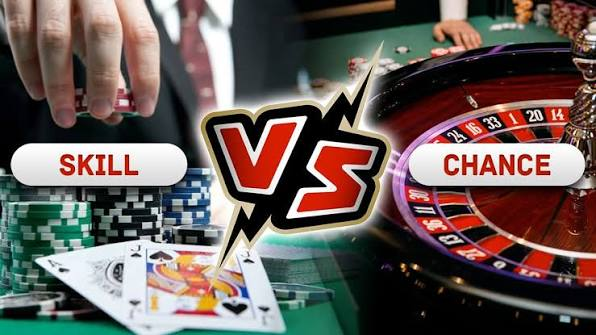
All casino games involve uncertainty, but some provide more opportunities for meaningful decisions than others. Understanding this difference is important when comparing games.
Games Based Mainly on Chance
Slots, roulette, keno, and crash games depend mainly on random outcomes. Players can choose their stakes or select betting options, but these choices do not predict the result. For example, selecting red in roulette does not make red more likely to appear on the next spin. Similarly, choosing a particular cash-out multiplier in JetX does not change when the round crashes.
Games Where Decisions Matter
Blackjack and poker involve decisions that can affect expected results. In blackjack, players choose whether to hit, stand, double down, or split. Correct decisions can reduce the mathematical disadvantage. Poker involves more complex decisions. Players consider hand strength, possible opponent hands, betting patterns, and probabilities. In traditional poker, skilled players may gain an advantage over less experienced opponents. However, good decisions do not guarantee winning every hand.
Why Every Game Still Involves Risk
Even when a player makes the statistically correct decision, an unfavorable result remains possible. A blackjack player may follow basic strategy and still lose several hands in a row. This happens because short-term outcomes can differ greatly from long-term mathematical expectations. Understanding probabilities is more useful than assuming that a certain pattern guarantees a result.
Understanding RTP, House Edge, and Volatility
Three important terms appear frequently in casino game descriptions: return to player, house edge, and volatility. They explain different parts of a game’s mathematical structure.
What Is Return to Player (RTP)?
Return to Player, or RTP, is the theoretical percentage of total stakes that a game returns over a very large number of rounds. For example, a game with 96% RTP theoretically returns $96 for every $100 wagered across a sufficiently large sample. This does not mean that someone who spends $100 will receive exactly $96. Actual results can be much higher or lower, especially over a small number of rounds. RTP describes a long-term mathematical expectation, not a guaranteed individual payout.
What Is the House Edge?
The house edge represents the casino’s theoretical advantage. For a game with 96% RTP, the corresponding theoretical house edge is 4%. However, some games have different RTP values depending on the selected bet or the decisions made during play. For example, blackjack’s house edge depends partly on its rules and the player’s decisions. Roulette’s house edge depends on the wheel layout and, in some versions, special betting rules.
What Does Volatility Mean?
Volatility describes the variation in game results. Low-volatility slots generally offer more frequent smaller wins, while high-volatility slots tend to produce less frequent but potentially larger payouts. Two games can have the same RTP but very different volatility. For example, one slot may return small amounts regularly, while another may have long periods without wins followed by occasional large payouts. Neither pattern guarantees a particular result during an individual session.
How to Compare Different Casino Game Types
Casino games differ in complexity, pace, and the decisions available to players. The following table compares their main characteristics.
| Game Type | Main Feature | Player Decisions | Typical Round Pace |
| Slots | Spinning reels | Limited | Fast |
| Blackjack | Card totals | Several | Moderate |
| Roulette | Numbered wheel | Bet selection | Moderate |
| Baccarat | Player and Banker hands | Bet selection | Moderate |
| Poker | Hand rankings | Significant | Variable |
| Crash games | Rising multiplier | Cash-out timing | Fast |
| Live dealer games | Real dealer | Depends on the game | Variable |
These are general characteristics. Specific rules and game settings can change the experience. For example, some online blackjack games move quickly, while live blackjack may take longer because the dealer handles physical cards. A good comparison should consider the rules, available decisions, payout structure, and mathematical advantage. Game speed also matters. Faster games can involve more betting decisions within the same period, which may increase total money wagered and potential losses.
Common Mistakes Beginners Make When Learning Casino Games
One common mistake is confusing RTP with the chance of winning. A game with 96% RTP does not mean that 96% of rounds will be successful. RTP describes theoretical returns over many plays, not the frequency of wins. Another mistake is assuming that previous outcomes predict future results. A roulette wheel that lands on black several times does not become more likely to land on red. The same principle applies to independently generated crash game results. Players may also overlook differences between game versions. European and American roulette have different house edges, while blackjack rules can vary between tables. Poker games also differ depending on whether players compete against each other or the dealer. Reading the rules and payout table helps prevent these misunderstandings.
How to Learn Casino Game Rules Safely
The easiest way to understand casino games is to study their rules before participating. Start with the main objective, then learn how each round works and what determines a win or loss. Free demonstration games can help beginners understand card values, betting layouts, and special features without risking money. However, demo results cannot predict future outcomes. It is also useful to compare payout tables and learn the meaning of RTP and house edge. Real-money gambling involves financial risk and is subject to local laws and age restrictions. Anyone choosing to participate should set clear spending and time limits and avoid treating gambling as a way to earn income.
Frequently Asked Questions About Casino Game Types
What Are the Main Types of Casino Games?
The main categories include slots, card games, table games, live dealer games, crash games, and specialty games. Each uses different rules and equipment. Some games, such as blackjack and poker, involve decisions, while others rely mainly on random outcomes.
What Are the Most Popular Casino Table Games?
Blackjack, roulette, baccarat, and craps are among the best-known casino table games. Blackjack and baccarat use playing cards, roulette uses a numbered wheel, and craps uses dice. Each has different betting options, rules, and mathematical probabilities.
Are Slots and Crash Games the Same?
No. Slots use reels and symbols to determine winning combinations. Crash games use a multiplier that rises until the round ends. In games such as JetX, players choose when to cash out, but they cannot predict or control the crash point.
Which Casino Games Involve Skill?
Blackjack and poker are two examples where player decisions matter. Blackjack strategy can reduce the house edge, while traditional poker involves evaluating opponents and probabilities. However, both games include uncertainty, and even good decisions can lead to losses.
What Is the Difference Between Live and Online Casino Games?
Standard online casino games generally use software to generate and display results. Live dealer games stream real equipment and dealers from a studio or casino. Both are accessed digitally, but live games show physical gameplay through video.
Can Casino Games Be Played Without Real Money?
Many digital casino games offer free demo versions. These allow users to learn the rules and understand gameplay without making financial deposits. Demo availability depends on the game, developer, and platform. Free results do not guarantee similar outcomes in real-money play.
Conclusion
Casino games include many different formats, from traditional card and table games to slots, crash games, and live dealer experiences. Each category has its own rules, pace, and level of player involvement. Blackjack and poker involve meaningful decisions, while roulette, slots, and crash games depend mainly on random outcomes. Understanding how casino games work makes their differences easier to recognize. Learning the rules, payout structures, RTP, and house edge provides a clearer picture of each game than relying on winning myths or past results.
