
Essential oils are pretty much everywhere these days. You’ll find them in grocery stores, gift stores, and online marketplaces, often with labels that all promise the same purity. The problem is that quality varies a lot from one bottle to the next. Some oils are diluted with cheaper carrier oils, while others are synthetic fragrances sold under a natural-sounding name.
That’s why it is essential to know what you’re buying. This guide walks you through what high-quality essential oils look like, how to read a label, and what to check before you spend your money.
What Are High Quality Essential Oils?
An essential oil is a concentrated extract taken from a plant’s flowers, leaves, bark, peel, or roots. A high-quality oil contains only that extract, with nothing added or taken away. Several factors shape the final product long before it reaches the bottle, such as the plant itself, extract method, and purity.
You should steer clear of products that are labeled as therapeutic grade or certified pure, as these are marketing terms that are commonly utilized to make products sound more appealing. These phrases, and many others, don’t prove anything on their own. You should always read the label to ensure you know exactly what you’re getting.
How to Read an Essential Oil Label
The label is what tells you what’s inside the bottle. If the details on it are vague or missing, treat that as a warning sign. Here’s what you should pay attention to on the label to ensure you’re buying high-quality essential oils, not disingenuous products.
Check the Latin Name
Common names can be misleading. Lavender, for example, can refer to several different plants, each with its own scent and price. A trustworthy label lists the botanical name, such as Lavandula angustifolia for true lavender. This one detail, the Latin name, tells you that the seller knows what they’re bottling.
Check the Ingredients
The ingredient list should show only one item, which is the oil itself. A blend or a pre-diluted oil is fine as long as the label says it so clearly. Always be careful with words like fragrance oil, perfume oil, or nature identical, as these usually point to a synthetic product and not a true essential oil.
Find the Origin and Batch Number
Reputable brands state the country of origin for the plant, the part of the plant used, and the extraction method behind every drop. Each of these affects how the oil smells and performs. A batch or lot number is also another good sign. It means the oil can be traced back to a specific production run and matched with its test results.
How to Buy High Quality Essential Oils
Now comes the part after knowing how to read a label. The checks below can help you separate a careful supplier from the rest.
Ask for Test Reports and Analysis Certificates
The standard purity test is known as GC/MS, short for gas chromatography and mass spectrometry. It identifies the individual compounds in an oil and can reveal fillers or synthetic compounds. Suppliers that sell high-quality essential oils share these reports for each batch, either on the product page or when you ask. If a company refuses, take it as a red flag.
Compare Prices Carefully
Essential oils shouldn’t all cost the same. It takes far more plant material to make rose or sandalwood oil than it does to make orange or peppermint oil, for instance. If all the bottles in a lineup carry the same low price, something is likely off. A price that seems too low is usually a good sign of dilution or a synthetic substitute.
Inspect the Packaging
Quality oils come in dark glass bottles, typically amber or cobalt blue. Dark glass protects the oil from light, while clear glass and plastic allow it to degrade faster. The oils can also eat away at plastic bottles. Always look for a tight cap and avoid bottles stored with a rubber dropper bulb, since the concentrated oils can break it down over time.
Choose a Transparent Supplier
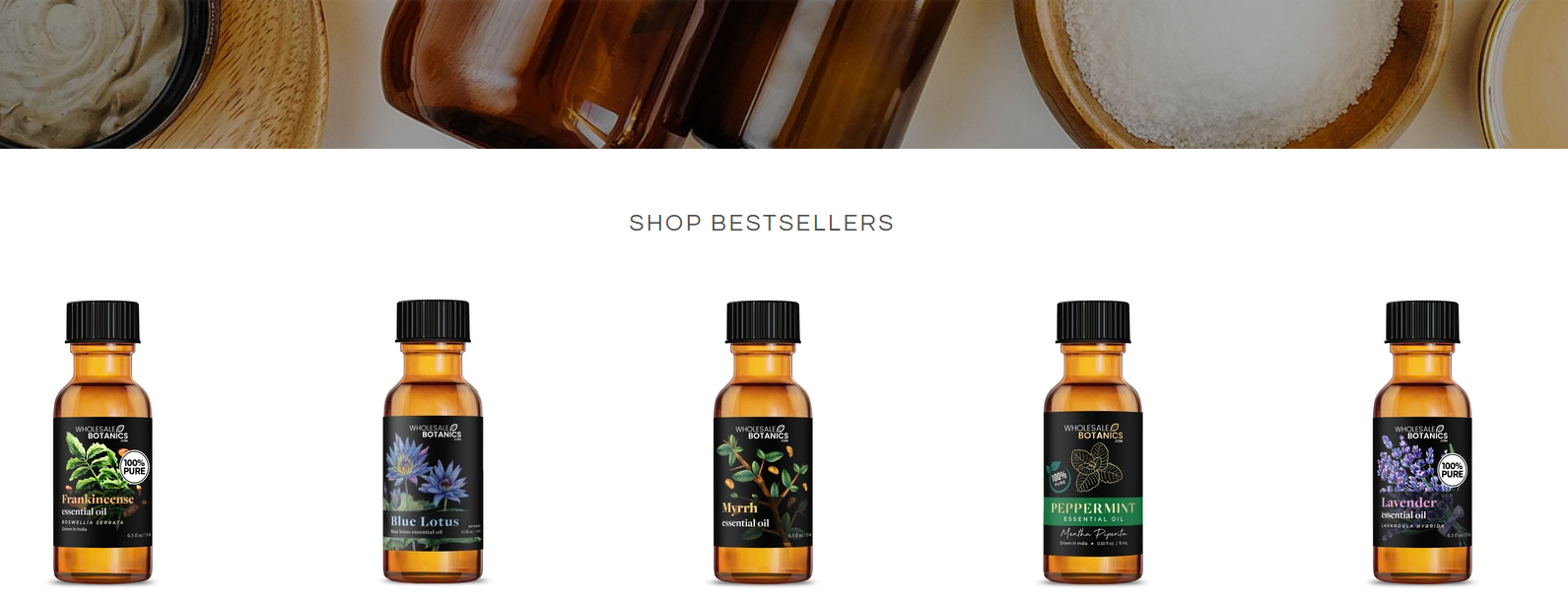
A good supplier answers questions about sourcing, testing, and storage without hesitation. You should be able to find the botanical name, origin, and extraction method for every product they sell. If you want a starting point, you can browse high-quality essential oils at Wholesale Botanics and run each product through the checks covered in our guide.
Storing and Using Your High Quality Essential Oils Safely
Even the best oils lose quality if stored poorly. Keep your bottles in a cool, dark place with the caps closed tightly, and never leave them in a hot car or on a sunny windowsill. Safe use also matters just as much as quality. Dilute essential oils in a carrier oil before applying them to your skin, and test a small area first.
Keep all oils out of reach of children and pets. If you’re pregnant or managing a health condition, always talk to a health professional before using them.
