
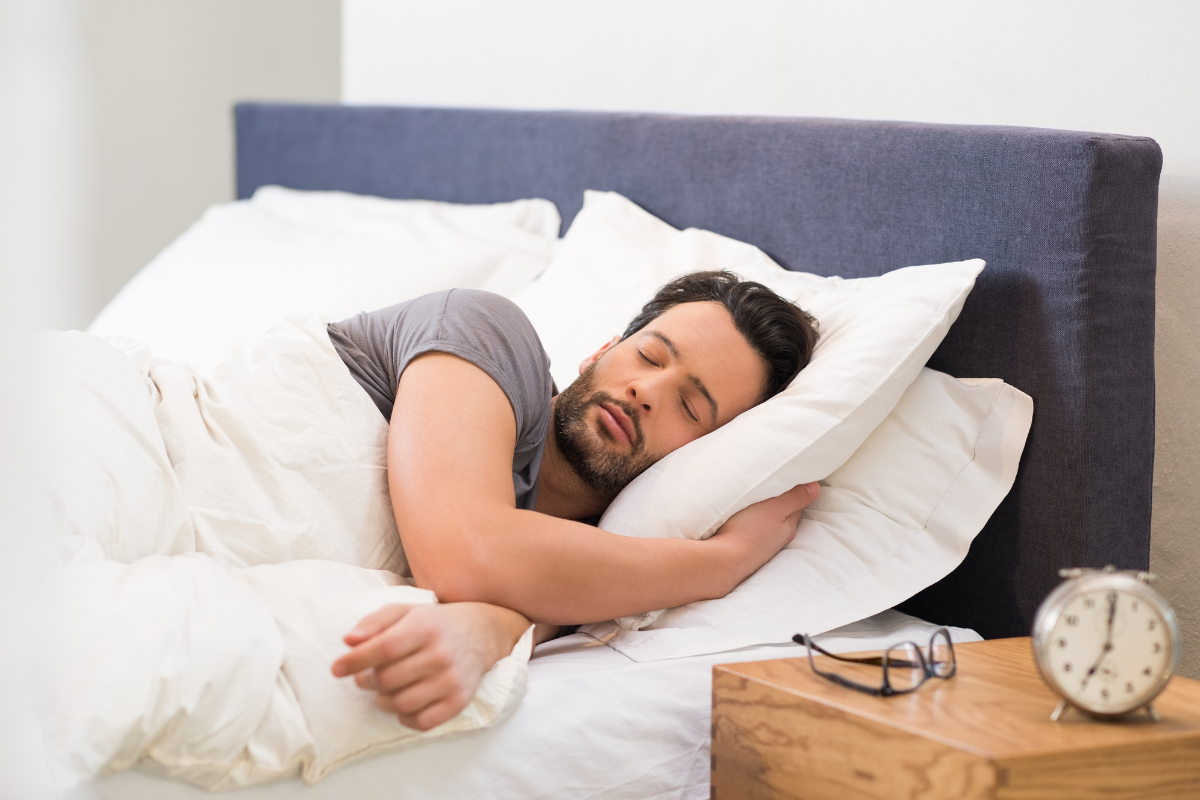
Going to bed earlier doesn’t necessarily mean you fall asleep earlier. Your sleep starts when you actually drift off. It may take minutes or even hours to transition from wakefulness to sleep, a period known as sleep latency. Aging and other factors can lengthen this duration, affecting your overall sleep hygiene.
Medications such as Z-drugs and benzodiazepines can address prolonged sleep latency, but they are generally intended for short-term use. The issue may return once you stop taking them, creating the need for sustainable treatment options. This guide will highlight natural strategies to reduce sleep onset latency without medication. Based on key triggers, it offers practical solutions to help you wind down more easily and improve sleep quality.
Tips to Transform Your Alert Mind to Sleepiness Smoothly
Your brain needs time to settle down before sleep, and you can make the transition faster and smoother with these steps.
- Having a Consistent Sleep Timing
People who sleep at irregular times are vulnerable to circadian rhythm disturbances. Going to bed at odd times once in a while is fine and doesn’t disrupt your body’s biological clock. Instead, people with irregular sleep patterns experience circadian rhythm disturbances. When your brain can’t predict when sleep will come, it can affect melatonin levels that should be high before sleep.
- Using Natural Sleep Wellness Products
If you can’t stay calm or stick to a fixed bedtime routine without stress, consider natural sleep-boosting supplements. With their stress-relieving effects, they may help you fall asleep quickly.
However, these supplements are not FDA-approved, so consult a healthcare provider if you are on certain medications or are unsure about appropriate dosage.
- Creating a Comfortable Bedroom
Some people link their mild to severe sleep disorders to medical conditions, but the actual issue lies in their environment only. This is especially true for light sleepers. Ensure your bedroom has no noise, visual clutter, bright lights, or uncomfortable temperatures.
Invest in blackout curtains to block external light, and keep your bedroom organized and free of unnecessary clutter. Also, have soundproof shields or noise-cancelling devices and try to maintain the room temperature at around 60°F with proper ventilation or air conditioning.
- Limiting Late Caffeine Intake
Caffeine is a powerful energy booster that keeps you awake. That is why most individuals start their morning with a cup of coffee or other caffeinated beverages. But the same drink can hinder your mental wind-down before sleep if you take it too late in the evening. Caffeine can last 4 to 6 hours, so keep a safe margin before bedtime. In the afternoon, shift to herbal teas and decaffeinated drinks.
Remember, some people are more sensitive to caffeine than others and can remain affected by it even longer than 6 hours. So, plan your caffeine intake earlier based on your body’s response.
- Reducing Stimulation Before Bedtime
Your brain stays active if you keep doing intense activities. From listening to negative news and watching adventure shows or suspense dramas to studying hard, these activities require constant processing and engage your cognitive abilities. Choosing the wrong time for these activities, such as late before bedtime, can cause sleep disturbances. So, try to avoid or reduce stimulation as much as possible and calm yourself with any of these activities:
- Reading books with genres such as low-stakes sci-fi, healing fiction, nature, travel, etc.
- Listening to natural sounds such as rain or birds chirping rather than fast music.
- Knitting or crafting
- Meditation, deep breathing, etc.
- Avoiding Pressure to Fall Asleep
People often become more stressed when they can’t sleep, and they start thinking about their limited rest time and how many hours of sleep are left. This thinking creates more stress, making sleep restoration more challenging. So, pushing yourself too hard to fall asleep can have a negative impact.
First, stay calm and remind yourself that staying in bed still counts as rest and can help your body heal. If that doesn’t work, you may get out of bed and do a low-stimulation activity until you feel sleepy.
During this period, avoid checking the clock to keep your mind relaxed. Remember, a few hours of uninterrupted sleep can help you wake up feeling refreshed. So, avoid stress at all costs.
Bottom Line
Falling asleep quickly isn’t complex when you take care of your body properly. Start with a fixed schedule to regulate your biological clock, and eliminate all environmental disturbances to support sleep hygiene. Manage your caffeine intake timing and avoid too many stimulating activities before bed.
Don’t forget to take natural sleep supplements and avoid pressuring yourself to fall asleep to keep your mind calm and relaxed. When taken consistently, these simple steps can shorten sleep onset and significantly reduce nighttime awakenings.
