
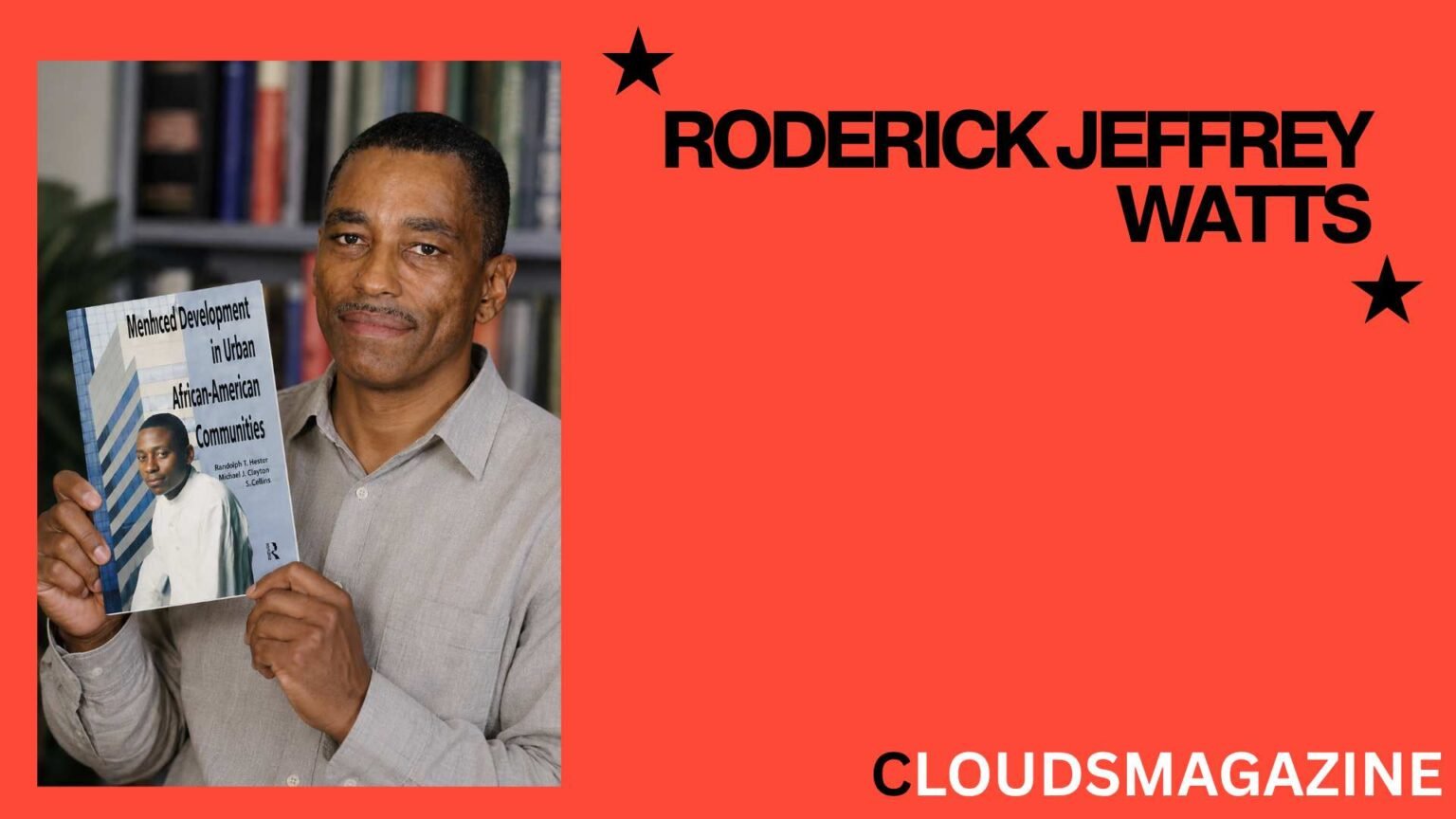
Roderick Jeffrey Watts is a prominent American community psychologist, professor, and researcher whose work has shaped the fields of liberation psychology and youth civic engagement. His research focuses on how young people develop an awareness of social injustice and the tools to take action against it.While he is best known in academic circles, his intellectual contributions have reached broader audiences through their thematic connections to major works on race and inequality in America.
This article explores his life, education, academic career, key contributions, and his personal connection to Pulitzer Prize-winning journalist Isabel Wilkerson.
Roderick Jeffrey Watts Biography
| Field | Details |
|---|---|
| Full Name | Roderick Jeffrey Watts |
| Profession | Community Psychologist, Professor, Researcher |
| Known For | Work on sociopolitical development and youth empowerment |
| Education | Oberlin College (graduate); University of Maryland (master’s and Ph.D.) |
| Spouse | Isabel Wilkerson (married 1989; later divorced) |
| Current Position | Professor of Psychology at the City University of New York (CUNY) Graduate Center |
| Academic Field | Community Psychology, Social Justice Studies |
| Research Interests | Youth sociopolitical development, African American cultural-racial identity, African American men’s development |
| Institutional Roles | Faculty at DePaul University, Georgia State University, Yale University School of Medicine, Stellenbosch University |
| Notable Publications | Human Diversity: Perspectives on People in Context (1994); contributed to Beyond Resistance! Youth Activism and Community Change (2006) |
Who Is Roderick Jeffrey Watts?
Roderick Jeffrey Watts is a community psychologist and licensed clinical psychologist who serves as a Professor of Psychology at the City University of New York (CUNY) Graduate Center.
He is trained in critical social and personality psychology, with a Ph.D. in clinical-community psychology from the University of Maryland.
His work combines cutting-edge research with a strong theoretical framework and a deep commitment to social justice. At the broadest level, his interests lie in social justice and liberation studies, which he views as a transdisciplinary endeavor.
He is also a licensed clinical psychologist with experience working with nonprofit and community-based organizations.
Roderick Jeffrey Watts’s Early Life and Education
Roderick Jeffrey Watts graduated from Oberlin College before earning both his master’s degree and Ph.D. from the University of Maryland.
His educational training emphasized interdisciplinary learning, blending psychology with sociology, education, and social theory to develop a broad perspective on how social environments influence human development.
He holds a Ph.D. in clinical-community psychology from the University of Maryland, which laid the foundation for his career in community psychology and social justice research. His early academic journey was driven by a strong curiosity about how social systems shape individual lives, leading him toward psychology as a tool for understanding power, inequality, and opportunity.
Roderick Jeffrey Watts’s Academic Career
Roderick Jeffrey Watts has held faculty positions at several major universities, including DePaul University, Georgia State University, Yale University’s School of Medicine, and Stellenbosch University in South Africa.
He joined the CUNY Graduate Center from Georgia State University, where he coordinated the joint clinical-community psychology program.
He was also recently a visiting professor of psychology at Stellenbosch University in South Africa. At CUNY, he is a Professor in the Ph.D. Program in Social Welfare and the Psychology department.
His teaching interests include program evaluation, African American psychology, consultation, and qualitative research methods.
What Is Roderick Jeffrey Watts Known For?
Roderick Jeffrey Watts is best known for his theory of sociopolitical development (SPD), a framework explaining how individuals come to understand structural oppression and develop the capacity to transform society.
His research and writing have been influential in community psychology, youth development, and social justice studies.
He is recognized as a leading scholar in community psychology, critical race awareness, and youth civic engagement. His work has shaped conversations about social justice, empowerment, and the psychology of inequality for over several decades.
He has also been recognized for his contributions to understanding the connection between a person’s awareness of injustice and their willingness to act on that awareness.
Roderick Jeffrey Watts and Psychology
Roderick Jeffrey Watts is a community psychologist who has dedicated his career to understanding how social contexts influence mental health, civic participation, and empowerment.
His research highlights the idea that psychological well-being cannot be separated from social realities such as economic inequality, racial discrimination, and educational access.
He is trained in critical social and personality psychology, which informs his approach to studying identity, oppression, and social change. By focusing on empowerment rather than pathology, his work has helped shift attention from problems within individuals to challenges within systems.
He has also been continuously involved in men’s group work for over twenty years, particularly in the area of African American youth development.
His Work in Liberation Psychology and Social Justice
Roderick Jeffrey Watts’s work encompasses liberation psychology, a framework that draws from principles of liberation and developmental psychology to promote social justice and civic engagement.
His critique of traditional approaches to youth civic engagement emphasizes the importance of social justice activism, which is consistent with liberation psychology.
He has written extensively on the quest for a liberating community psychology, exploring how the field can better address oppression and promote liberation. His research investigates how individuals perceive and respond to structural inequality, exploring how systems of hierarchy shape lived experiences.
His work in this area has influenced discussions about how psychology can contribute to social change and the creation of a just society.

Roderick Jeffrey Watts and Youth Sociopolitical Development
Roderick Jeffrey Watts developed the theory of sociopolitical development (SPD), which describes the process by which individuals acquire the knowledge, analytical skills, and capacity for action necessary to resist oppression.
SPD expands on empowerment and similar ideas related to social change and activism in community psychology, including oppression, liberation, critical consciousness, and culture.
His five-stage theory highlights the role of Paulo Freire’s notion of critical consciousness, a sociopolitical version of critical thinking, and informs interventions with young African American men in urban settings. He has published extensively on how youth programs, schools, and community initiatives can foster awareness and engagement among young people.
His work in this area has been widely used in educational reform discussions and youth leadership programs.
His Research on Identity, Community, and Social Change
Roderick Jeffrey Watts’s research on identity, community, and social change focuses on three main areas: youth sociopolitical development, African American cultural-racial identity, and African American men’s development.
He has over the years settled into these three areas of research and practice, evolving from his past interest in human diversity, particularly social identity and oppression.
His work examines how individuals develop political awareness and critical thinking about societal structures, positioning him as a key contributor to the study of sociopolitical development. He has also researched politically-conscious mentoring, African-centered rites of passage, and support for human development such as cultural and racial identity and masculinity.
He is coeditor of Human Diversity: Perspectives on People in Context, a book that offers practical guidelines on conducting diversity-conscious and diversity-sensitive projects and research.
Relationship and Marriage to Isabel Wilkerson
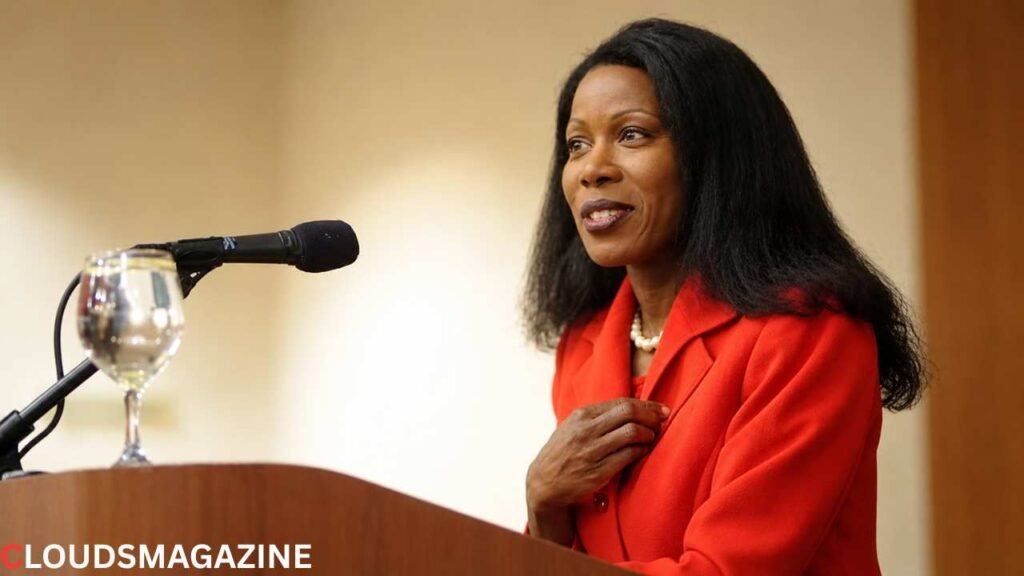
Roderick Jeffrey Watts married Isabel Wilkerson in a ceremony officiated by Rev. Yvonne Young, a Unitarian minister, on November 12, 1989, at Oxon Hill Manor in Maryland.
The wedding took place in Oxon Hill, Maryland, and the couple planned to live in Chicago after a wedding trip to the French West Indies.
At the time of their marriage, Wilkerson was a national correspondent in the Chicago bureau of the New York Times, and Watts was an assistant professor of psychology at DePaul University. The marriage was later dissolved, and Wilkerson married her second husband, Brett Kelly Hamilton, in 2009.
While their marriage ended, their intellectual work shares notable thematic connections, as both examine how historical and structural inequality shape lived experiences.
Who Is Isabel Wilkerson?
Isabel Wilkerson is an American journalist and author best known for her Pulitzer Prize-winning work The Warmth of Other Suns: The Epic Story of America’s Great Migration and her bestselling book Caste: The Origins of Our Discontents.
She was born in 1961 and became the first African American woman to win a Pulitzer Prize for journalism.
Her writings examine historical and structural inequality, exploring how systems of hierarchy shape lived experiences in America. She married Roderick Jeffrey Watts in 1989 in Fort Washington, Maryland, before later marrying her second husband, Brett Kelly Hamilton, in 2009.
Her work continues to be widely read and discussed for its powerful insights into race, history, and social change in the United States.
What Is Known About Roderick Jeffrey Watts’s Personal Life?
Roderick Jeffrey Watts maintains a relatively private personal life, with the most publicly documented aspect being his former marriage to Isabel Wilkerson.
He was born to Robert K. Watts of Albany, New York, and Eva Lacy Watts of Schenectady, New York.
His father was a principal health planner for the state of New York, and his mother was an office manager for a Schenectady arts center and a volunteer for a youth center. While specific details about his personal life remain limited, his professional legacy is well-documented through his extensive academic publications and his influence as a mentor and educator.
He has been a licensed clinical psychologist and has worked with many nonprofit and community-based organizations throughout his career.
Where Is Roderick Jeffrey Watts Today?
Roderick Jeffrey Watts continues to serve as a Professor of Psychology at the City University of New York (CUNY) Graduate Center, where he remains actively involved in research, teaching, and mentorship.
His recent work includes publishing on sociopolitical development and social identities in academic journals such as the Journal of Research on Adolescence.
He continues to be affiliated with CUNY’s Ph.D. Program in Social Welfare and the Psychology department. His ongoing research interests include youth sociopolitical development, African American cultural-racial identity, and African American men’s development.
He remains an influential figure in community psychology education and continues to contribute to scholarly discussions on social justice, empowerment, and the psychology of inequality.
Conclusion
Roderick Jeffrey Watts is a distinguished community psychologist whose work on sociopolitical development, liberation psychology, and critical consciousness has had a lasting impact on the field of psychology and beyond.
His research has helped shift the focus from individual pathology to systemic challenges, emphasizing the importance of empowering young people to recognize and resist oppression.
His academic career spans multiple prestigious institutions, and his publications continue to inform discussions on youth civic engagement, identity development, and social change. While his personal life has been relatively private, his former marriage to Isabel Wilkerson connects him to one of America’s most influential contemporary writers on race and inequality.
Today, he continues to teach and research at CUNY, shaping the next generation of scholars and practitioners committed to social justice.
(FAQ’s) Frequently Asked Question
Who Is Roderick Jeffrey Watts?
Roderick Jeffrey Watts is an American community psychologist, professor, and researcher. He is known for his work in psychology, social justice, youth development, and sociopolitical development.
What Is Roderick Watts Known For?
Roderick Watts is best known for his work on sociopolitical development and liberation psychology. His research explores how young people understand social inequality, develop awareness, and become involved in positive social change.
Is Roderick Watts Married to Isabel Wilkerson?
No, Roderick Watts is not currently married to Isabel Wilkerson. The two were married in 1989, but their marriage later ended in divorce.
Where Does Roderick Watts Currently Teach?
Roderick Watts teaches at the City University of New York (CUNY) Graduate Center. He is associated with the Psychology department and the Ph.D. Program in Social Welfare.
