
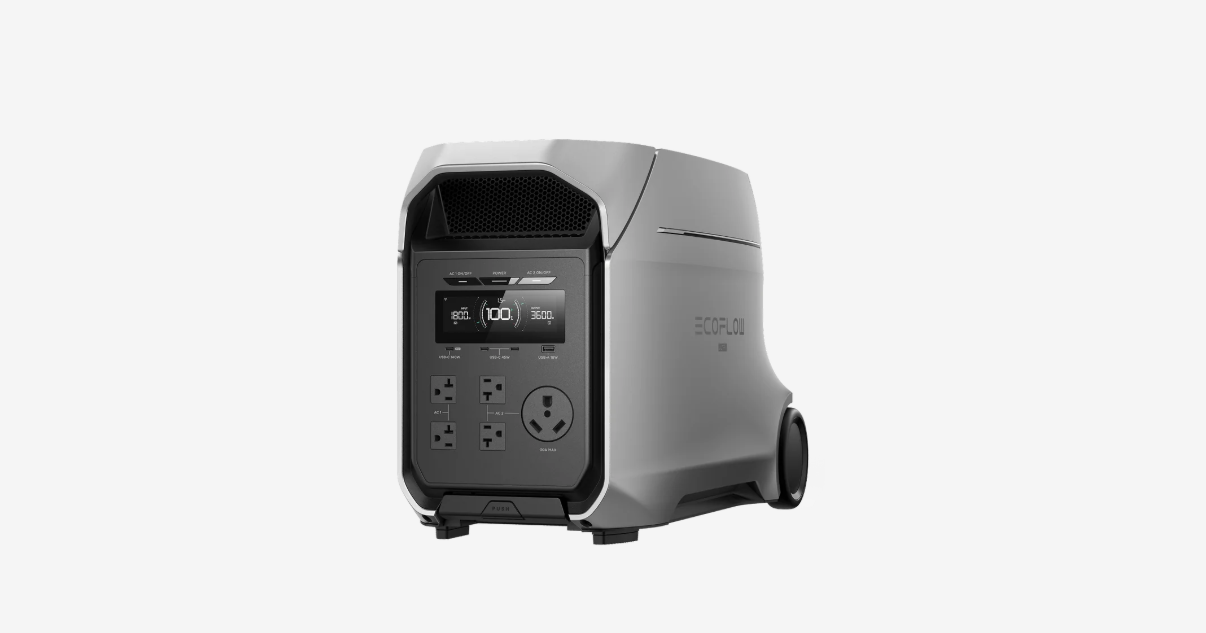
Choosing between a 120V and 240V power station depends on the appliances you need to operate, their electrical requirements, and whether you want to back up individual devices or selected household circuits. A 120V system can support many everyday loads, including refrigerators, lighting, computers, and small appliances. However, equipment such as certain well pumps, electric water heaters, and central air conditioning systems may require 240V. Before choosing a Portable Power Station, check appliance nameplates, circuit requirements, and simultaneous power demand rather than assuming that a higher wattage rating alone guarantees compatibility.
How Do 120V and 240V Power Station Outputs Differ for Household Appliances?
The main difference is the voltage supplied to connected equipment. In the United States, residential electrical systems commonly use split-phase power, providing both 120V and 240V circuits. This arrangement lets households run ordinary plug-in devices and larger electrical equipment from the same service. Understanding how these circuits work helps determine whether a power station can support the appliances that matter during an outage.
Which Household Loads Can a 120V Power Station Support?
Most everyday household electronics and smaller appliances operate on 120V. Common examples include refrigerators, televisions, Wi-Fi routers, lighting, laptops, and many microwave ovens. For households prioritizing essential backup, these loads can often be supplied through a compatible 120V power station. The important step is to calculate their combined running wattage and identify appliances with higher startup requirements.
For example, a refrigerator may have a relatively modest running demand but require additional power when its compressor starts. If several devices operate simultaneously, their combined demand must remain within the power station’s rated continuous output and supported surge capability. A 120V configuration can therefore be practical when the backup plan focuses on selected essential appliances rather than every electrical circuit in the house.
When Does a Household Need 240V Power Station Output?
Some household equipment is designed specifically for 240V circuits. Examples can include electric water heaters, certain well pumps, electric dryers, and central air conditioning systems. However, appliance voltage varies by model, so the equipment nameplate and installation specifications should always be checked. A standard US split-phase system supplies 120V between either hot leg and neutral, and 240V between the two hot legs. A power station that only provides 120V output cannot directly supply a load that requires 240V.
This is not simply a matter of increasing wattage. Even a high-output 120V unit does not automatically become compatible with a 240V appliance. The inverter and output configuration must support the required voltage.
How Should You Match Power Station Capacity With Household Electrical Requirements?
Voltage compatibility is only the first part of the decision. A power station must also provide sufficient continuous output, handle appliance startup demand, and store enough energy for the intended backup period. These requirements should be evaluated together before choosing between a smaller 120V setup and a larger split-phase system.
Check Running Watts, Starting Demand, and Circuit Requirements
Start by listing the appliances you want to operate during an outage. Record their rated voltage, running wattage, and starting requirements where applicable. A well pump, for example, may draw substantially more power during startup than during normal operation. Air conditioning compressors can present a similar challenge. A power station must support both the required voltage and the relevant starting demand.
Also distinguish between total inverter output and individual circuit limits. A system advertised with several kilowatts of output does not necessarily deliver that amount through every individual outlet or circuit.
For household backup, check the following:
- Appliance voltage and connection requirements.
- Combined running wattage of simultaneous loads.
- Startup or surge demand from motors and compressors.
- Available output across individual circuits.
- Required backup duration and battery capacity.
This information provides a more reliable basis for selecting a power station than comparing headline wattage figures alone.
Consider the Difference Between 120V and 240V Backup Configurations
EcoFlow provides examples of both approaches within its TITAN range. The TITAN 5000 Classic is rated at 4,000W at 120V, making it relevant for households prioritizing compatible 120V essential loads. By contrast, the TITAN 5000 and TITAN 5000 Plus support 120V/240V output configurations, allowing a broader range of household electrical requirements to be addressed.
The DELTA Pro 3 is another example of a power station supporting 120V/240V output. Its suitability still depends on the connected equipment, system configuration, and required backup capacity. These products show why you should consider voltage separately from battery capacity. A larger battery does not automatically provide 240V output, and a 240V-capable inverter does not guarantee enough stored energy for extended operation.
What Should You Check Before Connecting a Power Station to Household Circuits?
A household backup system involves more than connecting appliances to available outlets. If you want to supply selected circuits through an electrical panel, the transfer equipment, inverter configuration, and installation method must all be compatible. These details determine whether the system can deliver power safely and reliably.
Verify Split-Phase Compatibility and Transfer Equipment
A 240V household backup arrangement generally needs compatible split-phase output and appropriate transfer equipment. Check whether the power station supports the required 120V and 240V connections, and whether its supported transfer switch or smart home panel matches the intended system.
Never connect a power station directly to a household wall outlet to energize home circuits. Improper backfeeding can create serious electrical hazards. Panel integration should use approved equipment and be completed by a qualified electrician in accordance with applicable electrical codes.
Match Battery Capacity to the Loads You Actually Need
Once voltage and output compatibility are established, estimate how long the system must operate. A household may need to maintain refrigeration, lighting, communications, and water pumping for different periods during an outage. Calculate their expected energy consumption in watt-hours and account for inverter losses and startup demand. If only essential 120V appliances need backup, a smaller configuration may be sufficient. If the household depends on 240V equipment, you may need a compatible split-phase system.
The practical choice is the configuration that matches the household’s actual electrical requirements. Checking voltage, circuit compatibility, output limits, and expected runtime together helps prevent buying a power station with enough battery capacity but one that can’t run the equipment that matters most.
