
Introduction
Pregnancy brings many changes to your body, including your skin. You may notice dryness, itching, acne, or greater sensitivity to products you have used for years. If you are wondering, “I’m a pregnant woman. Are nivea products safe compared to burt’s bees or mustela?”, the good news is that you do not always need to replace your entire skincare routine. However, checking ingredients is an important step.
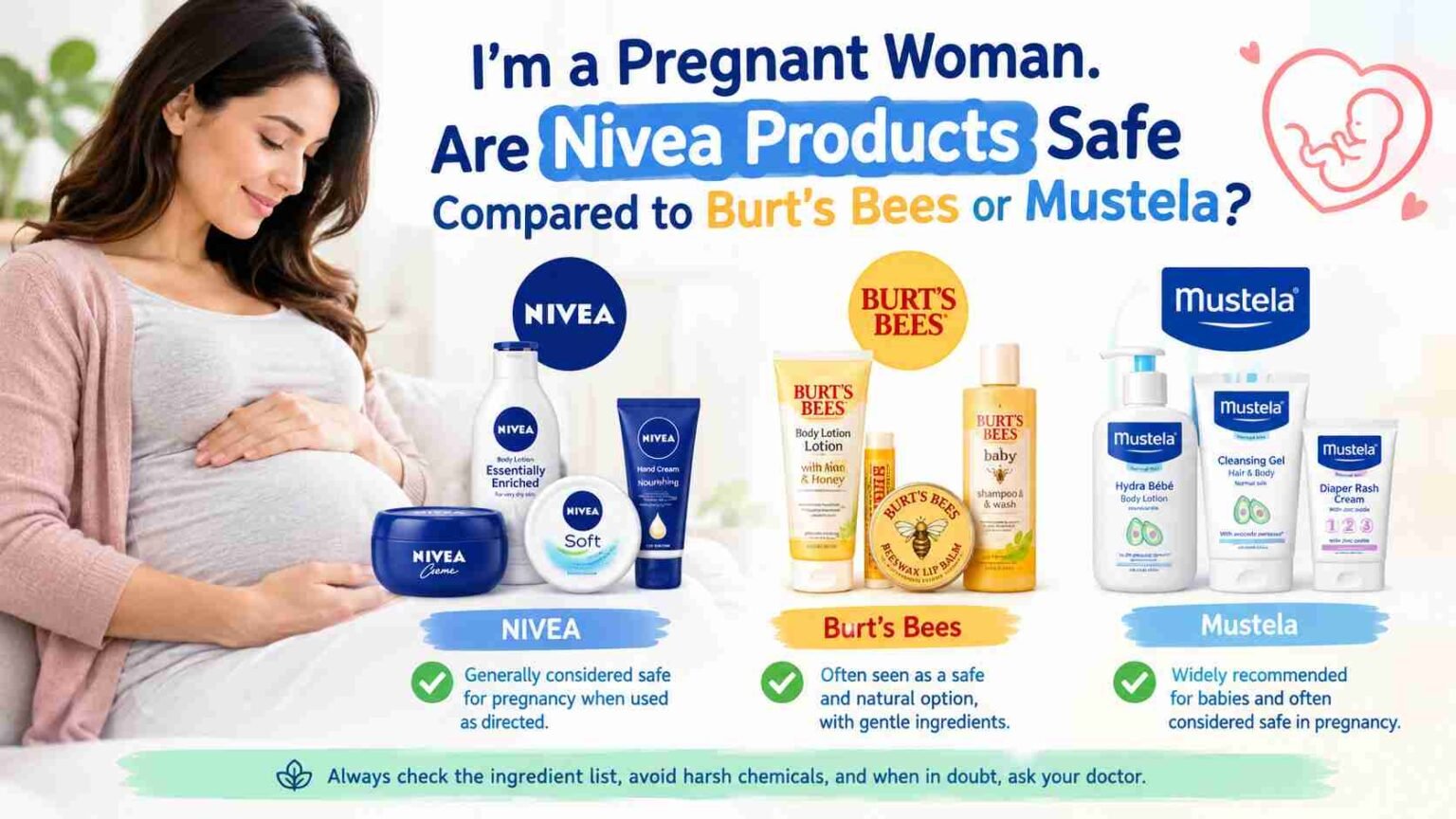
NIVEA, Burt’s Bees, and Mustela offer different types of skincare products. NIVEA is widely known for everyday moisturizers, Burt’s Bees offers nature-inspired skincare and maternity products, and Mustela has a dedicated maternity skincare range. Each brand may suit different needs and preferences.
The main question is not simply which brand is best. It is whether the specific product is suitable for use during pregnancy, whether it works for your skin type, and whether it contains ingredients that need extra attention. This guide compares the three brands, explains important skincare ingredients, and helps you make a more informed choice for yourself and your baby.
Are NIVEA Products Safe During Pregnancy Compared to Burt’s Bees or Mustela?
NIVEA, Burt’s Bees, and Mustela all offer products that may be suitable for pregnancy, but no brand should be considered automatically safe in every situation. The exact formula, intended use, and individual health needs matter more than the brand name alone.NIVEA publishes general guidance about using its skincare products during pregnancy and breastfeeding. Many of its everyday creams and lotions are designed to moisturize the skin. Burt’s Bees offers products such as Mama Nourishing Body Oil for pregnancy-related body care. Mustela also has a maternity range designed for the changing needs of pregnant women.
However, a product marketed for mothers or made with natural-origin ingredients is not automatically the best choice for everyone. Fragrance, botanical extracts, and certain active ingredients may not suit every person. Some ingredients used in acne or anti-aging treatments also require special attention during pregnancy.If you already use a moisturizer and it does not irritate your skin, you may not need to change it without a reason. Check the current ingredient list and product instructions before making a decision. If you are unsure about an active ingredient, ask your obstetrician or dermatologist. Your healthcare professional can give advice based on your pregnancy and individual circumstances.
NIVEA vs. Burt’s Bees vs. Mustela: Quick Comparison
The three brands have different strengths. Comparing their general product ranges can help you decide where to begin, but the table below is not a medical safety ranking.
| Feature | NIVEA | Burt’s Bees | Mustela |
| Main focus | Everyday skincare and hydration | Nature-inspired skincare and maternity care | Baby, family, and maternity skincare |
| Pregnancy products | Depends on the product | Includes Mama Nourishing Body Oil | Dedicated maternity range |
| Ingredient approach | Varies by formula | Many products feature natural-origin ingredients | Provides maternity and ingredient information |
| Fragrance | Check each label | Check botanical ingredients and fragrance | Check the individual formula |
| Potential advantage | Everyday moisturizing options | Pregnancy-oriented body oil options | Products specifically designed for maternity care |
| Main precaution | Review the exact ingredients | Natural does not always mean suitable for everyone | Maternity branding does not replace ingredient checks |
NIVEA may be a practical option if you want a familiar daily moisturizer. Burt’s Bees may appeal to people who prefer nature-inspired formulations. Mustela may be worth considering if you want products specifically designed for pregnancy-related body care.
The best comparison is between individual products rather than entire brands. For example, compare two moisturizers with similar purposes, check their ingredient lists, and consider how your skin responds. Price, texture, fragrance and availability also matter, but a higher price does not guarantee better results or greater safety.
What Makes a Skincare Product Suitable During Pregnancy?
A suitable skincare product should match your skin’s needs and avoid ingredients that your healthcare professional recommends against during pregnancy. It should also be appropriate for the body area where you plan to use it.
The first step is to read the ingredient list on the actual package. Product formulas can change, and products sold in different countries may not have identical ingredients. Do not rely only on an old online review or a brand’s general description.The type of product matters, too. A rinse-off cleanser is used differently from a body oil that stays on the skin for hours. The ingredient, concentration, application area, and frequency of use can all affect how a product should be assessed.
Pregnancy may also make your skin more sensitive. A lotion that worked well before pregnancy might now cause redness, itching, or discomfort. If this happens, stop using it and seek advice if the reaction continues.Cosmetic safety testing and a product’s suitability for every pregnant person are not exactly the same thing. If you are choosing an ordinary moisturizer, the decision may be straightforward. If you are considering a treatment for acne, pigmentation, or other skin conditions, review the active ingredients more carefully. Your obstetrician or dermatologist can help you decide which products are appropriate for your situation.
NIVEA During Pregnancy: Benefits, Ingredients, and Precautions
Benefits of NIVEA Moisturizers
NIVEA offers a variety of creams, body lotions, and facial moisturizers. These products may help soften dry skin, reduce the feeling of tightness, and support the skin’s natural moisture barrier. During pregnancy, this can be helpful when the skin feels dry or stretched.If you already tolerate a particular NIVEA product well, you may find that it continues to meet your everyday moisturizing needs. There is no general rule that every pregnant woman must switch to a specialist maternity brand.
NIVEA Ingredients to Check
Always check the exact product rather than assuming that every NIVEA formula is identical. Pay attention to fragrance if your skin is sensitive, and review any active ingredients in products designed for acne, uneven skin tone, or signs of aging.Ordinary moisturizing ingredients serve a different purpose from treatment ingredients. If you find retinol or another topical retinoid in an anti-aging product, avoid using it during pregnancy unless your healthcare professional specifically advises you otherwise. Ask for guidance if you are unsure about an ingredient.
Who May Prefer NIVEA?
NIVEA may suit someone who wants a familiar, everyday moisturizer without adding several new products to their routine. It may also be a reasonable starting point for people who already know which formula their skin tolerates. The key is to select the right product, follow its directions, and check its ingredients rather than choosing solely because the brand is familiar.
Burt’s Bees During Pregnancy: Natural Ingredients and Skin Benefits
Is Burt’s Bees a Good Choice for Pregnant Women?
Burt’s Bees offers nature-inspired skincare products, including Mama Nourishing Body Oil. Body oils can help soften the skin and reduce moisture loss, especially when applied after bathing while the skin is slightly damp.Some pregnant women prefer products featuring plant oils and ingredients of natural origin. However, natural ingredients are not automatically safer than synthetic ones. Their suitability depends on the specific substance, formulation, and the person’s sensitivity.
Essential Oils, Fragrance, and Allergies
Botanical extracts and essential oils can have a pleasant scent, but they may irritate some people’s skin or cause allergic reactions. Fragrance sensitivity can also become more noticeable when skin is already dry or reactive.If you prefer Burt’s Bees, read the full ingredient list and choose a formula that suits your needs. Consider fragrance-free options if scented products cause discomfort. You can test a small amount of a new cosmetic on a limited area of skin first, following the product directions, and stop using it if irritation develops.
Who May Prefer Burt’s Bees?
Burt’s Bees may appeal to people who prefer nature-inspired skincare or want a body oil designed with pregnancy in mind. It is worth comparing the exact product with a NIVEA moisturizer or Mustela maternity product that serves the same purpose. The decision should be based on ingredient suitability, skin comfort, and your preferences—not simply on the word natural.
Mustela During Pregnancy: Maternity Skincare and Stretch Marks
Why Consider Mustela?
Mustela offers a dedicated maternity skincare range, including products designed to moisturize skin during pregnancy and after childbirth. This can be useful if you want a product developed specifically for maternity-related body care rather than a general-purpose lotion.Before purchasing, review the product’s ingredients, directions, and claims. A maternity-focused label helps you identify its intended purpose, but it does not remove the need to check whether the formula suits your skin.
Can Mustela Stretch Mark Cream Prevent Stretch Marks?
Stretch marks are common during pregnancy. They develop as the skin changes and stretches, and factors such as genetics and hormonal changes can influence their appearance.A moisturizing cream may help reduce dryness and make the skin feel softer. However, using a cream does not guarantee that stretch marks will be prevented, and no moisturizer can promise to remove them completely. Be careful with products that make strong claims about guaranteed results.
Who May Prefer Mustela?
Mustela may be a good option to explore if you want a dedicated maternity product for your belly or other areas affected by skin stretching. It may also suit someone who prefers a brand with pregnancy-specific product information. Compare the product’s ingredients and price with similar products from Burt’s Bees and NIVEA before deciding.
Which Skincare Ingredients Should Pregnant Women Check or Avoid?
Retinol and Other Topical Retinoids
Retinoids are used in some acne and anti-aging treatments. Examples include retinol, tretinoin, and adapalene. Topical retinoids are generally recommended to be avoided during pregnancy. Check anti-aging serums and acne treatments carefully, and consult your healthcare professional if you are unsure about a product.If you used a retinoid before learning you were pregnant, stop using it and contact your healthcare professional for individual advice. Do not panic, but do not continue using it without guidance.
Salicylic Acid and Other Acne Ingredients
Not every acne ingredient carries the same recommendation. The American College of Obstetricians and Gynecologists includes topical salicylic acid among ingredients that may be used in pregnancy. However, formulation, concentration, and how a product is used still matter. Ask your healthcare professional about stronger treatments or products that combine several active ingredients.
Fragrance, Essential Oils and Hydroquinone
Fragrance and some botanical ingredients can irritate sensitive skin. If you experience redness or itching, consider a simpler, fragrance-free moisturizer. Skin-lightening products containing hydroquinone and prescription treatments deserve extra care because pregnancy-specific advice may be needed. Do not assume an ingredient is safe or unsafe based on its popularity alone; check reliable medical guidance.
Which Brand Is Best for Your Skin Type During Pregnancy?
The right product depends on what your skin needs. For dry or tight skin, a rich cream or body lotion may help retain moisture. A body oil may also soften the skin, although some people prefer creams because they are less greasy.For sensitive skin, look for a simple formula with few potential irritants. Fragrance-free products may be helpful if scented lotions cause discomfort. Introduce new products one at a time so you can identify what causes a reaction.
If your skin is oily or acne-prone, consider a gentle cleanser and a moisturizer labeled non-comedogenic, meaning it is designed to be less likely to block pores. Review acne treatment ingredients separately, particularly if you are considering a medicated product.For an itchy or stretching belly, regular moisturizing may relieve dryness. Use lukewarm rather than very hot water and avoid vigorous scrubbing. Do not assume that all itching is caused by stretching, however. Severe or persistent itching during pregnancy—especially itching affecting the palms or soles—needs prompt medical assessment because it can sometimes signal a pregnancy-related condition.
How to Build a Simple Pregnancy Suitable Skincare Routine?
A simple routine is often easier to manage than using many products. In the morning, wash your face with a gentle cleanser, apply a moisturizer that suits your skin, and use broad-spectrum sunscreen. Choose sunscreen based on your needs and follow its directions.In the evening, remove makeup and gently cleanse your face. Apply your moisturizer and avoid adding several new treatment products at once. If you are considering an acne or anti-aging treatment, check the ingredients with a healthcare professional first.
For body care, apply a lotion or cream to dry areas after bathing. You can choose a body oil if you prefer its texture and the formula suits your skin. You do not need to buy a separate product for every part of your body unless you have a specific need.If you breastfeed after delivery, read the directions for products applied to the breast or nipple area. Some products may need to be removed before feeding to prevent the baby from swallowing them. A midwife, doctor, or pharmacist can advise you about suitable products for that area.
NIVEA vs. Burt’s Bees vs. Mustela: Which Offers the Best Value?
The most expensive skincare product is not necessarily the most effective or the safest for you. To compare value, look at the price per gram or milliliter rather than the package price alone. Also consider how much product you need for each application and how often you use it.NIVEA may offer practical choices for everyday moisturizing. Burt’s Bees may appeal to shoppers interested in nature-inspired formulas and maternity body oils. Mustela provides dedicated maternity skincare options. Prices and product availability vary by country, retailer, and product size, so check local listings before making a comparison.
Texture is important, too. A cream that feels comfortable and fits your routine may be more useful than an expensive product you rarely use. Fragrance, packaging and ease of application can also affect your experience.Compare products designed for the same purpose. A general body lotion and a specialist stretch-mark cream may have different intended uses, so their prices alone do not tell you which is better. Focus on ingredient suitability, comfort, and realistic benefits.
Common Mistakes to Avoid When Choosing Pregnancy Skincare
One common mistake is assuming that natural or organic products are always safer. Plant-based ingredients can still irritate the skin, while many well-formulated synthetic ingredients are suitable for ordinary cosmetic use.Another mistake is assuming that every product from a trusted brand is appropriate for every pregnant woman. A brand may sell moisturizers, acne treatments, and anti-aging products with very different formulas. Check each product separately.
Avoid using topical retinoids during pregnancy unless your healthcare professional gives specific advice. Do not expect stretch-mark creams to guarantee prevention, and be cautious of strong promises made in advertisements.Introducing several new products at the same time can also make it difficult to identify the cause of a reaction. Try new products gradually, follow label directions, and stop using anything that causes irritation. If symptoms persist or you have concerns about an ingredient, seek professional guidance instead of relying on online opinions alone.
Frequently Asked Questions
1. Can I use NIVEA Soft cream during pregnancy?
Check the current ingredient list and directions for the specific NIVEA Soft product sold in your country. If you are unsure about an ingredient or have a skin condition, ask your healthcare professional.
2. Do I need a special pregnancy skincare brand?
Not necessarily. A suitable everyday moisturizer may meet your needs. A maternity-specific product can be useful if it addresses a particular concern, but the label alone does not establish that it is better for everyone.
3. Can I use skincare products that contain perfume while pregnant?
Perfume is not automatically a pregnancy hazard, but it can irritate sensitive skin or trigger allergies. If you notice discomfort, choose a fragrance-free option and seek advice if symptoms continue.
4. Will changing my moisturizer reduce pregnancy stretch marks?
Changing moisturizers cannot guarantee that stretch marks will be prevented. Moisturizing can help relieve dryness and improve skin comfort, but stretch marks are influenced by several factors, including genetics and pregnancy-related changes.
5. What should I do if my skincare product causes itching or redness?
Stop using the product and gently wash the affected area if needed. Seek medical advice if the reaction is severe, spreads, or does not improve. Contact your maternity care professional promptly for significant or persistent itching during pregnancy.
Conclusion
NIVEA, Burt’s Bees, and Mustela each offer skincare options that may suit pregnant women, but there is no single winner for every skin type and every pregnancy. NIVEA may be a practical choice for everyday moisturizing, Burt’s Bees may appeal to people who prefer nature-inspired formulations, and Mustela offers products designed specifically for maternity care.The most important step is to compare the actual ingredients, product purpose, and directions. Avoid topical retinoids during pregnancy unless your healthcare professional advises otherwise, and get guidance about unfamiliar active ingredients. If your current moisturizer works well and is suitable for your situation, you may not need to replace it simply because you are pregnant.Choose a product that keeps your skin comfortable, fits your budget, and meets your needs. When in doubt, your obstetrician or dermatologist is the best person to help you make a safe, informed decision.
Medical note: This article provides general information and is not a substitute for personalized medical advice.
