
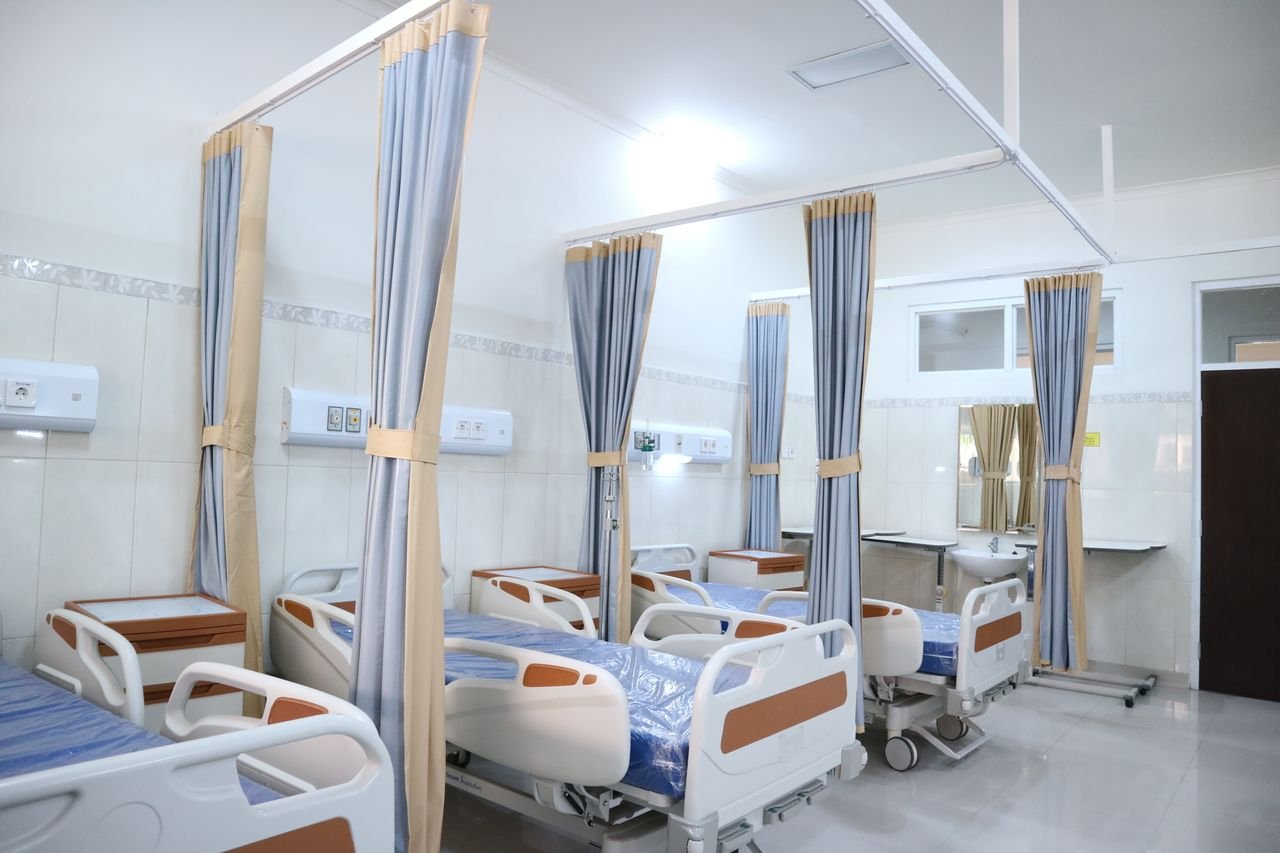
The time required to install hospital curtains varies by location. Work in a small clinic might be completed quickly, whereas a large hospital could take longer.
Factors such as the number of rooms, the quantity of curtains to be installed, and the condition of the existing tracks all influence the timeline. Removing old curtains changes the nature of the job, whereas simply installing new ones might take less time.
Therefore, it is best to create a proper plan for the hospital in advance.
How Much Time Should I Plan For?
There is no fixed timeframe; every project is different. Installing curtains in just a few rooms can be relatively straightforward. However, working across an entire ward or multiple floors requires more time.
Another important factor is that a hospital cannot halt operations. Patient rooms remain in use, and staff continue to perform their duties. Consequently, the installation time isn’t determined solely by the act of hanging the curtains; the work process itself is also crucial.
What Affects Installation Time?
Several minor factors can alter the overall duration.
For example:
- Number of rooms
- Number of curtains
- Size of the curtains
- Condition of existing tracks
- Need for new tracks
- Whether rooms are occupied or vacant
- Availability of curtains and other materials
If the site is prepped and ready, work can proceed quickly. If there are issues with the tracks, those must be addressed first. That is why conducting a site assessment before starting the work is beneficial.
Replacing Old Curtains
The process of removing old curtains and installing new ones involves more than just a single step.
First, the old curtains are removed. Next, the existing system is inspected to ensure it is in good working order. Finally, the new curtains are installed. If there is a large number of curtains, the task can be carried out in phases.
Disposable hospital curtains are a practical option for some hospitals. The replacement process depends on the hospital’s existing system.
In some locations, removing used curtains is part of the job; therefore, it is best to decide beforehand how to handle the old curtains.
What About the Curtain Track?
The curtain track is a crucial component of the entire system. If the track does not function correctly, issues may persist even after installing a new curtain.
The condition of the healthcare curtain track can be assessed prior to installation by examining its movement, fittings, and other components.
If the existing track is serviceable, it does not necessarily need to be replaced; however, a damaged or unsuitable track may require additional work.
When planning for the on the right track hospital curtain track system, the hospital should consider its specific layout and existing setup.
Installing in Patient Rooms
Extra caution is required when working in patient rooms, as not every room is vacant. Consequently, it is not always feasible to work on all rooms simultaneously; some rooms can be addressed first, with the remaining work completed later.
This approach preserves patient privacy and minimizes disruption to staff routines. When installing healthcare privacy curtains, factors such as curtain length and room layout are taken into account; the curtain must reach the appropriate area and move smoothly.
Disposable Curtains Can Change the Process
Using disposable curtains can simplify the replacement process in certain areas, though this method may not be suitable for every hospital. When working with disposable cubicle curtains, hospitals should consider their specific usage patterns.
In some areas, curtains are replaced more frequently. In some areas, other options might be better suited for continuous use. The final decision should be based on how the room is used, cleaning protocols, and the hospital’s specific requirements.
Can Installation Be Done Without Disrupting the Hospital?
Yes, the work can be planned to minimize disruption to daily activities. It is not necessary to shut down the entire hospital at once; the work can be divided into sections. For instance, a few rooms can be completed at a time before moving on to the next section.
This approach is particularly useful for large hospitals, as staff can be informed in advance about where the work will take place. On The Right Track Privacy Solutions allows privacy requirements to be planned according to the specific needs of each area.
What If the Track Needs to Be Replaced?
If the existing track is old or damaged, the installation time may increase. Installing a new track involves measuring the space and fitting the hardware, followed by hanging the curtain.
Sometimes, the issue is limited to just one section; in such cases, replacing the entire system is not necessary. A site assessment helps clarify exactly what work is required.
A Simple Installation Plan
A solid plan can make the process much easier. The hospital can gather the following information beforehand:
Step 1: How many rooms require curtains?
Step 2: How many new curtains are needed?
Step 3: Is the existing track still usable?
Step 4: Which rooms can be vacated first?
Step 5: When should the work be scheduled to minimize disruption for patients and staff?
Having this information makes it easier to create a practical schedule.
The Benefits of Professional Installation
Installing curtains might seem like a minor task, but there are several factors to consider when working in a hospital environment.
The curtains must fit correctly, and the track system must be properly aligned. Crucially, patient privacy within the room must be maintained throughout the process.
When working with systems like the On The Right Track privacy curtain system, proper installation planning is essential. A systematic approach saves staff time and minimizes unnecessary disruptions.
Before Installation Begins
The hospital should verify a few details before work commences: Confirm the number of curtains and their sizes, inspect the condition of the tracks, and ensure all necessary materials are available on-site.
It should also be determined which rooms will be serviced first. Clarifying these details in advance helps reduce last-minute complications.
Final Thoughts
The time required to install hospital curtains varies from project to project; smaller jobs can be completed quickly, whereas larger projects require more extensive planning.
The condition of the tracks must be assessed alongside the curtains, and time should be allocated for the removal of old curtains if necessary.
The best approach is to conduct a site assessment before starting work, then create a schedule based on the specific requirements of the rooms, curtains, and tracks.
This ensures a more organized installation process and minimizes disruption to the hospital’s daily operations.
READ ALSO: The Crown in Her Lap: Dunnottar, the Earls Marischal, and the Keith Tartan
