
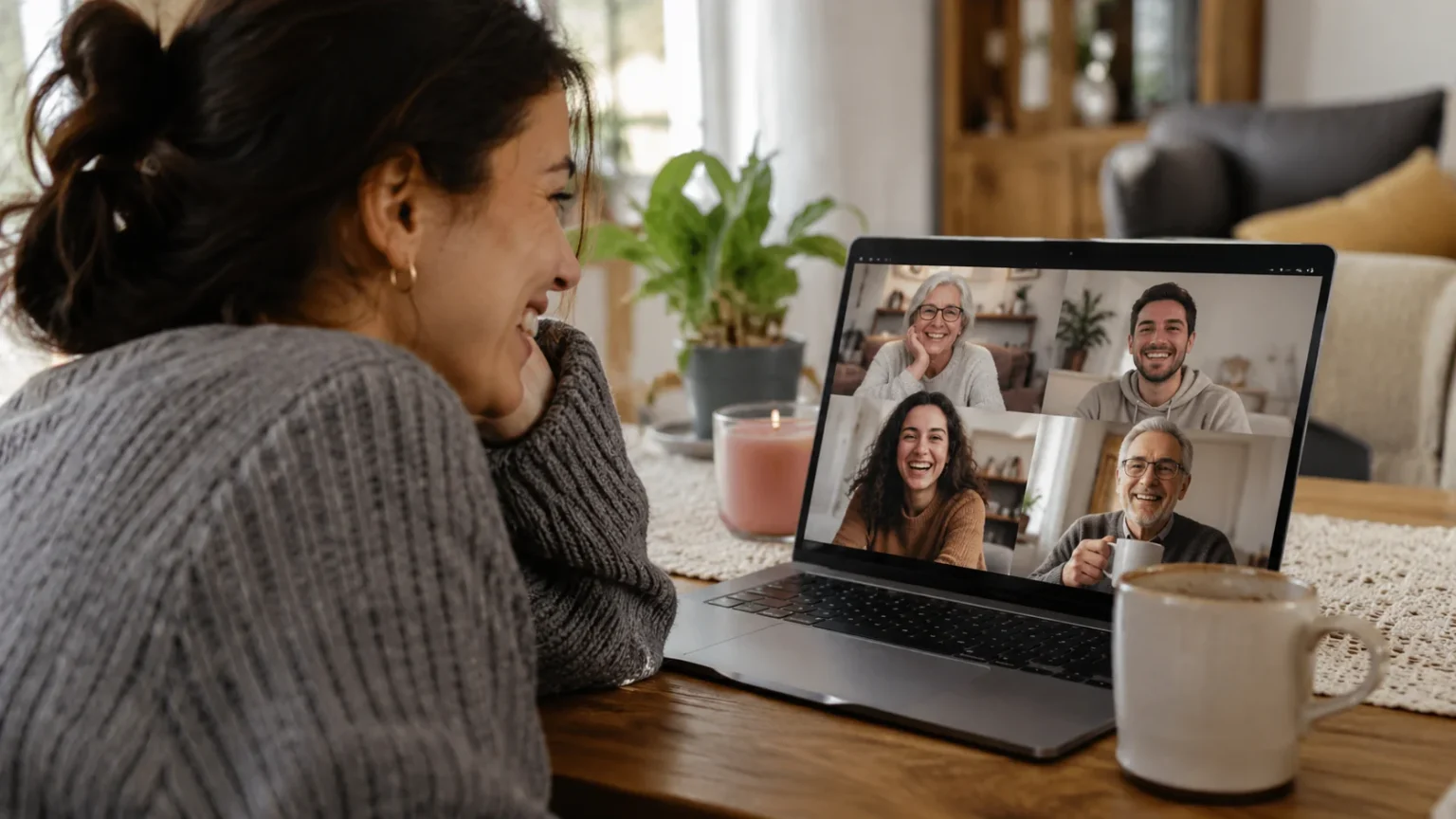
Not long ago, a video call was something you arranged in advance. You booked a time, checked the webcam worked and apologised for the frozen picture. Today, for millions of people, it is simply how they talk. Grandparents wave at grandchildren over breakfast, friends in different time zones catch up while cooking dinner, and colleagues who have never met in person know each other’s living rooms. How did the camera become the default, and what makes some calls feel warm while others feel awkward?
The technology quietly got good enough
Three things changed at roughly the same time. Smartphones put a decent front-facing camera in almost every pocket. Mobile and home broadband became fast enough for smooth video almost everywhere. And the apps themselves became effortless: no installs, no accounts for the other person, just a link or a tap. When something becomes that easy, people stop treating it as special and start using it every day.
The pandemic turned a habit into a norm
Lockdowns forced almost everyone, including people who had never made a video call, to learn quickly. Birthday parties, quizzes, religious services, doctor’s appointments and even weddings moved onto screens. Many of those habits outlasted the restrictions. Families who started a weekly call to check on older relatives kept it going because it worked. The phone call still exists, but for close relationships many people now default to video.
Why seeing a face matters
Psychologists have long pointed out how much of communication happens without words: facial expressions, eye contact, a raised eyebrow, a smile that softens a joke. On a voice call much of that disappears. Video brings it back. It is easier to tell when someone is tired, worried or genuinely happy to hear from you, and easier to comfort or reassure them. For people living alone, a daily face on screen can make a real difference to how connected they feel.
New ways to meet new people
Video is no longer only for people we already know. Language learners book conversation partners on the other side of the world. Hobby groups meet on camera every week. And a growing number of adults use video chat platforms that pair them with someone new for a spontaneous conversation, a modern version of striking up a chat with a stranger on a train. For people who find large social events draining, a one-to-one conversation from home can be a more comfortable way to meet others.
As with any service that connects strangers, these are adult spaces. Keeping personal details private and leaving any conversation that feels uncomfortable are simple rules that make the experience safer and more enjoyable.
How to make video calls feel less awkward
Plenty of people still find calls tiring. A few small changes help:
- Raise the camera to eye level. Prop your phone or laptop on a few books so you are not looking down at the screen.
- Face the light. A window in front of you, not behind you, makes a bigger difference than an expensive camera.
- Hide your own preview. Constantly watching yourself is one of the main causes of call fatigue.
- Keep it short and regular. A ten-minute call twice a week often feels closer than one long call a month.
- Do something together. Cook the same recipe, watch a match or play an online game. Shared activities take the pressure off conversation.
Not just for the young
One of the most striking changes is who makes the calls. Older adults, once the group least likely to use video, are now among its most regular users. Tablets with large screens, simple one-tap apps and patient grandchildren did much of the work. For many retired people, a scheduled call with family has become a fixed part of the week, as dependable as the Sunday phone call used to be, and much more personal.
Keeping it healthy
Video calls work best as a bridge, not a replacement. Screens cannot fully substitute for a hug or a shared meal, and constant availability can be exhausting. It helps to agree on good times to call, to switch off notifications in the evening, and to protect some time for people in the same room. Used that way, the camera keeps relationships alive across distance without taking over everyday life.
The bottom line
Video calling became the default not because of a single invention but because it finally became easy, reliable and familiar. What keeps people using it is something older than any app: the simple comfort of seeing a familiar face, or a friendly new one, when you want to talk.
