
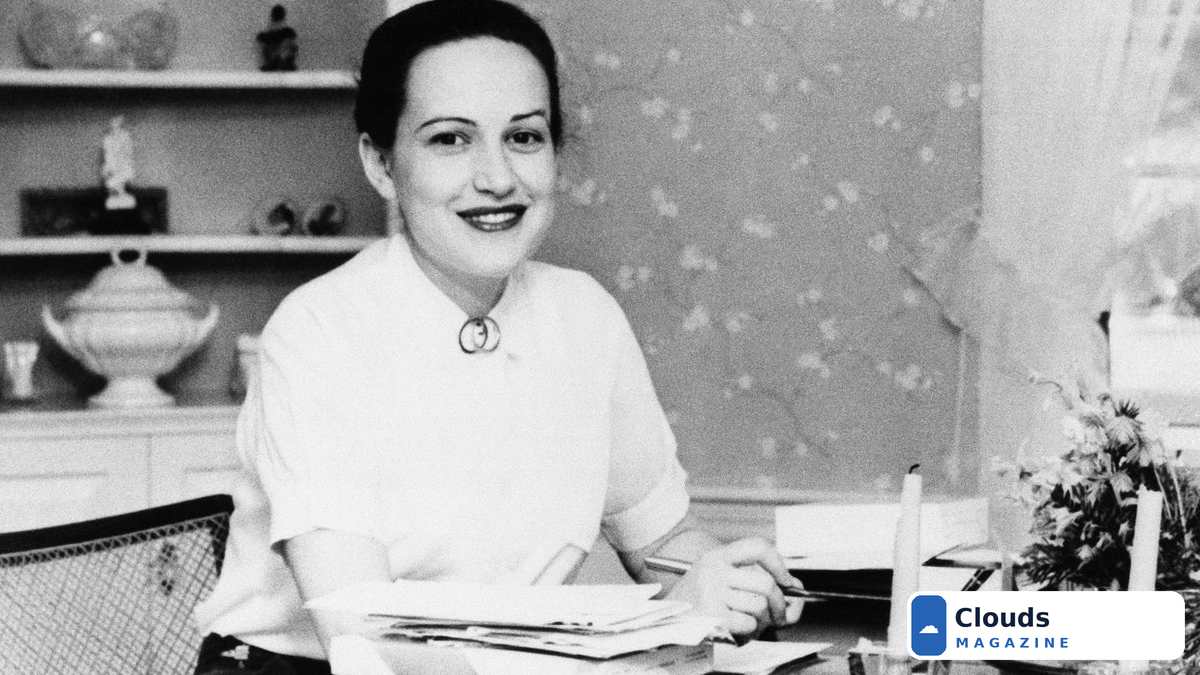
Ann Fleischer is a name that survives almost entirely inside somebody else’s biography. She was the first wife of Henry Kissinger, married to him for fifteen years, yet she left no memoir, gave no famous interviews and built no public career of her own.
That imbalance is the real subject of her story. Profiles of other private people carried into the record by a famous relative, among them Lucy Elizabeth Linch, show the same pattern: a documented outline, long silences, and a great deal of later guessing.
What follows separates the two. Every dated event below rests on an archival guide, a university record or a major newspaper. Where the record stops, the article says so plainly, because for Ann Fleischer the gaps are part of the honest biography.
Quick Answer
Quick Answer: Ann Fleischer, born Anneliese Fleischer in Fürth, Germany, in 1925, was Henry Kissinger’s first wife. They married on February 6, 1949, had two children, Elizabeth and David, and divorced in 1964. She later married Brandeis chemist Saul G. Cohen and lived privately.
Who Was Ann Fleischer?
Ann Fleischer was Henry A. Kissinger’s first wife, married to the future secretary of state two decades before that office made him world famous. The marriage began in 1949, when he was still an unknown Harvard undergraduate.
She never held public office, never worked as a spokesperson and never sought a political identity of her own. The historical record therefore knows her through a small set of firm events: a refugee childhood, a wedding, two children, a divorce and a second marriage.
That limited outline is not a failure of research. It reflects a life deliberately lived outside publicity, at a time when the wife of an ambitious Harvard professor could still remain almost entirely unrecorded.
Ann Fleischer: Quick Biography and Personal Details
The table below gathers the details that can be stated with confidence. Items carried only by unsourced websites, including one exact birthday, are deliberately left out or marked as unconfirmed.
| Detail | Information |
|---|---|
| Full name | Anneliese “Ann” Fleischer |
| Also known as | Ann Fleischer Kissinger; later Anneliese Cohen |
| Known for | First wife of Henry Kissinger |
| Born | 1925, in Fürth, Bavaria, Germany |
| Background | German-Jewish refugee |
| Profession | Bookkeeper, as reported by The Washington Post |
| First husband | Henry A. Kissinger, married 1949, divorced 1964 |
| Children | Elizabeth Kissinger, born 1959, and David Kissinger, born 1961 |
| Later husband | Dr Saul G. Cohen, Brandeis University chemistry professor, married 1973 |
| Public career | None documented |
| Net worth | Not publicly established |
| Last confirmed record | Named as Cohen’s wife in his April 2010 university obituary |
| Current status | Not reliably confirmed in public records |
Read the table as two layers, not one. The marriages, the children and the divorce appear in archival guides and university publications. The finer details of her birth and later life rest on much thinner ground.
That difference explains the cautious wording used throughout this profile. A birth year can be reported because German reference records carry it. A birth day cannot, because no source of standing has ever printed one with evidence behind it.
Early Life and German-Jewish Background
Ann Fleischer was born in 1925 in Fürth, a Bavarian city with one of the oldest Jewish communities in southern Germany. It was also Henry Kissinger’s birthplace, two years earlier, which gave the couple a shared starting point few American marriages could match.
Her childhood unfolded as Nazi rule tightened around Jewish families. The Washington Post, in its 2023 obituary of Kissinger, counts her among the German refugees of that exodus, placing her family’s departure within the same wave of escape that carried his family out in 1938.
Beyond that outline, her early years are undocumented. No reliable source names her school in Germany, describes her family’s circumstances in Fürth, or records the route her family took to the United States.
The Historical Circumstances of Her Generation
Germany’s Jewish citizens lost their rights in stages after 1933: professions closed, businesses were marked and boycotted, and the Nuremberg Laws of 1935 redefined them as subjects rather than citizens. Each year narrowed the space in which a Jewish child could simply grow up.
The violence of November 1938, when synagogues burned across Germany during Kristallnacht, turned emigration from a choice into an emergency. Families who could gather visas, sponsors and ship tickets left; those who could not were trapped by paperwork as much as by borders.
Ann Fleischer belonged to the generation of children carried through that rupture. Whatever her family’s individual route, the documented pattern of her community is clear: Fürth’s Jewish families scattered, and a large share of them rebuilt their lives in New York.
Growing Up Between Two Cultures
Refugee children in New York typically lived in two languages at once. German was spoken at home, at table and in synagogue, while English governed school, work and the street outside. Becoming American was a daily practice rather than a single event.
Washington Heights, where the Kissinger family settled, held so many German-Jewish refugees that it earned the nickname Frankfurt on the Hudson. Shops, newspapers and congregations reproduced a lost world within a few Manhattan blocks, softening the strangeness of exile.
Ann’s adolescence belonged to that world. She knew Henry Kissinger from their shared neighbourhood and school years, a connection formed long before either of them had any reason to expect history to record it.
Two Fürth Families: The Kissingers and the Fleischers
The Kissinger side of the Fürth connection is well documented. Henry was born Heinz Alfred Kissinger on May 27, 1923, to Louis Kissinger, a schoolteacher, and Paula Kissinger, née Stern, who came from Leutershausen. A younger brother, Walter, completed the family.
Louis taught at a Jewish school in Fürth until Nazi restrictions pushed Jewish teachers out of their posts. The family left Germany in 1938, travelling first to London and then to New York, where Washington Heights absorbed them into its refugee community.
The Fleischer family’s Fürth years are recorded far more thinly, which is itself typical. Ann’s parents never became public figures, and no archive has published their story. What is documented is the overlap: two Jewish households, one city, one catastrophe, one destination.
Ann Fleischer and Henry Kissinger: How Their Relationship Began
The relationship began in Washington Heights, where both teenagers were part of the same refugee community. The Washington Post calls her his high school girlfriend, and biographical accounts agree that they dated while he attended George Washington High School.
When Kissinger was drafted into the United States Army in 1943, the relationship continued by letter. He served in Europe with the 84th Infantry Division and in military intelligence work, while Ann remained in New York and worked.
After the war he entered Harvard College in 1947 on the path the Army had opened for veterans. On February 6, 1949, during his undergraduate years, the couple married, turning a wartime correspondence into a household.
A Relationship Before International Recognition
Nothing about the wedding pointed toward future fame. The groom was a 25-year-old undergraduate with an extraordinary academic record and no public name. The bride was a young working woman from his own streets and his own lost city.
That timing matters for understanding Ann’s place in the story. She did not marry a statesman, a celebrity or a wealthy man. She married a fellow refugee whose ambitions were still confined to examinations, fellowships and a hoped-for teaching post.
Later fame reversed the lens through which the marriage is viewed. Because Kissinger became Kissinger, a modest 1949 wedding in New York is now examined as the opening chapter of a diplomatic legend it could not have predicted.
Their Shared Immigrant Experience
The couple’s bond rested on more than neighbourhood proximity. Both had been born in Fürth, both had lost the same hometown to the same regime, and both were building adult lives in a country whose language their parents spoke with difficulty.
Shared experience of that depth can hold a young marriage together through lean years. It gave them common references, common silences and families who understood each other’s losses without explanation.
It should not, however, be stretched into a full explanation of their relationship. Affection, habit, ambition and temperament all leave fewer records than migration does, and the surviving documents cannot weigh them.
Ann Fleischer and Henry Kissinger’s Marriage
The marriage lasted from February 1949 until the couple’s divorce in 1964. Those fifteen years covered Kissinger’s entire formation as a scholar: his Harvard degrees, his first books, his government consulting and the birth of both children.
Archival timelines at the Library of Congress and Yale University record the marriage and divorce among the fixed points of his life. They say nothing about the household itself, which remained as private as Ann herself.
What Was Happening in Henry Kissinger’s Life?
The timeline below places the marriage against his documented milestones. Read across it, the pattern is plain: Ann’s years with him were the apprenticeship years, long before the White House.
| Year | Henry Kissinger’s milestone |
|---|---|
| 1938 | Emigrated with his family from Germany to New York |
| 1943 | Became a naturalised American citizen |
| 1943–1946 | Served in the United States Army |
| 1949 | Married Ann Fleischer |
| 1950 | Graduated from Harvard College |
| 1951 | Completed his master’s degree |
| 1954 | Earned his PhD and joined Harvard’s faculty |
| 1964 | Divorced Ann Fleischer |
| 1969 | Became national security adviser |
| 1973 | Became secretary of state |
Two dates in that table deserve emphasis. When the marriage began, Kissinger had not yet finished his first degree. When it ended, he was a Harvard professor and consultant, respected in his field but unknown to the general public.
Life During His Academic Career
Harvard in the 1950s was the centre of Kissinger’s working life. His doctoral research on the statesmanship of Metternich and Castlereagh became the book A World Restored, and he directed the Harvard International Seminar, which brought rising foreign figures to Cambridge each summer.
His 1957 book Nuclear Weapons and Foreign Policy made his reputation beyond the university, arguing against the doctrine of massive retaliation and for more flexible options. Consulting work for the Eisenhower, Kennedy and Johnson administrations followed.
Ann’s documented role in those years is domestic rather than professional: a wife in Cambridge and the mother, from 1959, of two young children. No reliable source describes her daily life, and inventing one would say more about the writer than about her.
Why Their Marriage Attracts Historical Interest
The interest begins with contrast. Kissinger’s second marriage, to Nancy Maginnes in 1974, unfolded at the summit of world politics and was photographed constantly. His first marriage belongs to an earlier, quieter America and survives in only a handful of lines.
Researchers also come to Ann through the children. Elizabeth and David Kissinger are the former secretary of state’s only children, and their mother is therefore a fixed point in every family account of his life, however briefly she is treated.
Finally, the marriage corrects a distorted picture of Kissinger’s rise. Before the summits and the Nobel Prize there was a refugee schoolboy, a bookkeeper bride and a wedding in Washington Heights. That beginning is historically real, and it is hers as much as his.
Ann Fleischer’s Children: Elizabeth and David Kissinger
Ann and Henry Kissinger had two children during the marriage: a daughter, Elizabeth, born in 1959, and a son, David, born in 1961. Both arrived while their father was building his Harvard career.
The children are the most durable public link between Ann and her former husband. Their names appear in the standard biographical records of Kissinger’s life, including the Nobel Prize organisation’s biographical summary.
Elizabeth Kissinger
Elizabeth Kissinger, the couple’s elder child, has kept the private profile her mother modelled. She has never held public office, published a memoir or cultivated a media presence, and reliable reporting about her adult life is correspondingly thin.
What can be said is structural rather than personal. She grew up in Cambridge during her father’s ascent, was five years old when her parents divorced, and later became a stepdaughter of Brandeis chemist Saul G. Cohen, whose university obituary lists her among his stepchildren.
Profiles that assign her a career, a fortune or a detailed biography without evidence are repeating the same error made about her mother. The honest record for Elizabeth Kissinger is short, and this profile leaves it at its documented length.
David Kissinger
David Kissinger, born in 1961, chose a public-facing industry far removed from diplomacy. He built a career in American television, working as an executive with the NBC Universal Television Studio.
In 2005 he became head of Conaco, the production company of comedian Conan O’Brien, a role recorded in his father’s biographical entry. The appointment placed a Kissinger at the centre of late-night comedy rather than foreign policy.
His career is a useful reminder that the family’s story does not run on one track. The son of a secretary of state and a bookkeeper from Washington Heights made his name in entertainment, on credits his parents’ generation watched rather than produced.
Why Family Information Matters
Family details anchor Ann Fleischer in verifiable ground. A marriage can be misdated by careless websites, but children with documented careers and university obituaries naming step-relationships create records that can be checked against one another.
They also explain why interest in her persists. Every account of Kissinger’s personal life, every profile of David Kissinger’s television work and every archival chronology of the family passes through her name, usually in a single sentence.
Ann Fleischer’s Divorce from Henry Kissinger
The marriage ended in divorce in 1964, fifteen years after the Washington Heights wedding. The date is one of the firmest facts in Ann’s biography, carried by the Library of Congress chronology and the Nobel biographical record alike.
At the time, the divorce was a private event involving a professor and his wife. It acquired retrospective significance only because of what Kissinger later became, and because his second marriage was so thoroughly public.
Why Did Ann Fleischer and Henry Kissinger Divorce?
No reliable public record answers this question. Neither party published an account of the marriage’s failure, no court reporting of substance survives in the accessible record, and the standard biographies move past the divorce in a line or two.
Later websites often fill the silence with his ambition, his absences or his workload. Those explanations may sound plausible, but plausibility is not evidence, and none of them rests on a statement from Ann, from Kissinger or from anyone documented as close to the couple.
The accurate answer is therefore an unsatisfying one: the marriage ended in 1964, and the reasons remain private. A biography that respects its subject has to be willing to leave that door closed.
The Timing of the Divorce
The divorce came five years before Kissinger entered government. In 1964 he was a Harvard professor, a bestselling author in his field and an occasional adviser in Washington, but he held no office and commanded no headlines.
That timing shaped how history treats the two marriages. Ann’s marriage belongs to the years of formation, Nancy Maginnes’s to the years of power, and public memory has allocated attention accordingly.
It also means the divorce cannot be blamed on the pressures of high office. Whatever ended the marriage did so within an academic household in Cambridge, not inside the machinery of the Nixon White House.
Did Ann Fleischer Remarry After Her Divorce?
Yes. In 1973, nine years after her divorce, Ann married Dr Saul G. Cohen, a distinguished chemistry professor at Brandeis University in Massachusetts. The marriage lasted until Cohen’s death in 2010.
Unlike her first wedding, this one is confirmed by the groom’s own institution. Brandeis University’s published obituary for Cohen names his wife as Anneliese and lists Elizabeth and David Kissinger among his stepchildren, tying the record together in a single document. Later profiles of other academics’ spouses, such as Gina Martin Wilson, rarely enjoy confirmation that solid.
Who Was Saul G. Cohen?
Saul G. Cohen was one of the founding figures of Brandeis University. He joined its faculty in 1950, became the first chair of its chemistry department and of its science school, and went on to serve as the university’s first dean of faculty and first University Professor.
His science had a famous practical chapter. In the 1940s he worked alongside Edwin Land of the Polaroid Corporation on the organic chemistry that stabilised instant photographs, and in 1972 he received the American Chemical Society’s James F. Norris Award.
Cohen was a widower when he married Ann; his first wife, Doris Brewer Cohen, is commemorated by a Brandeis award bearing her name. His two children, Elisabeth and Jonathan, joined Elizabeth and David in a blended family that Brandeis records describe as including nine grandchildren. He died at home in Lexington, Massachusetts, on April 24, 2010, aged 93.
Ann Fleischer’s Connection to Henry Kissinger’s Political Career
Ann’s connection to Kissinger’s political career is chronological rather than participatory. She was married to the student and the young professor, not to the national security adviser, and she played no documented role in his diplomacy.
Understanding her therefore requires a short account of what he became after her. The career that makes her name searchable began, in public terms, almost exactly when their marriage ended.
Kissinger’s Rise to National Security Adviser
In January 1969, President Richard Nixon appointed Kissinger as his national security adviser. The post made the former Harvard professor the president’s closest channel on foreign policy, war and diplomacy.
From that office he ran the secret bombing policy debates of the Vietnam era, the opening toward China and the arms-control negotiations with the Soviet Union. His influence inside the administration soon exceeded that of most cabinet members.
None of this involved Ann, who had been divorced from him for five years. Her connection to the period is limited to biography: the man in the West Wing had once been the schoolboy she dated in Washington Heights.
His Appointment as Secretary of State
Kissinger took office as the 56th secretary of state in September 1973, serving first Nixon and then, after the resignation of August 1974, President Gerald Ford. He held the post until January 1977, for two of those years keeping the national security role as well.
That autumn brought the two events that define his public image: the 1973 Nobel Peace Prize, awarded for the Paris Peace Accords on Vietnam, and the shuttle diplomacy that followed the Yom Kippur War in the Middle East.
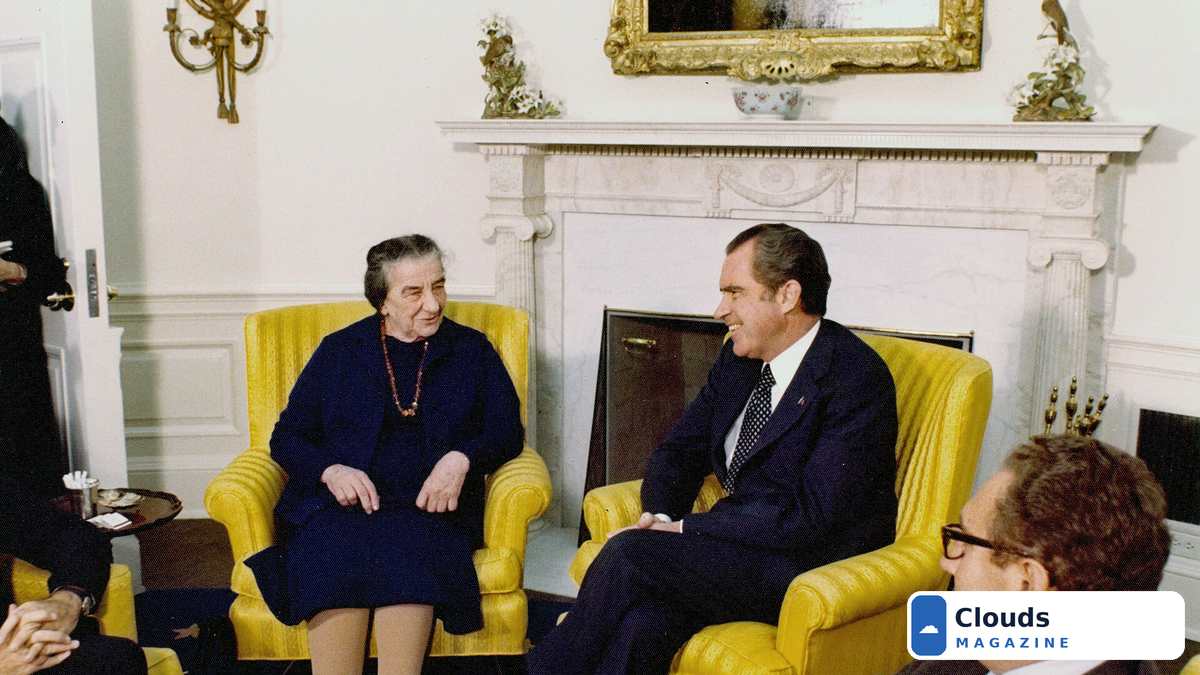
Ann watched none of it as a wife. By the time of the Nobel award she had been remarried for several months, beginning a marriage to a chemist that would last thirty-seven years, more than twice the length of her first.
Ann’s Life Should Not Be Reduced to Kissinger’s Achievements
It is easy to write Ann Fleischer as a footnote, because the surviving record introduces her inside his story. But the documented facts of her own life stand independently: a Fürth birth, a refugee childhood, paid work, two children and two marriages.
Her second marriage alone resists the footnote treatment. Thirty-seven years with a leading American chemist, inside one of the country’s notable postwar universities, is a substantial life by any measure, even one lived away from cameras.
Treating her as a person rather than a plot device also produces better history. It keeps the questions honest: what is documented, what is repeated, and what has simply been invented to fill an attractive silence?
Ann Fleischer’s Profession and Career
The firmest professional fact about Ann Fleischer comes from the obituary The Washington Post published for Henry Kissinger after his death in November 2023. In it, the newspaper identifies her as a bookkeeper in the years before her marriage.
That single word, bookkeeper, does real work in her biography. It establishes that the teenage refugee from Washington Heights held a skilled job of her own before she became Mrs Kissinger, at a time when the couple’s future held no guarantees.
What Does Her Work as a Bookkeeper Tell Us?
Bookkeeping in the 1940s meant ledgers, invoices and payrolls maintained by hand, with accuracy checked in ink. It was skilled clerical work, demanding numeracy and trust, and it staffed the offices of exactly the small businesses that filled Washington Heights.
For immigrant families, a daughter’s wages were rarely incidental. Steady clerical employment contributed to a household still establishing itself, and it gave the earner a measure of independence inside a community that prized security after years of danger.
Her occupation also fits the couple’s early economics. Kissinger studied, wrote and taught through the 1950s on academic pay. Biographies of student marriages from that era routinely rest on a working spouse, and Ann’s bookkeeping is the documented piece of that pattern in theirs.
Did Ann Fleischer Have a Public Career?
No public career is documented for her at any stage. She held no office, published no books, gave no recorded speeches and appears in no professional directory under her own name. The Brandeis years, when a faculty wife might easily have become visible, left no public trace either.
That absence should be read plainly rather than pitied. A public career is one kind of life, not the standard against which others are measured, and nothing in the record suggests she sought one and was denied it.
What the record does show is work: bookkeeping before her marriage, and the raising of two children through the most demanding decade of her husband’s formation. Neither appears on a curriculum vitae, and both are real.
Ann Fleischer’s Personality and Private Lifestyle
Almost nothing reliable is recorded about Ann Fleischer’s personality. She gave no interviews that survive, wrote no letters that have been published, and was never profiled by a magazine in her own right during either marriage.
Descriptions of her on modern websites as warm, reserved or devoted are decorations added by writers, not observations drawn from witnesses. The only temperament the evidence supports is the one her life demonstrates: a consistent, decades-long preference for privacy.
Why Did Ann Remain Outside the Public Spotlight?
Part of the answer is timing. Her marriage to Kissinger ended in 1964, before television cameras attached themselves to his career. The years when a secretary of state’s wife becomes a public figure by default were Nancy Maginnes’s years, not hers.
Part is occupation and inclination. A bookkeeper in Cambridge and later a professor’s wife in Lexington had no professional need for publicity, and no interview, cause or campaign ever pulled her toward it. The contrast with spouses who lived fully in view, such as Heini Wathén, shows how complete her absence from public life was.
Part is simply how archives work. Institutions preserve the papers of officeholders, not of the people who shared their early lives. Ann’s privacy survived because no archive, employer or publication ever had a reason to breach it.
Privacy as an Important Part of Her Historical Identity
Privacy is not a gap in Ann Fleischer’s biography; it is one of its central facts. Across two marriages, one to a man who became world famous and one to a leader of a young university, she remained essentially unphotographed by history.
That consistency deserves respect rather than remedy. The modern instinct to reconstruct a personality from fragments says more about the market for content than about the woman, whose own choices point firmly in the opposite direction.
Her story is therefore best told the way this profile tells it: firm where the documents are firm, silent where they are silent, and honest about the difference between the two.
Ann Fleischer’s Age, Birthplace, and Nationality
Ann Fleischer was born in 1925 in Fürth, Bavaria, Germany. The year is carried by German reference records, and no source of standing contradicts it. Her age at her documented milestones follows from it: twenty-three or twenty-four at her wedding, in her mid-thirties when her children were born.
One exact date, November 6, 1925, circulates widely online. It traces to a single uncited line in an encyclopedia entry and is repeated by websites that copy one another. Because no reliable source stands behind the day and month, this profile prints the year only.
If the 1925 birth year is correct, she would have turned one hundred in 2025. Whether she did so is unknown, because no reliable public record of her life after April 2010 has been published.
Was Ann Fleischer German?
She was German by birth and upbringing: born in Fürth to a German-Jewish family and educated, in her earliest years, inside the community the Nazi regime was dismantling. German was the language of her childhood home.
Emigration changed her legal and cultural position without erasing the first one. Like the Kissingers, who arrived in 1938 and took American citizenship during the war years, the refugee families of Washington Heights became American while remaining recognisably Franconian in speech, food and worship.
No published record documents the date of her own naturalisation, and this profile does not guess one. What the record supports is the description The Washington Post used: a fellow German refugee who built her adult life in the United States.
What Was Her Connection to Fürth?
Fürth is a city in Bavaria, adjoining Nuremberg, with a Jewish history stretching back centuries. Its community was once so prominent in religious scholarship and printing that the city was nicknamed the Franconian Jerusalem.
Both of Ann’s life-shaping connections began there. She was born in Fürth in 1925, and so, two years earlier, was Heinz Alfred Kissinger, whose father taught in the city’s Jewish school. The two families’ shared birthplace preceded their shared exile.
The city neither of them grew up in still frames their story. Fürth today maintains memorials to its destroyed Jewish community, and the Kissinger name is commemorated there; Ann Fleischer’s is not, which is a fair summary of how fame distributes remembrance.
Ann Fleischer’s Net Worth and Financial Status
No reliable figure exists for Ann Fleischer’s net worth, and this profile prints none. She was a private citizen whose income, assets and estate have never been reported by a financial publication, a court record or any source equipped to know them.
Websites that attach a dollar number to her name are performing arithmetic without inputs. Her case is a clean example of why the celebrity net-worth genre fails completely when it is applied to people who were never public earners.
Was Ann Fleischer Wealthy Because of Henry Kissinger?
There is no evidence on which to base that claim either. The marriage ended in 1964, before Kissinger held office, published his bestselling memoirs or built the consulting income of his later decades. His subsequent wealth was earned after the divorce, alongside a different wife.
The terms of their divorce settlement were never published, and no reliable source describes ongoing financial arrangements between them. Assigning her a share of his fortune, in print, would be invention rather than estimation.
Her second marriage joined her to a senior professor’s household: comfortable, respected and academic in scale. Brandeis records document Cohen’s career and honours in detail and his finances not at all, which is where an honest account has to stop.
Why Online Net-Worth Estimates Can Be Misleading
Estimates for private individuals are usually assembled from guesses stacked on other guesses. The typical ingredients are:
- Salaries assumed from a job title, with no employment record behind them
- Property values attached to addresses the person may never have owned
- A famous relative’s fortune divided by intuition rather than by law
- Inheritance figures invented to make a round number look researched
Each ingredient is weak on its own, and combining them multiplies the error. For Ann Fleischer, whose documented earnings consist of one reported occupation, the method has nothing solid to start from.
Where Is Ann Fleischer Today?
The last firm point in her public record is April 2010, when Brandeis University’s obituary for Saul G. Cohen named Anneliese as his surviving wife. She was, on that date, eighty-four or eighty-five years old and living the same private life she had always kept.
Nothing reliable has been published about her since. No reputable outlet has carried an obituary for her, and no family statement about her health or residence exists in the accessible record. Modern profiles of other once-public spouses, such as Robin Stapler, show the same pattern of a record that simply stops.
Claims that she died in a particular year, or that she is alive at a particular address, circulate online without evidence. One recurring error borrows her second husband’s 2010 death and assigns it to her. The accurate answer remains: her current status is not publicly confirmed.
Why Information About Her Later Life Is Limited
The simplest reason is that she generated no news. She held no office, ran no company, endorsed no products and maintained no public presence for journalists or biographers to follow after her second marriage.
A second reason is naming. Across her life she appears as Anneliese Fleischer, Ann Fleischer, Ann Fleischer Kissinger, Anne Fleischer in one wire photograph caption, and Anneliese Cohen. Records scattered across five name forms are easy to lose and easier to confuse with other people’s.
A third reason is the privacy of the people around her. Her children have not published family updates, and Brandeis University’s connection to her ended with her husband’s memorial arrangements in 2010. Silence, in her case, has been a family practice as much as a personal one.
Ann Fleischer and Nancy Maginnes: Understanding the Difference
Searches about Kissinger’s wives regularly merge two different women. Ann Fleischer and Nancy Maginnes married the same man in different centuries of his life: one the unknown student of 1949, the other the sitting secretary of state of 1974.
Keeping them separate is the single most useful correction a reader can make. The table below sets the two marriages side by side.
| Detail | Ann Fleischer | Nancy Maginnes |
|---|---|---|
| Relationship | First wife | Second wife |
| Marriage | February 6, 1949 | March 30, 1974 |
| End of marriage | Divorce in 1964 | Kissinger’s death in 2023 |
| Children with Kissinger | Elizabeth and David | None |
| His position at the wedding | Harvard undergraduate | Secretary of state |
| Public profile | Private throughout | Public throughout |
The contrast extends to documentation. Nancy’s marriage produced photographs, interviews and a half-century of public appearances. Ann’s produced a wedding date in an archival chronology and, eventually, one wire photograph. Both records are real; they are simply different kinds of evidence.
Who Was Nancy Maginnes?
Nancy Maginnes, born Nancy Sharon Maginnes, was a foreign-policy professional in her own right before her marriage. She worked for Nelson Rockefeller, the New York governor and later vice president, including on his Commission on Critical Choices for Americans.
She married Kissinger on March 30, 1974, in Arlington, Virginia, while he held the office of secretary of state. The wedding of a sitting secretary of state was national news, the opposite of the unrecorded Washington Heights ceremony of 1949.
Nancy remained his wife for forty-nine years, until his death at home in Kent, Connecticut, on November 29, 2023, at the age of one hundred. Her public life alongside him is documented in thousands of photographs and reports.
Why the Distinction Matters
Confusing the two women scrambles chronology. Photographs of Nancy at summits in the 1970s are sometimes captioned with Ann’s name online, crediting the first wife with a public life she never had and the second with children she never bore.
It also distorts both biographies. Ann’s story is about the years before fame and a long private life after it. Nancy’s is about partnership at the centre of power. Each deserves to be read on its own evidence.
The Historical Importance of Ann Fleischer’s Story
Ann Fleischer’s biography matters beyond its connection to a famous name. Read carefully, it touches the refugee experience, the reconstruction of family life after catastrophe, the place of women’s work in postwar America and the ethics of writing about private people.
It also functions as a test case for historical method. Her record is short enough to hold in one view, which makes every addition to it visible. When a website prints a fact about her that the documents do not contain, the invention can be caught.
1. The Experience of Jewish Refugees
Ann belonged to the generation of German-Jewish children whose lives were redirected by persecution. Her documented outline, Fürth to Washington Heights, matches the experience of thousands of families whose individual stories were never written down.
Remembering that her ordinariness was itself a historical condition matters. Most refugees did not become secretaries of state. They became bookkeepers, teachers and parents, and their rebuilt lives are the larger part of the refugee story.
2. The Importance of Family History
Public careers rest on private foundations that archives rarely preserve. Kissinger’s fifteen married years at Harvard, and the two children born inside them, are part of the factual scaffolding of a major twentieth-century life.
Family history restores proportion. It shows the statesman as a student husband before he was a strategist, and it gives the woman who shared those years a name, a birthplace and a documented existence of her own.
3. Women’s Work in the Twentieth Century
The Washington Post’s single word, bookkeeper, carries a whole social history. Clerical work was among the most respectable employments open to young women of Ann’s generation, and refugee households depended on it while they established themselves.
Her case shows how easily that work disappears. A husband’s books survive in libraries; a wife’s ledgers do not. Recovering even the name of her occupation is a small act of historical repair.
4. The Importance of Historical Accuracy
Ann’s thin record attracts fabrication precisely because it is thin. Invented birthdays, invented fortunes and an entirely invented alternative biography, complete with a fictitious father, have all been published under her name by content websites.
Her story therefore teaches a transferable lesson: the less documented a person is, the more discipline their biographer needs. Accuracy is not the enemy of a good story here. It is the only story the evidence permits.
What Happened to Ann Fleischer After Her Divorce?
After 1964, Ann’s life divides into a quiet decade and a long second marriage. She remained in the United States, raised her two children through their school years, and stayed outside every public record connected with her former husband’s ascent.
In 1973 she married Saul G. Cohen of Brandeis University, and her documented life moved to Massachusetts. The Brandeis connection produced the richest records of her later years, all of them indirect: a husband’s honours, a blended family, and finally his 2010 obituary naming her as his widow.
Since that obituary, nothing reliable has been added. What happened to Ann Fleischer after her divorce is therefore answerable in outline and unanswerable in texture, and the outline is the thirty-seven-year Cohen marriage spent, by every indication, exactly as privately as she wished.
How to Research Ann Fleischer: Reliable Sources and Common Mistakes
Research on Ann Fleischer should start from institutions, not aggregators. The records that establish her biography were created by a national archive, two universities, a Nobel organisation and one major newspaper, and each can be consulted directly.
The four starting points below are the ones used for this profile. Between them they confirm the marriage, the children, the divorce, the occupation and the second marriage, which is nearly everything that can responsibly be said.
Nobel Prize Biography of Henry Kissinger
The Nobel Prize organisation’s biographical summary of its 1973 laureate records his marriage to Ann Fleischer in 1949, the divorce in 1964 and the couple’s two children. It is the quickest institutional confirmation of the basic chronology.
Its limits are equally clear. The entry exists to document a laureate, so it gives Ann one sentence and no biography. Use it to fix dates, not to describe her life.
United States Department of State
The State Department’s official history materials document Kissinger’s government service in detail: national security adviser from 1969, then secretary of state until January 1977. They frame the career that makes Ann’s name searchable.
For Ann herself the department’s record is background rather than biography. Its value lies in separating the public chronology, which is exact, from the private one, which must be assembled elsewhere.
The Washington Post
The Post’s obituary of Kissinger, published in November 2023, is the single most informative newspaper source about Ann. It identifies her as his high school girlfriend, a fellow refugee from Germany and a bookkeeper.
Those three details do more biographical work than entire websites devoted to her. They place her in Washington Heights, connect her to the refugee experience and give her an occupation, each in a clause.
Library of Congress
The Library of Congress holds the Henry A. Kissinger Papers, and its published finding aid includes a biographical chronology of his life. Archival timelines of that kind record the 1949 marriage and 1964 divorce among his fixed personal milestones.
Yale University Library, which also holds Kissinger papers, publishes a matching chronology. When two national archives agree on a date, a researcher can treat it as settled and spend scepticism where it belongs: on everything else.
Common Mistakes to Avoid
The recurring errors in Ann Fleischer research are easy to list, because the same ones repeat from site to site:
- Printing November 6, 1925 as her birthday without a cited source
- Assigning her a net worth no financial record supports
- Explaining the 1964 divorce with motives neither party stated
- Illustrating Ann’s life with photographs of Nancy Maginnes
- Reporting her second husband’s 2010 death as her own
- Treating social-media accounts in her name as genuine
Each mistake has the same cause: a gap in the record treated as an invitation rather than a boundary. The correction is always the same as well. Go back to the documents, and print only what they hold.
Ann Fleischer at a Glance
For readers who want the documented record in one view, the table below lists only events that a reliable source confirms. Anything not carried by an archive, a university or a major newspaper has been left out on purpose.
| Year | Documented event |
|---|---|
| 1925 | Born in Fürth, Bavaria, Germany |
| 1949 | Married Henry Kissinger on February 6 |
| 1959 | Daughter Elizabeth born |
| 1961 | Son David born |
| 1964 | First marriage ended in divorce |
| 1973 | Married Brandeis chemist Saul G. Cohen |
| 2010 | Named as Cohen’s wife in his Brandeis obituary |
| 2023 | Henry Kissinger died, aged 100, in Connecticut |
Eight lines cover a century. That brevity is not a defect of the table; it is the truest available summary of how completely Ann Fleischer kept her life her own.
Frequently Asked Questions About Ann Fleischer
The questions below are the ones readers most often ask about Ann Fleischer. Each answer is held to the same standard as the rest of this profile: documented facts, plainly labelled uncertainty, and nothing invented to make an answer sound complete.
1. Who Is Ann Fleischer?
Ann Fleischer, born Anneliese Fleischer in Fürth, Germany, in 1925, was the first wife of Henry Kissinger. A German-Jewish refugee who grew up in New York’s Washington Heights, she worked as a bookkeeper, married Kissinger in 1949 and raised their two children before the 1964 divorce.
2. When Did Ann Fleischer Marry Henry Kissinger?
She married him on February 6, 1949, while he was an undergraduate at Harvard College. The date is supported by a 1971 Congressional Record biography and by the archival chronologies of his papers at the Library of Congress and Yale.
3. Did Ann Fleischer and Henry Kissinger Have Children?
Yes, two. Elizabeth Kissinger was born in 1959 and has lived privately. David Kissinger, born in 1961, became a television executive, working at NBC Universal and, from 2005, heading Conaco, Conan O’Brien’s production company.
4. Why Did Ann Fleischer and Henry Kissinger Divorce?
Nobody documented the reasons. The divorce itself, in 1964, is firmly recorded, but neither Ann nor Henry Kissinger ever gave a public explanation, and claims about his ambition or workload causing the split are speculation without a source behind them.
5. Is Ann Fleischer Still Alive?
Her current status is not publicly confirmed. She was alive in April 2010, when Brandeis University’s obituary for her second husband named her as his widow. No reliable report about her has appeared since, and no reputable outlet has published an obituary for her.
6. Did Ann Fleischer Marry Someone After Henry Kissinger?
Yes. In 1973 she married Dr Saul G. Cohen, the Brandeis University chemistry professor who had helped found the university’s science school. Their marriage lasted until his death on April 24, 2010, and Brandeis records list Elizabeth and David Kissinger as his stepchildren.
7. What Was Ann Fleischer’s Profession?
She worked as a bookkeeper before her marriage, according to The Washington Post’s 2023 obituary of Henry Kissinger. No later occupation and no public career are documented for her, and profiles claiming otherwise do not cite evidence.
8. What Was Ann Fleischer’s Net Worth?
It has never been publicly established. No financial record, court document or credible report describes her income or assets, so every figure published online is an invention. Her former husband’s later wealth, earned after their 1964 divorce, cannot be assigned to her.
9. Where Was Ann Fleischer Born?
She was born in Fürth, Bavaria, Germany, in 1925, the same city where Henry Kissinger had been born two years earlier. The birth year is carried by German reference records; the exact day sometimes printed online is not supported by any cited source.
10. How Was Ann Fleischer Connected to Nancy Maginnes?
They were the first and second wives of the same man, in different eras of his life. Ann married Kissinger in 1949 and divorced him in 1964. Nancy Maginnes married him in 1974, when he was secretary of state, and remained his wife until his death in 2023.
Conclusion
Ann Fleischer’s life can be told in a paragraph, and this profile has resisted every temptation to pad it into more. A girl born in Fürth in 1925 became a refugee, a bookkeeper, a Harvard professor’s wife, a mother of two, a divorcée, and then, for thirty-seven years, the wife of a chemist, before the record closes in 2010.
What gives her story weight is not hidden drama but placement. She stands at the beginning of one of the most documented American lives of the twentieth century, and her near-invisibility beside his fame measures how unevenly history distributes its attention between men and the women beside them.
Readers who want to continue into the public half of that shared history can start with the reference biography of Henry Kissinger, where the career that made her name searchable is set out in full. Ann’s own record, short as it is, needs nothing added to it.
