

Xea Myers is the only child of two people who built famous careers in opposite worlds: her father was Heavy D, the Jamaican-born rapper who led Heavy D & the Boyz, and her mother is Antonia Lofaso, the Los Angeles chef and television personality.
Her own working life sits behind the camera rather than in front of it. Profiles of people who built an independent career alongside a famous name, among them Veronica Stigeler, share that shape: the work comes first, and the public attention arrives second.
What follows sticks to the documented record: a birth year corroborated by contemporary reporting, a funeral speech reported around the world, a court-managed estate, and a set of television production credits. Where the record runs out, this profile says so plainly.
Quick Answer
Quick Answer: Xea Myers, born in 2000, is the only child of rapper Heavy D and chef Antonia Lofaso. She spoke at her father’s funeral in November 2011, aged eleven, was confirmed as the beneficiary of his estate as a teenager, and now works in television and documentary production.
Who Is Xea Myers?
Xea Myers is an American television and documentary producer whose name first reached the public through her parents. Her father, Dwight Arrington Myers, performed as Heavy D; her mother, Antonia Lofaso, built her name in professional kitchens and on cooking television.
Her parents were partners from 1998 until his death in 2011, and they never married. Wikipedia’s record of Heavy D is precise on the point: he fathered a daughter in 2000 with Antonia Lofaso, and she was his only child.
As an adult she has kept the low profile she had as a child. Her public identity rests on production work and on her place in her father’s story, not on a celebrity career of her own, and she gives few interviews and shares little of her private life.
Xea Myers Biography: Quick Facts
The table below collects the fixed points of her biography, the details carried by contemporary reporting and by reliable coverage of her parents. Two rows are deliberately cautious, and the section after the table explains why.
| Detail | Information |
|---|---|
| Full name | Xea Myers |
| Known as | Xea Myers |
| Nationality | American |
| Birthplace | Los Angeles, California, according to published biographies |
| Birth year | 2000 |
| Father | Heavy D (Dwight Arrington Myers) |
| Mother | Antonia Lofaso |
| Profession | Television and documentary producer |
| Known for | Her family background and entertainment credits |
| Father’s profession | Rapper, songwriter, producer and actor |
| Mother’s profession | Chef, restaurateur and television personality |
| Notable association | Heavy D’s legacy |
| Public profile | Relatively private |
One name in the table deserves a note. Some online biographies give her full name as Xea Delcy Myers, but the middle name appears in no source of standing, so this profile prints the name the reliable record actually carries: Xea Myers.
The caution in the table is the pattern of her whole biography. Her parents’ lives are documented in detail, while her own record is a short set of firm points surrounded by details that repetition alone has tried to promote into facts.
The Birth Year That Stands: Why 2000 Is All the Record Gives
This is the point where most profiles of Xea Myers quietly invent something. Her exact birth date has never been published by any source of standing: she has no encyclopedia entry of her own, no official biography states a birthday, and the coverage written while events were happening gives her age only at dated moments.
What the contemporary record does give is consistent. In November 2011, reporting of her father’s funeral described her as his eleven-year-old daughter; in 2013, coverage of his estate described her as thirteen. Both ages point to the same birth year, 2000, which is the year her father’s own encyclopedia entry records.
So this profile prints the year and stops there. A birthday is a fact, and facts need better support than repetition. The honest version of her chronology is built from the dated events themselves: a childhood in Los Angeles, a father’s death in 2011, an estate settled around her in 2013, and an adult career in production.
Three Dates, No Record
The biography sites that do print an exact birthday cannot agree on one. One cluster of sites gives February 25, 2000; a second, equally confident cluster gives March 29, 2000; at least one site prints February 29 in its text while its own table gives a different day again.
Dates that disagree with each other in the month, the day, and sometimes on the same page are not rival facts. They are copies of copies, none of them traced to a record, an interview, or a family statement, and none of them is printed here as hers.
The careful end of the biography circuit concedes the position in its own words, noting that online biographies do not consistently report her exact birth date. When the carriers of a detail hedge it themselves, the detail is decoration, not documentation.
Ages at Dated Events
The dated events do the work a birthday would do. She was eleven when she spoke at Grace Baptist Church in November 2011, thirteen when her father’s estate was before a Los Angeles court in 2013, and eighteen, at the latest, by the end of 2018.
That arithmetic makes her twenty-five or twenty-six in late 2026, an adult with a production career behind her. It also fixes the one point that matters for her biography: every public step of her adult life belongs to her, taken years after the childhood events that made her name searchable.
Nothing in her story needs an invented birthday to hold together. The year 2000, the funeral, the estate and the credits make a complete chronology on their own, each of them checkable against coverage written at the time.
Xea Myers’ Early Life and Childhood
Xea Myers’ childhood was spent in Los Angeles, the city she was born in 2000. It was a childhood divided between two demanding professions: a father at the centre of hip-hop’s mainstream years and a mother climbing the ladder of professional kitchens.
The family’s base was Los Angeles even though her father’s roots were elsewhere. Heavy D was born in Jamaica and raised in Mount Vernon, New York, while Antonia Lofaso had moved to Los Angeles as a child and built her career in its restaurants.
Childhood in that household meant creative work was ordinary life. Studios, restaurant kitchens, television sets and public appearances were the family business on both sides, long before she had any reason to think of them as industries.
Growing Up Around Two Different Industries
The contrast between her parents’ worlds is the defining feature of her upbringing. Music ran on performance, collaboration and public recognition; professional cooking ran on discipline, consistency and the daily pressure of a dining room.
Look closer and the two industries rhyme. Both reward a recognisable identity, both are team efforts disguised as solo careers, and both punish anyone who cannot repeat their best work on demand, night after night.
Exposure is not destiny, and nothing says her parents’ careers chose hers for her. What the upbringing demonstrably gave her was fluency in both worlds, which is exactly the combination her later production work, split between music stories and food television, would use.
Who Is Xea Myers’ Father? Meet Heavy D
Dwight Arrington Myers performed as Heavy D. He was born in Mandeville, Jamaica, on May 24, 1967, and his family moved to Mount Vernon, New York, in the early 1970s; the town remained his hometown for the rest of his life.
He fronted Heavy D & the Boyz, the first act signed to Uptown Records, with Heavy D as the group’s only rapper alongside DJ Eddie F and dancers G-Whiz and Trouble T. Roy. The group held a sizeable American audience through most of the 1990s.
His reach extended well past his own records. He performed the theme songs for In Living Color and MADtv, appeared on Janet Jackson’s “Alright” and Michael Jackson’s “Jam,” and became president of Uptown Records while still an artist on its roster.
Heavy D’s Musical Career
Five albums with the Boyz carried the career: Living Large in 1987, Big Tyme in 1989, Peaceful Journey in 1991, Blue Funk in 1992 and Nuttin’ but Love in 1994. Four solo albums followed, ending with Love Opus in 2011.
The songs most associated with him map the range of the catalogue, from dancefloor records to the smooth, melodic style that made him hip-hop’s self-described Overweight Lover:
- Somebody for Me
- Now That We Found Love
- Is It Good to You
- We Got Our Own Thang
- Got Me Waiting
Behind the scenes he was an executive as much as a performer. He developed the group Soul for Real, executive-produced and wrote much of their breakout album Candy Rain, discovered Monifah, and later served as a senior vice president at Universal Music.
Heavy D as a Father
Heavy D and Antonia Lofaso were partners from 1998 until his death, and their daughter was born in 2000. They never married, a point the record states plainly and this profile repeats without dressing it up.
Accounts of his life return to the same detail: he was a devoted, present father. Fellow artists and family members described a man who guarded his time with his daughter inside a career that pulled him toward studios, stages and film sets.
That side of him matters to her biography because it is the version she grew up with. The public knew a performer; she knew the person who occupied the centre of her childhood, and the family’s later tributes keep returning to exactly that distinction.
Heavy D’s Death and Its Impact on Xea Myers
Heavy D died in Los Angeles on November 8, 2011, aged forty-four. He had collapsed outside his home in Beverly Hills and was taken to Cedars-Sinai Medical Center, less than a month after his final live performance at the BET Hip Hop Awards.
The autopsy report, released that December, gave the cause as a pulmonary embolism caused by a blood clot in his leg, most likely formed during an extended flight; he had also suffered from heart disease. He had recently performed at a Michael Jackson tribute concert in Cardiff.
His funeral filled Grace Baptist Church in Mount Vernon on November 18, 2011. His eleven-year-old daughter spoke briefly, telling the congregation her father was “still here, not in the flesh, but in the spirit,” words the Associated Press carried around the world. He is buried at Ferncliff Cemetery in Hartsdale, New York.
Who Is Xea Myers’ Mother? Meet Antonia Lofaso
Antonia Marie Lofaso was born on November 23, 1976, on Long Island, New York, and moved to Northridge, Los Angeles, with her parents when she was eight. She trained at the French Culinary Institute in New York City.
Before television, she worked in serious kitchens, including Spago and Foxtail in Los Angeles, and managed Sean Combs’ restaurant Justin during her training years. The discipline of that route shows in everything she later built.
Her daughter arrived in the middle of that climb, in 2000. Lofaso’s public career and her motherhood have run in parallel ever since, and she has discussed both, including raising Xea alone after 2011, in interviews across two decades.
Antonia Lofaso’s Restaurant Career
Television arrived in 2008, when she finished fourth on the fourth season of Top Chef in Chicago. She returned for Top Chef: All-Stars in 2010–11 and placed third, and she won her Top Chef Duels episode in 2014.
Her own restaurants anchor the Los Angeles side of the career: Black Market Liquor Bar, opened in 2011, Scopa Italian Roots in 2013, and DAMA in 2018. She remains co-owner and executive chef of the group.
The television work never stopped. She judged Cutthroat Kitchen from 2013 to 2017, became a judge and one of the most successful contestants on Guy’s Grocery Games, and won the sixth season of Tournament of Champions in 2025, having lost the previous season’s final.
Antonia Lofaso as a Mother
Lofaso has spoken publicly and repeatedly about motherhood, describing it as the centre of her life rather than an interruption to her career. A 2024 profile of her was titled, simply, mother first, chef second.
After Heavy D’s death she raised Xea as a single mother while her own career accelerated. In interviews she has described the two of them navigating grief together, and the way his memory stayed present in their household rather than being packed away.
The public glimpses of the pair as adults fit that account: exercising together, appearing together, and marking his anniversaries together. The relationship reads as the working partnership of two adults, not the publicity arrangement of a celebrity family.
Xea Myers’ Relationship With Her Parents
Her relationship with her father was cut short when she was eleven, and everything known about it since comes through remembrance. The funeral speech, the estate arrangements made for her benefit, and the family’s tributes all describe a bond the family has protected carefully.
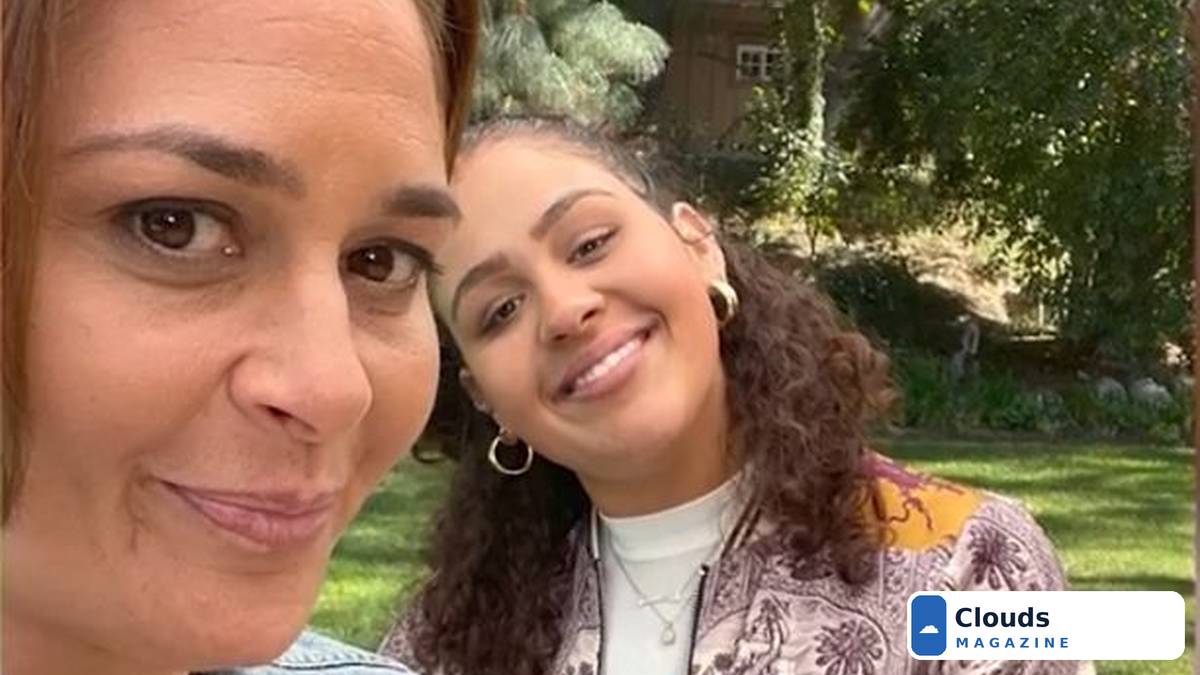
Her relationship with her mother is the continuing one. Antonia has described how Xea holds onto meaningful items connected with her father — furniture and artwork from his home among them — keeping the physical surroundings of her childhood intact around her.
Objects like those do quiet work in a family’s memory. A chair or a painting is not an archive; it is a daily presence, and keeping them is one concrete way a daughter keeps a father in the house he never saw her grow up in.
Xea Myers’ Education and Academic Background
Education is where the online record of her life gets thin, and this profile treats it the way the evidence allows. Entertainment publications have placed her at Marymount High School in Los Angeles for her secondary years, and afterwards at Emerson College in Boston.
Neither detail is confirmed by an institutional source, a graduation record, or an interview with her or her mother. The schools are plausible, and Emerson’s strength in communication, media and film would fit a production career, but plausible is not the same as verified.
What can be said without invention is narrower: her working life is in media production, and production is a trade learned largely on sets and in edit bays. Whatever her formal education was, the credits discussed below are the part of her training the public can actually see.
Xea Myers’ Career in the Entertainment Industry
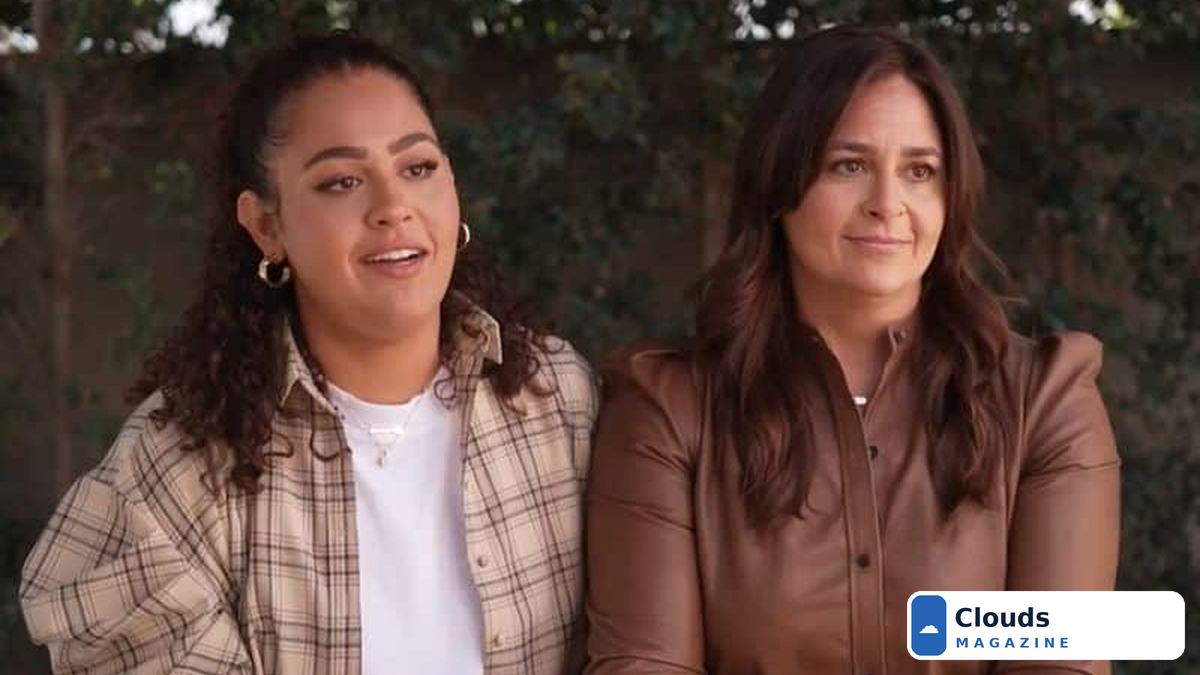
As an adult, Xea Myers has worked in television and documentary production, the behind-the-scenes end of both her parents’ industries. Production suits the shape of her public life: substantial work, minimal personal exposure.
Her name is attached in public listings to documentary and entertainment projects on both sides of the family business, music stories on one side and food television on the other. The listings are not always consistent about the exact role she held on each title.
That inconsistency is normal in production credits, where the same person may research one project, coordinate another, and appear in a third. The sections below take her listed projects one at a time and say only what the listings support.
Be Inspired: The Life of Heavy D
The project most closely tied to her name is the documentary Be Inspired: The Life of Heavy D, which traces her father’s life and career. Public listings associate her with it from the period soon after his death.
A documentary of that kind does specific work: it gathers interviews, performances, photographs and recollections into one account while the witnesses are still here to give them. For an artist who died at forty-four, that gathering is urgent rather than optional.
For Xea, the association is personal as well as professional. Working on the record of her father’s life placed her inside the machinery that decides how he is remembered, which is a more durable role in his legacy than any tribute appearance.
Unsung
Unsung is the long-running TV One documentary series that profiles musicians whose contributions deserve wider recognition. Her name appears in public listings in connection with the series in the years after her father’s death.
The series is built on exactly the material her own family story contains: careers that shaped a genre, setbacks the hits concealed, and the people who carried the work. Its episodes function as small acts of music history.
Her connection to it, whatever the precise credit, sits naturally beside the Heavy D documentary. Both projects treat hip-hop’s past as something to be documented carefully rather than left to memory and myth.
Guy’s Grocery Games
Guy’s Grocery Games is the Food Network competition hosted by Guy Fieri, in which chefs race around a supermarket set cooking against the clock and the contents of their carts. It premiered in 2013 and became one of the network’s fixtures.
Her name appears in connection with the programme, which is also her mother’s territory: Antonia Lofaso is one of its judges and one of its most successful contestants. The listing is a neat emblem of the two-industry childhood, her surname surfacing on her mother’s stage.
The listing alone does not establish whether her involvement was in front of the camera or behind it. Food television runs on large production crews, and a surname in the credits of a family member’s show is a beginning in the business, not a mystery.
Battle of the Decades
Battle of the Decades, a Food Network competition series from 2023, set chefs cooking dishes inspired by different decades. Her name is listed among the projects associated with her in public credits. Each episode set its chefs a decade to cook from, which made the series as much about food history as competition.
The format belongs to the same culinary-television world as her mother’s career, and her association with it extends the pattern of her credits: entertainment production with a food accent, built inside an industry she had watched from childhood.
A single credit of this kind proves little on its own. Read with the rest of her listings, it shows a working producer accumulating the varied, unglamorous credits that television careers are actually made of.
The Madman
The Madman is also listed among the projects associated with her name in public credits. Publicly available detail about the project and her specific responsibilities on it is limited, and this profile invents none.
Credits like this are the connective tissue of a production career. Most working producers have titles on their record that audiences never heard of, where the work was real even if the programme’s footprint was small.
Taken together, her listed projects describe a consistent direction rather than a scattered one: documentary and competition television, music history and food, the two subjects her family handed her before she chose anything for herself.
What Does a Television Producer Actually Do?
Producing is the least visible senior job in television, and understanding it makes her career easier to read. A producer’s work begins long before filming and continues long after the cameras stop, and the responsibilities typically break down into six areas:
- Project development: identifying ideas that can become documentaries, series or entertainment programmes, and judging their subject, audience and feasibility
- Research: investigating historical events, finding and preparing interviewees, and reviewing archival material for accuracy
- Team coordination: organising the writers, directors, camera operators, editors and presenters whose work has to interlock
- Production planning: controlling budgets, schedules, filming locations, equipment and staffing across a shoot
- Post-production: shaping the edit, structure and sound of the finished programme after filming ends
- Distribution and audience strategy: working with networks and partners on how a finished programme reaches its viewers
Careers built this way are measured in credits rather than headlines, which is why producers like Kate Connelly could work at the top of television for years while remaining names the audience never learned. Production rewards reliability and judgement over visibility.
For someone with her background, the trade has one more advantage: it converts access into work. Knowing how a music documentary should feel, or how a cooking competition actually runs, is knowledge she absorbed at home before she ever held a job in either industry. Few producers her age grew up inside both worlds at once.
Xea Myers and Her Father’s Legacy
Heavy D’s legacy has two halves. The public half is a catalogue that helped prove rap could be melodic, danceable and broadly popular without sanding off its identity, plus an executive career that opened doors for artists after him.
The private half belongs to his family. For his daughter, the legacy is not a genre’s history but a father’s memory, and the two halves meet in the projects that document his life, where she has stood on the production side of the camera.
That position is worth naming. The person who helps decide how an artist is documented shapes the legacy itself, and she reached that position while still young enough that the grief and the career were the same age.
Preserving Personal Memories
The family’s remembrance runs through objects as much as ceremonies. Antonia has described Xea keeping her father’s furniture and artwork around her, the ordinary furniture of a childhood home carried into an adult one.
Families preserve the dead this way everywhere: clothing, photographs, letters, recordings, rooms left partly as they were. The objects hold experiences rather than information, which is why they outlast the paperwork of an estate.
Her father’s belongings had a second, legal existence too, covered in the net worth section below. The family’s 2013 statement confirmed his personal possessions held in storage would come to her, the formal version of the same keeping.
Keeping Musical History Relevant
His music keeps finding new listeners. Streaming, sampling, documentary profiles and hip-hop’s own habit of honouring its founders all carry the catalogue to audiences who were not born when it charted. A memorial service in Mount Vernon in November 2026, fifteen years on, showed the remembrance is organised rather than fading.
Documentation accelerates that. Every serious film or series about his era gives younger listeners a map of why the music mattered, and gives the songs a context that raw audio cannot supply on its own.
Her production work sits inside that process. Whether the subject is her father directly or the wider generation he belonged to, the work of keeping musical history accurate and watchable is, in her case, also family work.
Xea Myers’ Personal Life and Interests
Her personal life is the least documented part of her story, by her own evident choice. She is not alone in that choice: Heini Wathén likewise kept her own life out of the frame beside one of the most recognisable men in his field.
What is publicly visible is modest: a reported social media presence, occasional photographs alongside her mother, and the fitness routine the two of them have been photographed sharing. The rest she keeps, and this profile leaves it with her.
Is Xea Myers Married?
No reliable source establishes that she is married, and no spouse has ever been identified in coverage of standing. Her relationship status is private, and online biographies that assign her one are guessing.
The honest answer is also the complete one: nothing in the documented record, from the funeral coverage of her childhood to the production listings of her adulthood, says anything about a partner. Absence of evidence here is simply privacy working as intended.
The silence is notable because her family has been covered for decades. Outlets that reported her father’s funeral, her mother’s restaurants and her uncle’s court filings have never produced a wedding, an engagement or a named partner for her, at any point in her adult life.
Does Xea Myers Have Children?
No reliable public information establishes that she has children. No announcement, interview or credible report has ever said so, and claims to the contrary on biography sites come with no source attached.
Unless she chooses to say otherwise, the subject is closed. A private person’s family plans are not a gap in the record that repetition gets to fill.
Does Xea Myers Have Siblings?
She is an only child. Her father’s encyclopedia record lists one child, and her mother has no other children in any reliable account, which made Xea the sole focus of both parents’ family lives.
That only-child position shaped the practical story too. When her father’s estate was administered, there was exactly one heir at the centre of it, and the family’s arrangements, from the support fund onward, were built around her alone.
Her wider family is documented even if her household is not: grandparents Clifford and Eulahlee Myers, an uncle, Floyd Myers, who managed her father and later his estate, and an aunt, Portia. The family’s 2013 statement was issued in all their names, acting together for her benefit.
Is Xea Myers Active on Social Media?
Published biographies associate her with the Instagram handle @xeamyers, and photographs of her as an adult have circulated from family social media. Her own public activity, though, is limited and mostly tied to family and work.
That restraint is consistent with everything else in her record. Social media is where most people of her generation and background build a public self; she has conspicuously declined to build one, which is itself a biographical fact.
The contrast with her mother is instructive. Lofaso’s accounts are working tools of a restaurant career, full of dishes, programmes and opening nights. Her daughter, raised by one of television’s most visible chefs, has kept her own feed, whatever it contains, out of the biography business entirely.
Xea Myers’ Net Worth: How Much Is She Worth?
Xea Myers’ net worth is not publicly established. No verified financial disclosure, court valuation of her personal assets, or statement from her supports any figure, and this profile prints none.
The figures on biography websites, which put her anywhere from roughly $300,000 to roughly $2 million depending on the site, are unattributed estimates that contradict each other. A spread that wide is not a range; it is evidence that nobody publishing the numbers knows them.
What is documented is her father’s estate, a different thing from her wealth. The section below separates the two, because nearly every misleading number attached to her name comes from confusing them.
Understanding the Difference Between Personal Wealth and Inheritance
When Heavy D died in 2011, his brother Floyd Myers filed in Los Angeles County court in 2013 behind an old will, written in 1999 before Xea was born, which left everything to Floyd; the filing put the estate’s assets at about $320,000, with future royalties still to come.
The family closed ranks in public. His mother, Eulahlee Myers, stated that Xea would receive all of his Social Security, pension and future royalties, along with his personal possessions in storage, and that the family had chosen Floyd to manage the estate, with court approval, until she was old enough.
So the documented position is administrative, not numerical: an estate of modest stated cash value plus a living royalty stream, managed by her uncle for her benefit. Turning that into a personal net-worth figure for her would require records that have never been public, and this profile does not perform the conversion.
Interesting Facts About Xea Myers
The documented points of her story, gathered in one place:
- She is Heavy D’s only child, born in 2000 to the rapper and chef Antonia Lofaso, his partner from 1998 until his death
- She spoke at her father’s funeral at Grace Baptist Church in Mount Vernon on November 18, 2011, aged eleven, in a service the Associated Press reported worldwide
- A presidential letter was read to her at that service, when the Reverend Al Sharpton read out the Obamas’ message of condolence to her family
- Her mother is a Top Chef finalist who placed fourth in 2008 and third on All-Stars, and now owns Black Market Liquor Bar, Scopa Italian Roots and DAMA in Los Angeles
- She was her father’s heir, confirmed by the family’s 2013 statement covering his royalties, pension and personal possessions
- She works behind the camera as a television and documentary producer, with listed associations on both music and food programmes
- She keeps his belongings, including furniture and artwork, as her mother has described in interviews
- She has stayed private, building no public celebrity profile despite two famous parents and a searchable name
Why Is Xea Myers Famous?
She is famous by inheritance of attention rather than by pursuit of it. Her father was one of hip-hop’s defining mainstream stars, her mother is one of food television’s most recognisable chefs, and searches for either of them lead to her.
The searches themselves follow a pattern, and the reasons readers give for looking her up are consistent:
- They want to know more about Heavy D’s daughter.
- They are interested in Heavy D’s family and personal life.
- They follow Antonia Lofaso and want to learn about her daughter.
- They want information about Xea’s professional career.
- They are curious about what happened to Heavy D’s family after his death.
- They want to understand how Xea maintains her father’s memory.
Her own work adds a second, smaller reason. Production credits accumulate, anniversaries of her father’s death bring documentary coverage, and each cycle sends a new set of readers to the same short, careful set of facts.
What Makes Xea Myers’ Story Different?
Most biographies of famous people’s children are built from exposure: relationships, spending, appearances, feuds. Hers is built from restraint, and the record is interesting precisely because of what it refuses to contain.
The two industries she connects could hardly be less alike in public image, yet her career quietly joins them. Music gave her a legacy to document; food television gave her a trade to practise; production is where the two meet.
There is also the matter of how young the defining events came: eleven at the funeral, thirteen when the estate reached court. She built an ordinary working adulthood out of that extraordinary start. Profiles of guarded lives, among them Emma Sugiyama, turn on the same refusal to perform a private life in public.
The Importance of Privacy in Xea Myers’ Public Story
Privacy is not a missing chapter in her biography; it is one of its main facts. She received national attention at eleven, at a funeral, before she had chosen anything public for herself, and her adult life reads as a long, deliberate correction to that start.
The practical stakes are real. Unverified claims about a private person’s relationships, education and money replicate across biography sites until repetition masquerades as sourcing, and her record contains live examples of the process, from invented birthdays to invented fortunes.
Readers are better served by the distinction this profile has kept throughout: what contemporary reporting documented, what later sources reported, and what nobody actually knows. Her connection to two famous careers is documented; her work is documented; the rest is hers.
Xea Myers’ Future and Professional Possibilities
Her future will be measured in credits, not headlines, and that is the honest frame for it. Production offers her several durable paths: documentary filmmaking, television development, creative direction and the research-heavy work of music history.
The documentary direction fits her record best. Programmes about musicians and cultural figures keep being commissioned because they preserve stories that would otherwise scatter, and she has been associated with that work since her teens.
Nothing requires her to become a public figure to succeed at it. Her parents’ careers showed two ways of being famous; her own career so far demonstrates a third way of working in the same industries, which is to be the person who makes the programme rather than the person it is about.
Xea Myers at a Glance
The table below holds only the fixed points, the events and facts a checkable source confirms. Anything carried only by unsourced websites has been left out on purpose, including every version of her exact birthday.
| Detail | Information |
|---|---|
| Full name | Xea Myers |
| Birth year | 2000 (corroborated by contemporary reporting of her age) |
| Father | Heavy D (Dwight Arrington Myers), May 24, 1967 – November 8, 2011 |
| Mother | Antonia Lofaso, born November 23, 1976 |
| Parents’ relationship | Partners, 1998–2011; never married |
| Public moment | Spoke at her father’s funeral, November 18, 2011, aged 11 |
| Estate | Confirmed beneficiary of her father’s estate, family statement 2013 |
| Profession | Television and documentary producer |
| Exact birth date | Not confirmed by any source of standing |
| Net worth | Not publicly established |
Read the cautious rows as information rather than failure. A biography of firm lines, each of them true, serves a reader better than a longer one padded with details nobody ever verified.
The timeline those lines make is still a full story: a birth in 2000, a childhood between two industries, a father’s death in 2011, an estate settled around her by 2013, and a working life in television production. Nothing in it needs invention.
Frequently Asked Questions About Xea Myers
The questions below are the ones readers bring to her name most often. Each answer keeps to the documented record and says plainly where that record runs out.
The anniversaries drive the cycle of asking. November 2026 marked fifteen years since his death, and memorial coverage in Mount Vernon renewed the searches all over again, most of them landing on the same questions asked in 2011: where is his daughter now, and what does she do?
1. Who is Xea Myers?
Xea Myers is an American television and documentary producer, born in 2000. She is the only child of the late rapper Heavy D and chef Antonia Lofaso, and she spoke at her father’s funeral in 2011, aged eleven.
2. How old is Xea Myers?
She was born in 2000, which makes her twenty-five or twenty-six in late 2026. Her exact birthday has never been confirmed by a reliable source; online sites print three different dates, none of them sourced, so this profile gives her age as a range.
3. Who are Xea Myers’ parents?
Her father was Dwight Arrington Myers, known as Heavy D, the Jamaican-born rapper who led Heavy D & the Boyz, and died on November 8, 2011. Her mother is Antonia Lofaso, the Los Angeles chef and Top Chef personality who owns Black Market Liquor Bar, Scopa Italian Roots and DAMA.
4. What does Xea Myers do for a living?
She works in television and documentary production. Public listings associate her name with the Heavy D documentary Be Inspired, with TV One’s Unsung, and with Food Network programmes including Guy’s Grocery Games and Battle of the Decades, plus a further credit listed as The Madman.
5. What is Xea Myers’ net worth?
It is not publicly known. No verified financial record supports any figure, and the estimates on biography websites contradict each other. Her father’s estate, administered by her uncle for her benefit after 2011, is a separate matter from her personal wealth.
Conclusion
Xea Myers’ story is the story of a handover. A father who defined a sound died when she was eleven; a mother at the top of a second industry raised her; and the daughter grew into the person who works, professionally, on how stories like her father’s get told.
The documented record is short and solid: born in 2000, a funeral speech reported around the world, an estate arranged around her future, and a production career built quietly in two industries she knew before she could work in either.
Readers who want the public half of the story can follow it through the reference biography of Heavy D, where the career that made her name searchable is set out in full. Her own record, told at its true length, stands complete as it is.
