
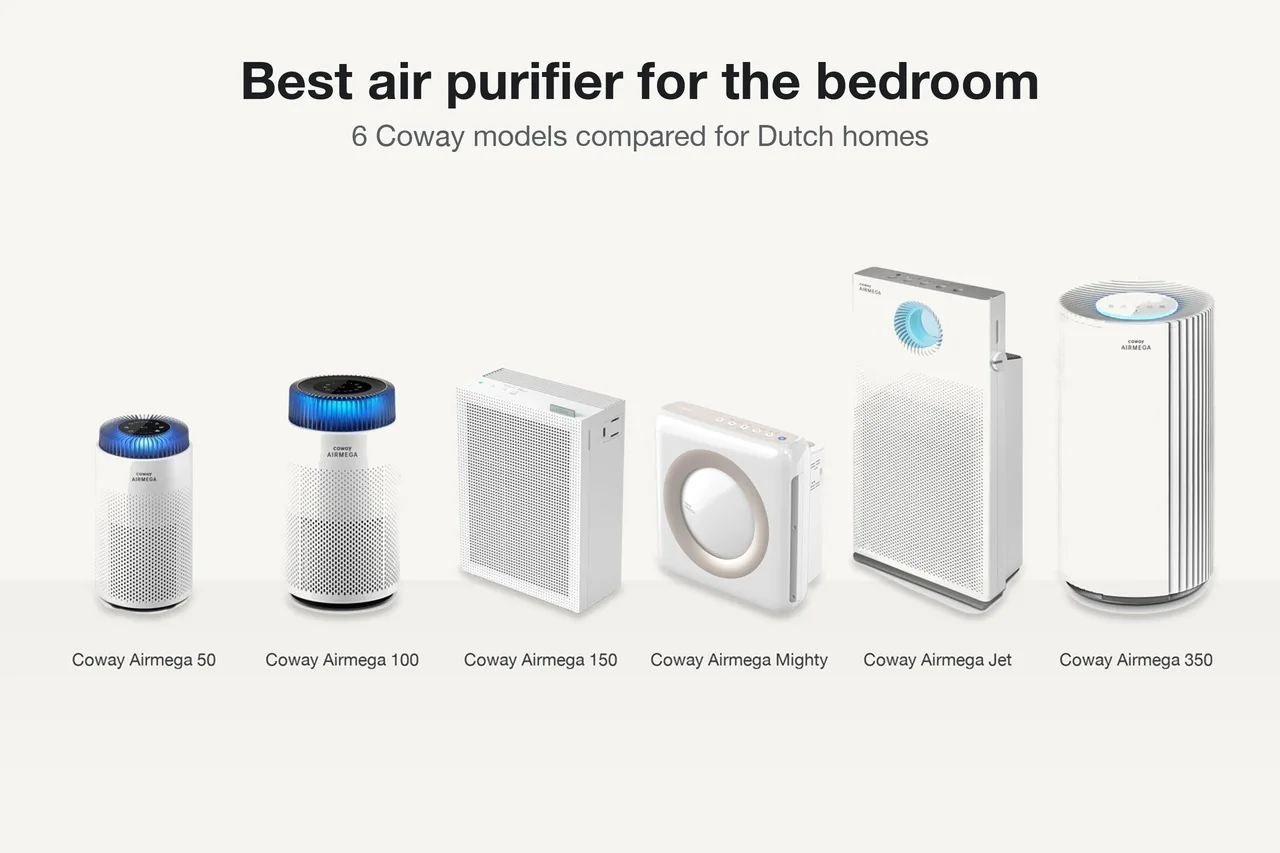
The best air purifier for dust pairs a fine-dust filter with a pre-filter you can keep clean and a sensor that reacts when dust rises. With windows shut and the heating on from October to March, dust has fewer ways out of UK homes. Below are six models sold in the UK in 2026, matched to the rooms and routines they suit, in alphabetical order.
At a glance
- For app users who want a washable pre-filter: Blueair Blue Max 3350i
- For everyday use in a small room: Coway Airmega 100
- For bedrooms and narrow spaces: Coway Airmega 150
- For living rooms and shared spaces: Coway Airmega Mighty
- For smart-home users: Dyson HushJet Purifier Compact HJ10
- For small rooms with app control: Levoit Core 300S
How we chose
Each model is sold on its maker’s UK website and has a fine-dust filter plus a pre-filter or particle sensor. Facts come from the makers’ UK product pages and user manuals. Room-size and noise figures are left out, as makers measure them in different ways.
The 6 models
Blueair Blue Max 3350i: for app users who want a washable pre-filter
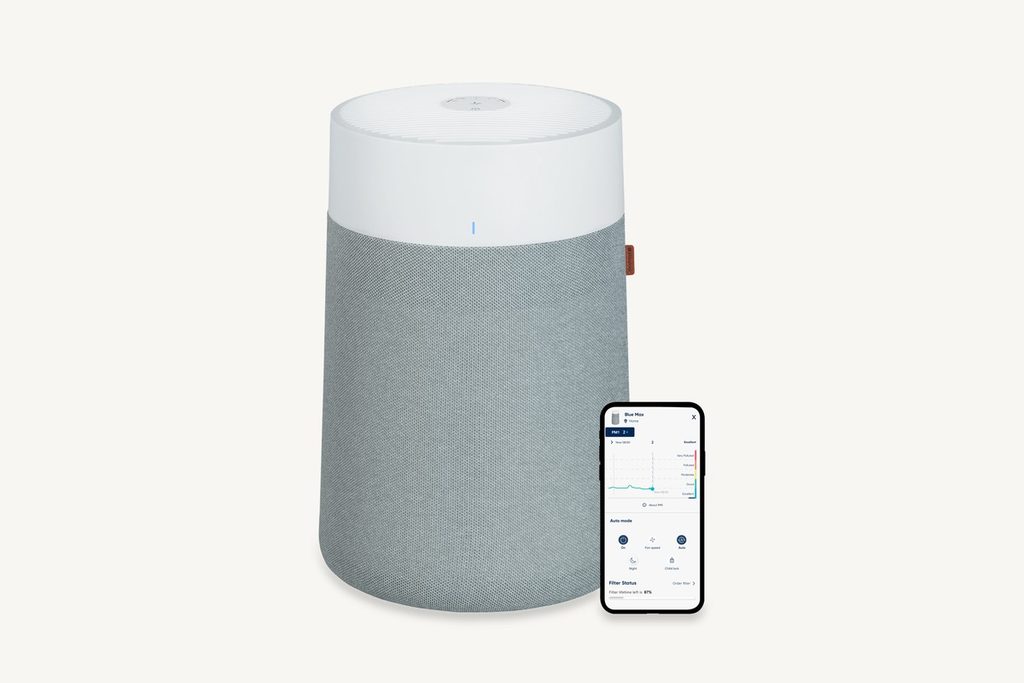
The Blueair Blue Max 3350i combines HEPASilent filtration with a washable pre-filter. Image: Blueair.
Key specs: HEPASilent filtration, washable pre-filter, auto mode, night speed, 32 W, 3.5 kg.
- Pro: the pre-filter can be washed.
- Pro: filter alerts appear in the Blueair app.
- Con: particle and carbon layers are replaced as one filter.
Blueair describes HEPASilent as a mix of electrostatic and mechanical filtration. Integrated sensors adjust the fan in auto mode.
Coway Airmega 100: for everyday use in a small room
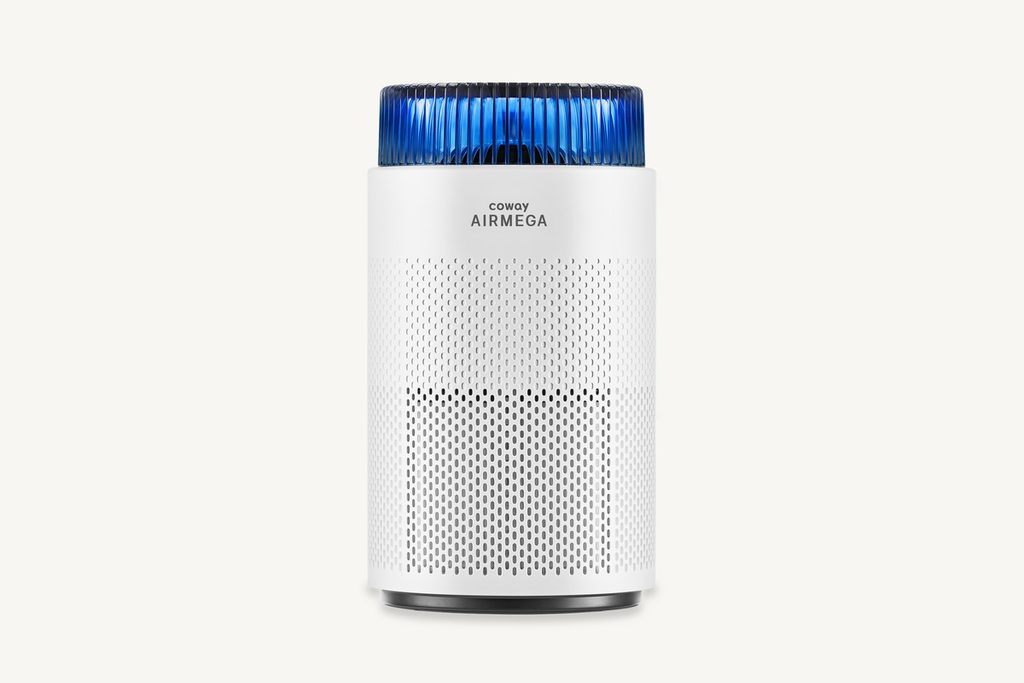
The Coway Airmega 100 uses one 3-in-1 filter with a HEPA layer. Image: Coway.
Key specs: 3-in-1 filter with a HEPA layer, PM2.5 sensor, auto and sleep modes, 25 W, 3.0 kg.
- Pro: the lowest rated power of the models here that state one.
- Pro: one filter to replace.
- Con: the pre-filter surface is cleaned dry, not washed.
A soft night light can replace the air quality light, which helps in a bedroom.
Coway Airmega 150: for bedrooms and narrow spaces
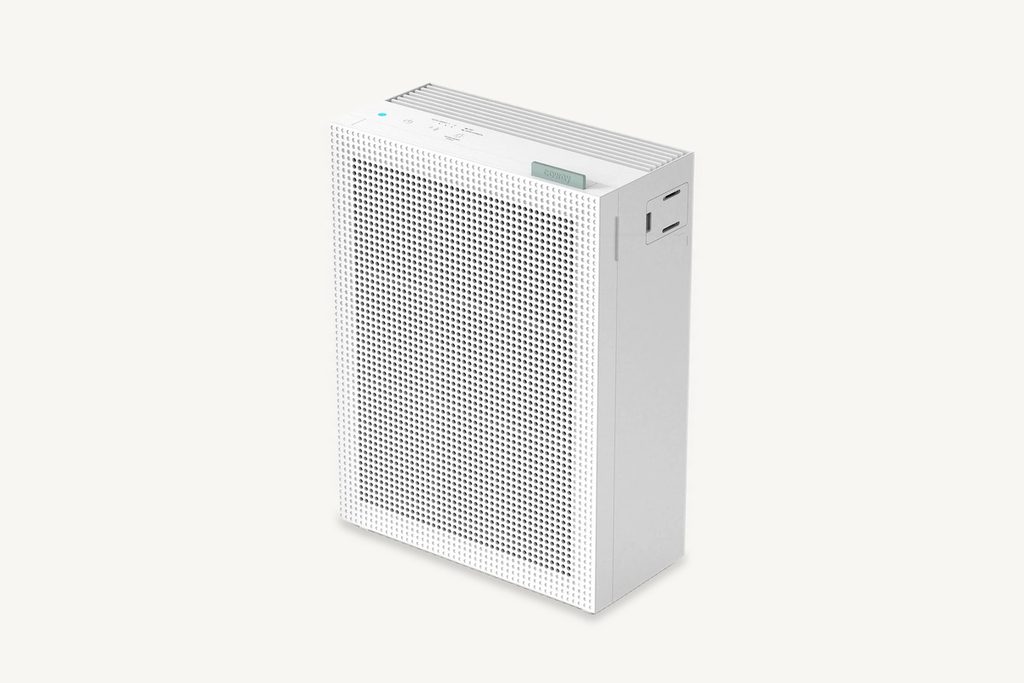
The Coway Airmega 150 is 165 mm deep, with a pre-filter you can wash. Image: Coway.
Key specs: washable pre-filter, activated carbon filter, HEPA filter, silent mode, 35 W, 5.5 kg.
- Pro: the pre-filter pulls out by a handle and can be washed.
- Pro: 165 mm deep, so it fits beside a bed.
- Con: it needs 20 cm of space on each side.
The manual recommends silent mode while you sleep, and the air quality light can be switched off.
Coway Airmega Mighty: for living rooms and shared spaces
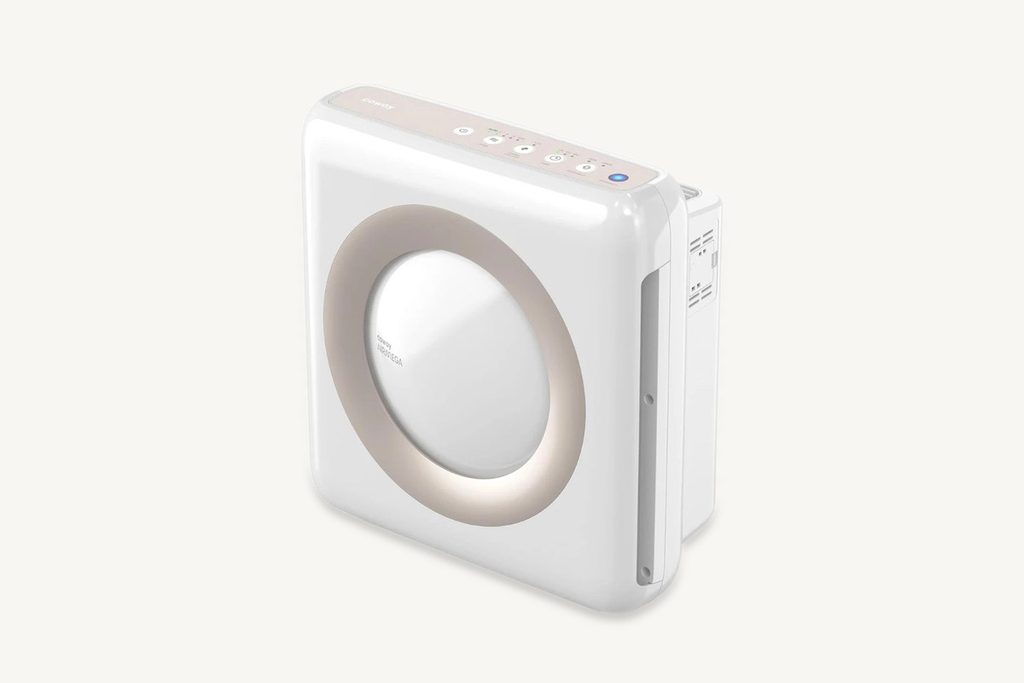
The Coway Airmega Mighty has a carry handle and an eco mode that stops the fan when the air is clean. Image: Coway.
Key specs: washable pre-filter, deodorisation filter, HEPA filter, auto and eco modes, timer, 5.9 kg.
- Pro: its manual lists a maximum airflow of 7.2 m³/min.
- Pro: eco mode stops the fan when the air is clean.
- Con: the manual lists no sleep mode and no app.
It has a carry handle, and the full range of Coway air purifiers is on the brand’s UK site.
Dyson HushJet Purifier Compact HJ10: for smart-home users
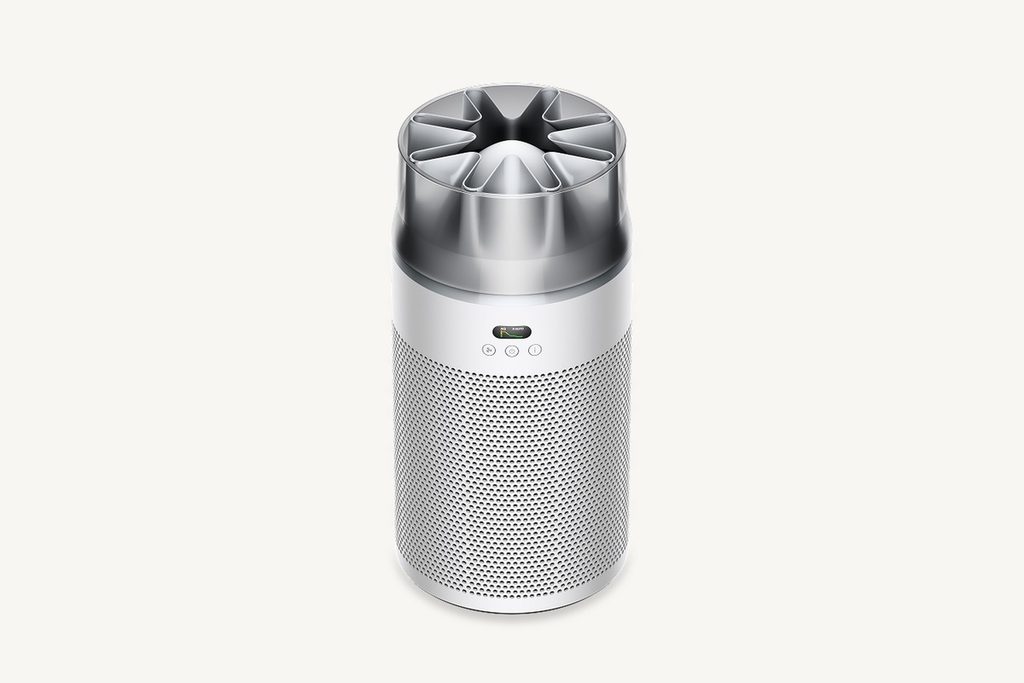
The Dyson HushJet Purifier Compact HJ10 shows PM2.5 readings on its screen and in the MyDyson app. Image: Dyson.
Key specs: electrostatic filter, activated carbon filter, laser PM2.5 sensor, auto and sleep modes, 3.15 kg.
- Pro: PM2.5 readings show on the screen and in the MyDyson app.
- Pro: filter life is tracked in the app.
- Con: Dyson does not state a separate pre-filter or a power rating.
Levoit Core 300S: for small rooms with app control
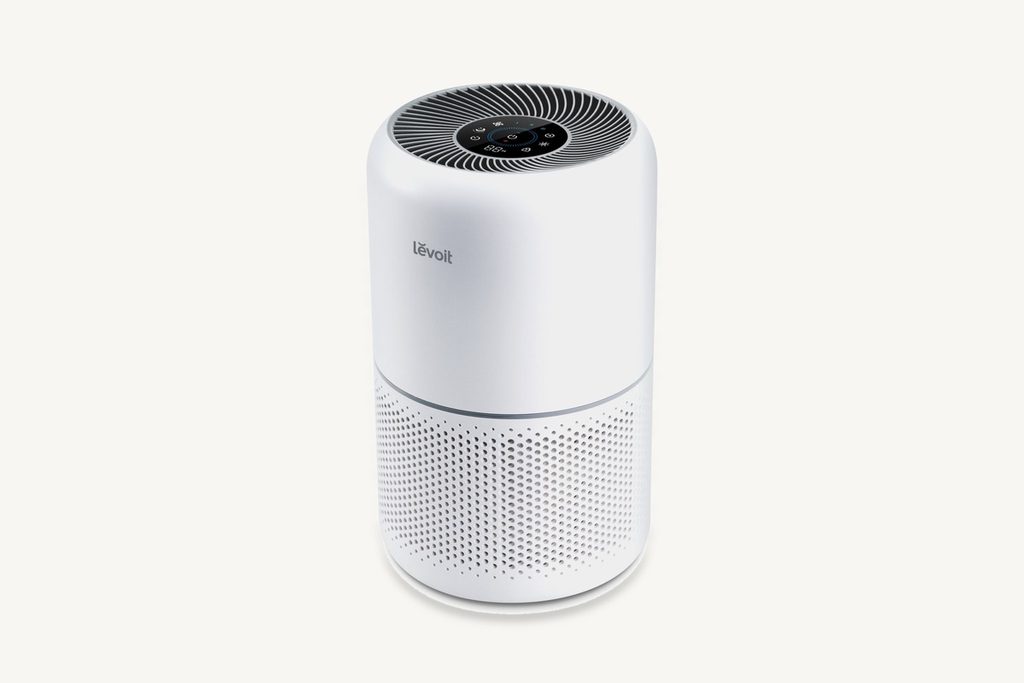
The Levoit Core 300S weighs 2.7 kg, the lightest of the six models here. Image: Levoit.
Key specs: pre-filter, HEPA filter, activated carbon filter, laser dust sensor, auto and sleep modes, 39 W, 2.7 kg.
- Pro: the lightest model here.
- Pro: filter alerts appear in the VeSync app.
- Con: the pre-filter is brushed or vacuumed, not washed.
What should you check before you buy?
Household dust can include fabric fibres, hair, soil from shoes and particles from cooking. A good air purifier for dust handles the coarse and fine parts in separate layers.
- A pre-filter you can clean, so fluff and hair do not clog the finer filter.
- A fine-dust filter, such as a HEPA filter, for particles that stay in the air.
- A sensor and auto mode, so the fan speeds up while you vacuum or make the bed.
- A night setting if the unit will run in a bedroom.
A purifier only treats the air that passes through it, so settled dust still needs a vacuum and a damp cloth. Place the unit where you spend time, with space around it.
FAQs
Do air purifiers work with dust?
They capture dust while it is in the air, so less of it settles later. A fine-dust filter does most of the work and a pre-filter catches fluff and hair. Dust already on carpets, sofas and shelves stays there until you vacuum or wipe it.
How often should you replace the filter?
Follow the filter indicator and the maker’s manual. Coway’s manuals, for example, say the replacement interval depends on how you use the unit and on your home. A pre-filter that you keep clean helps the finer filter stay clear for longer.
Where should you put an air purifier for dust?
Put it in the room where you spend the most time, on the floor, with space around it. Keep curtains, furniture and laundry away from the vents. Check the manual for clearance: Coway, for example, asks for at least 20 cm from walls on each side.
Will an air purifier help with dust allergies?
A purifier with a HEPA filter can help reduce airborne dust, which supports cleaner indoor air. It does not treat or prevent allergy symptoms, so speak to your GP about them. An air purifier supplements ventilation and source control. It does not replace them and is not a medical treatment.
The short version
Choose a model with a fine-dust filter, a pre-filter you can keep clean and a sensor-led auto mode. A slim unit suits a bedroom, a higher-airflow unit suits a living room, and regular vacuuming still matters.
