
Introduction
How Mogothrow77 Software Is Built is a question that interests readers who want to understand the technology, design, and development methods behind this software. When people discover an unfamiliar software name online, they often want to know how it works, which programming languages it uses, how its data is managed, and whether it is safe to use. These questions are important because understanding the development process can help users make better decisions about technology.
Building software usually involves several stages, including planning, designing the system, writing code, testing features, protecting data, and releasing updates. Each stage helps make an application more useful, reliable, and easier to maintain. However, publicly available descriptions of Mogothrow77 do not consistently confirm its exact programming languages, internal architecture, or development tools.
This guide explains how software like Mogothrow77 could be developed using common software engineering practices. It also separates general technical knowledge from details that still require verification. By the end, readers will have a clearer understanding of the development process and how to evaluate claims about this software.
What Is Mogothrow77 Software?
Mogothrow77 is a name that appears in online technology discussions and articles about software development. However, the available descriptions do not establish a consistent, independently verified picture of its purpose, ownership, or internal design. This makes it important to approach technical claims carefully instead of assuming that every published description is correct.
To understand a software product, readers should first identify what it does and who it is designed to help. Some applications manage information, while others provide online services, automate tasks, or support communication between different systems. Without reliable documentation about Mogothrow77, its exact function should not be presented as a confirmed fact.
The same caution applies to claims about its features, performance, and technical structure. An article may describe a particular database or programming language, but that description does not prove that the software actually uses it.
Understanding the software’s identity is the first step toward understanding how it might be built. Official documentation, developer information, public release notes, and trustworthy technical records can help establish the facts. Until such evidence is available, the most useful approach is to explain the standard development methods that could apply to a software project of this kind.
How Mogothrow77 Software Is Built: An Overview of the Development Process?
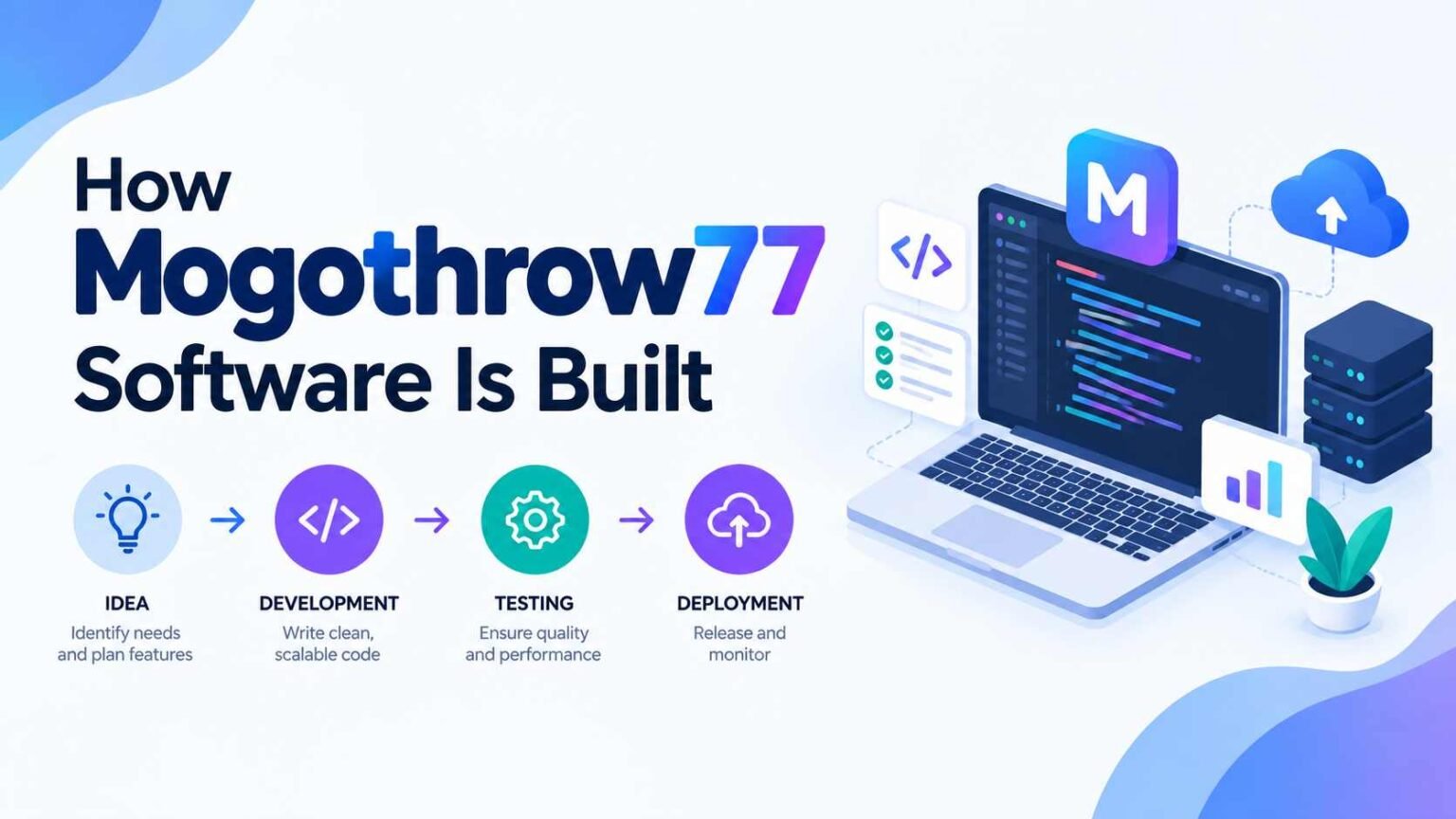
Software development follows a series of connected stages. Although the exact workflow behind Mogothrow77 has not been independently confirmed, the following process explains how a typical software application is planned, created, tested, and maintained.
Identifying the Main Problem and User Requirements
Every successful software project begins with a clear purpose. Developers need to understand the problem the application should solve and the people who will use it. They gather requirements, identify important features, and determine what users expect from the finished product.Clear requirements help prevent confusion during development. They also give the team a practical way to measure progress.
Planning Features and Creating a Minimum Viable Product
Rather than building every possible feature at once, developers often start with a minimum viable product, or MVP. This is a basic version containing the most important functions. It allows the team to test its ideas and collect feedback before investing time in additional features.
Designing the Software Before Coding
During the design stage, developers decide how the application’s parts will work together. They plan the user interface, data storage, security controls, and communication between services. Good planning can reduce expensive changes later.
Building, Testing, and Improving the Application
Developers turn the design into working code. They test individual features, correct errors, and improve the application based on results. Repeating this process helps identify problems early.
Releasing and Maintaining the Software
After testing, the application can be released to its intended users. Development continues through bug fixes, security updates, compatibility improvements, and new features. Software maintenance is essential because user needs and technology change over time.
The Core Architecture Behind Mogothrow77 Software
Software architecture describes how an application is organized and how its components communicate. A typical application may contain a frontend, backend, database, and supporting services. These are common architectural elements, not verified details of Mogothrow77.
Frontend Architecture and User Interface
The frontend is the part users see and interact with. It may include pages, forms, navigation menus, buttons, and dashboards. A well-designed frontend should be easy to understand and work properly across supported devices.Developers also consider accessibility, loading speed, and clear error messages. These details help users complete tasks without unnecessary confusion.
Backend Logic and Application Services
The backend handles tasks that happen behind the scenes. It may process requests, apply business rules, check permissions, and retrieve information from a database. Keeping this logic organized makes an application easier to update and maintain.
APIs and Communication Between Components
An application programming interface, or API, allows different software components to exchange information. For example, a frontend may send a request to retrieve a user’s saved information. The backend processes the request and returns an appropriate response.
Database Design and Data Management
Databases store information in an organized way. Depending on the application’s needs, developers may choose a relational database or a document-based database. The right choice depends on data structure, consistency, performance, and future requirements.
Monolithic Architecture vs. Microservices
A monolithic application keeps most core functions within one application structure. Microservices divide a system into smaller services that can be developed and deployed separately. A monolith may be simpler for a small project, while microservices can help larger systems scale independently. Neither approach should be attributed to Mogothrow77 without supporting evidence.
Which Programming Languages and Technologies Might Be Used?
The technology stack is the collection of programming languages, frameworks, databases, and tools used to build and operate an application. The best stack depends on the software’s purpose, team skills, performance needs, and operating environment.
Choosing a Programming Language
Developers select programming languages based on the tasks they need to complete. JavaScript and TypeScript are widely used for web applications. Python is useful for many backend and data-related tasks, while Java, C#, and Go are common choices for different types of applications and services.These are examples of possible technologies, not confirmed languages used by Mogothrow77. Naming a language without reliable evidence could mislead readers.
Frontend Frameworks and Backend Technologies
Frontend frameworks can help developers build reusable interface components. Backend frameworks provide tools for handling requests, managing application logic, and connecting to databases. Choosing familiar, well-supported tools can make development more efficient.
Databases and Data Processing
A project may use PostgreSQL or MySQL for structured relational data, or a document database for information that needs a more flexible structure. Caching tools can also improve response times when frequently requested information can be stored temporarily.
Cloud Hosting and Development Tools
Some applications run on cloud infrastructure, while others use dedicated servers or different hosting environments. Containers can make software easier to package and run consistently. Version control, automated testing, and monitoring tools can support development and maintenance.To identify Mogothrow77’s actual stack, readers need credible technical evidence rather than assumptions based on common industry practices.
How the Coding and Development Process Works?
Writing code is only one part of building dependable software. Developers also need a clear workflow that makes changes easy to review, test, and maintain. A well-organized process helps teams work together and reduces the risk of introducing new problems.
Writing Clean, Modular and Maintainable Code
Clean code uses clear names, sensible structure, and consistent formatting. Developers often divide a large application into smaller modules, with each module responsible for a particular task. This makes the code easier to understand and reduces unnecessary repetition.For example, a project might separate account management from reporting functions. A change to one area can then be made with less risk of affecting unrelated features.
Using Version Control to Track Changes
Version control systems, such as Git, record changes to source code. They allow developers to compare versions, create separate branches for new features, and restore earlier work when necessary.This is especially useful when several people contribute to the same project. It also creates a history that helps explain when and why a change was made.
Reviewing Code and Working as a Team
Code reviews allow other developers to examine changes before they become part of the main application. Reviewers can identify mistakes, security concerns, unclear logic, and opportunities to simplify the code.
Following Agile Development Practices
Agile development breaks work into smaller tasks and repeated cycles. Teams can release improvements gradually, gather feedback, and adjust their plans. However, the actual methodology used by the Mogothrow77 developers is not publicly established.
How Mogothrow77 Software Handles Data and Integrations?
Data management is an important part of software development. Applications often need to store information, exchange data with other services, and handle unexpected errors. The exact data systems used by Mogothrow77 have not been confirmed, but several established practices help developers manage these tasks.
Database Structure and Data Validation
A well-designed database keeps information organized and reduces unnecessary duplication. Developers define how records relate to one another and decide which fields are required. Data validation checks that submitted information follows the expected format before it is stored or processed.
Connecting Services Through APIs
APIs allow an application to communicate with external services. For example, an application might connect to a payment provider or retrieve information from another platform. Developers must check incoming requests and ensure that only authorized users or services can access protected information.
Managing Errors and Protecting Data
Clear error handling prevents small problems from causing larger failures. Regular backups can help recover important information after accidental deletion or system failure. Recovery procedures should also be tested to confirm that stored data can actually be restored when needed.
Security Measures in the Software Development Process
Security should be considered throughout software development rather than added only before release. Applications may process personal information, account details, or other sensitive data, so developers need to identify risks and apply suitable protections. However, there is no verified public evidence establishing the exact security controls used by Mogothrow77.
Authentication and User Permissions
Authentication confirms a user’s identity, while authorization determines which actions that user can perform. Strong passwords, multi-factor authentication, and carefully managed permissions can reduce the risk of unauthorized access.
Encryption and Secure Data Handling
Encryption helps protect information while it travels between systems and, where appropriate, while it is stored. Developers should also avoid exposing passwords, private keys, and other secrets in source code or public error messages.
Dependency Checks and Security Testing
Modern applications often rely on third-party libraries. Developers should update these dependencies, review known vulnerabilities, and remove components that are no longer needed. Security testing can identify weaknesses before attackers discover them.Good security practices reduce risk, but they do not guarantee that software is completely safe. Users should evaluate the source, reputation, permissions, and update history of any unfamiliar application.
Testing and Quality Assurance
Testing helps developers discover problems before software reaches its users. A feature may work correctly in one situation but fail when it receives unexpected input or interacts with another component. A structured testing process helps uncover these issues and improve reliability.
Unit and Integration Testing
Unit tests check individual functions or small pieces of code. Integration tests examine whether different components work together correctly. Both types can be automated, allowing developers to repeat tests whenever the code changes.
System and Performance Testing
System testing checks the application as a complete product. User acceptance testing helps determine whether it meets real user needs. Performance testing examines response times and behavior under different workloads.
Fixing Bugs Before Release
When a test identifies a problem, developers investigate its cause, correct the code, and run the relevant tests again. Regression testing checks that a new change has not broken a feature that previously worked.These methods describe common quality assurance practices. Without access to verified development records, it is not possible to confirm which tests are performed specifically on Mogothrow77.
Deployment, Updates and Continuous Integration
Deployment is the process of making software available in its intended environment. Before release, developers typically prepare the application, check its configuration, and confirm that the required components are available.
Understanding a CI/CD Pipeline
Continuous integration, or CI, involves regularly combining code changes and checking them through automated builds and tests. Continuous delivery or deployment, commonly called CD, helps prepare or release tested changes more efficiently.
Releasing and Monitoring Updates
A release may include new features, bug fixes, or security improvements. After deployment, developers monitor errors, performance, and system health. If an update causes serious problems, a rollback can return the application to an earlier working version.CI/CD is a widely used development approach, but its use by Mogothrow77 has not been independently verified. The same applies to any specific cloud platform or deployment tool attributed to it.
Performance, Scalability and Reliability
Software should respond quickly and remain dependable as demands change. Developers can improve performance by reducing unnecessary processing, optimizing database queries, and caching information that is requested frequently. Measuring performance before making changes helps identify the real cause of delays.Scalability refers to the ability of a system to handle increased workloads. Depending on the application, developers might add computing resources, improve database capacity, or distribute work across multiple servers. These changes should be based on measured needs rather than assumptions that a larger architecture is always better.
Reliability also depends on monitoring. Error logs, performance measurements, and alerts help teams notice problems before they affect many users. Regular maintenance, tested backups, and clear recovery procedures further reduce the impact of unexpected failures.For Mogothrow77, these are useful principles for evaluating software quality, not proof of its actual performance. Reliable conclusions require documented measurements, independent testing, or other trustworthy evidence.
How to Verify Mogothrow77’s Actual Technology Stack?
Readers can assess technical claims by looking for evidence that can be checked independently. Official developer documentation is a useful starting point because it may describe the software’s purpose, installation process, supported platforms, and technical requirements.
Public source-code repositories can provide further information when the project makes its code available. Files such as dependency manifests and build configurations may reveal programming languages, libraries, and development tools. Release notes can also show whether the project receives regular updates.However, a repository should be checked for authenticity and relevance. A similarly named project may be unrelated to the software being discussed. An open-source license, if one exists, should be reviewed to understand how the code may be used or modified.
Readers should also be cautious about articles that confidently list specific technologies without linking to evidence. Repeated claims across several websites do not necessarily represent independent confirmation. If reliable documentation cannot be found, it is better to describe the technology stack as unknown than to present a guess as a fact.
Common Challenges in Building Software Like Mogothrow77
Developing software involves balancing functionality, security, cost, and ease of use. Adding too many features too early can make a project difficult to manage. Developers can avoid this problem by prioritizing essential functions and gathering feedback before expanding the application.
Bugs and security weaknesses are another challenge. Careful coding, automated tests, code reviews, and regular dependency updates help reduce risk, although no process can eliminate every possible issue.Technical debt can also develop when teams take shortcuts to meet deadlines. These shortcuts may save time initially but create extra work during later updates. Regular code maintenance helps prevent the problem from growing.
Compatibility is equally important. Software may need to work across different devices, operating systems, browsers, or connected services. Developers should define the supported environments and test important combinations before release.These challenges apply broadly to software projects. They should not be interpreted as confirmed problems experienced by Mogothrow77.
What Developers Can Learn From This Development Process?
The main lesson is that good software begins with a clear purpose. Developers should understand user needs before choosing technologies or writing code. Starting with a small, useful version makes it easier to test assumptions and improve the product gradually.Architecture should match the project’s real requirements. A simple application may not need a complex network of services, while a larger system may benefit from more independent components. Clean code, version control, code reviews, and automated testing help teams maintain quality as the project grows.Security also requires continuous attention. Protecting data, updating dependencies, checking permissions, and monitoring errors should remain part of the development process.
Finally, technical accuracy matters when explaining an unfamiliar product. Developers, publishers, and reviewers should distinguish verified facts from general examples. This makes technical information more useful and helps readers make informed decisions.
Frequently Asked Questions
1. How is Mogothrow77 Software Built?
The exact internal development process has not been independently confirmed. Generally, software is built by gathering requirements, designing an architecture, writing code, testing features, addressing security risks, and releasing updates. These stages provide a useful framework for understanding how a project like Mogothrow77 could be developed.
2. What Programming Language Does Mogothrow77 Use?
There is no reliably verified information establishing its programming language. Technologies such as JavaScript, Python, Java, and C# are used in many software projects, but none should be attributed to Mogothrow77 without supporting documentation.
3. Is Mogothrow77 Software Open Source?
Its open-source status has not been established by the information available here. To check, look for an authentic public source-code repository and a license file. A website publishing technical articles about software does not, by itself, prove that the software’s source code is publicly available.
4. How Can Users Assess Whether Mogothrow77 Is Safe?
Check the software’s official source, developer information, permissions, update history, and available security documentation. Avoid downloading unknown files from untrusted websites. If the software’s identity or publisher cannot be verified, exercise caution before installing it or providing personal information.
5. What Evidence Can Confirm Mogothrow77’s Architecture?
Official technical documentation, an authentic source repository, dependency files, and credible developer statements can help establish its architecture. Independent testing may provide additional evidence about performance and behavior. If these sources are unavailable, specific claims about its database, APIs, or deployment infrastructure should remain unconfirmed.
Conclusion
Understanding how Mogothrow77 software is built requires separating established software engineering practices from claims that lack reliable evidence. Most software projects involve planning, architecture, programming, data management, security, testing, deployment, and ongoing maintenance. Each stage contributes to the application’s usability, reliability, and long-term quality.Although these principles explain how a project like Mogothrow77 could be developed, its exact programming languages, architecture, and internal tools remain unverified. Readers should look for trustworthy documentation and technical evidence before accepting specific claims.
