
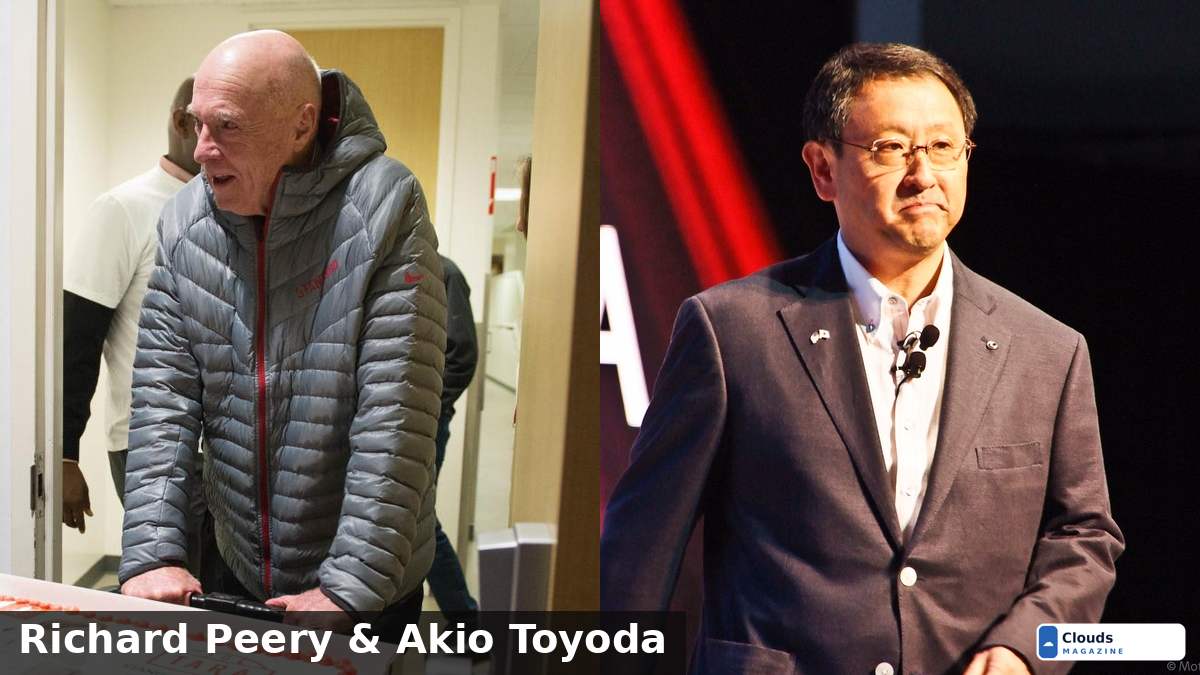
Richard Peery and Akio Toyoda built two of the most durable careers in modern business, one in California property and one in Japanese cars. Peery turned farmland into Silicon Valley office parks, while Toyoda led Toyota through its hardest decades.
Neither man chased headlines. Peery, now in his late eighties, has avoided publicity for half a century, while Toyoda, 70, spent years working ordinary jobs inside the company his family founded.
So what actually connects Richard Peery and Akio Toyoda, and what is each man worth? The honest answer starts with a comparison, much like the pairing of Jim Carrey and Johann Rupert, whose link also turns out to be looser than readers expect.
Quick Answer
Richard Peery is a Silicon Valley real-estate billionaire who co-founded Peery Arrillaga, and Akio Toyoda is Toyota’s chairman and former president. No partnership, deal or family tie between them is documented. Forbes put Peery at $3.6 billion in 2024; Toyoda’s wealth is undisclosed, with estimates near $1 billion.
Who Is Richard Peery?
Richard Peery is an American real-estate developer who spent five decades converting Santa Clara Valley farmland into office parks. His firm, Peery Arrillaga, helped house the technology industry as it grew.
He built that career almost entirely out of public view. Forbes has called men like Peery and his partner the Valley’s quiet landlords, owners of land that famous companies depend on daily.
Richard Peery’s Early Business Background
Peery is the son of H. Taylor Peery, a Stanford graduate who studied at Stanford’s business school and worked in banking and real estate. Richard took his bachelor’s degree at Brigham Young University.
He began a Stanford MBA but did not finish it. Instead, in his twenties, he took over managing his father’s property portfolio, learning the business by running real assets rather than studying them. Forbes recounts a detail that captures his instincts. As a middle-school boy, Peery owned every gumball machine on the Stanford campus, an early sign of his feel for location and steady income.
Richard Peery and the Rise of Silicon Valley
In the 1960s the Santa Clara Valley was still orchards and farmland. Peery saw what few others did: electronics firms would need land, and the orchards beside the new highways were cheap.
He and his partner bought farmland steadily, years before the technology boom made the region famous. When the boom arrived, their land sat exactly where the industry wanted to build.
Richard Peery’s Real Estate Investment Strategy
Peery’s strategy was patient land banking. Buy well-located farmland before its value is obvious, hold it through slow years, then develop offices when demand arrives and lease to strong tenants.
He favoured long-term regional growth over quick sales. Selling early would have produced one payment; holding produced decades of rent from the world’s most valuable technology companies.
Richard Peery and John Arrillaga
Peery’s defining relationship was with John Arrillaga, the former Stanford basketball player who became his business partner in the 1960s. Together they ran Peery Arrillaga for more than fifty years.
The two men divided the work and shared the patience the strategy demanded. Arrillaga died in January 2022 at 84, closing one of the longest partnerships in American real estate.
Richard Peery’s Role in Commercial Development
Bisnow credits Peery Arrillaga with building more than 12 million square feet of office space since the 1960s. In 2006 the partners sold nearly half the portfolio to Deutsche Bank for $1.1 billion.
About 3.3 million square feet of office space remains in Peery’s hands today. His tenants have included Google and Intuit, and Facebook leased a 750,000-square-foot campus from the firm in Fremont.
Richard Peery’s Philanthropic Influence
Peery channels much of his giving through the Peery Foundation, founded in 1978 to promote self-reliance through social entrepreneurship. His son Dave Peery now leads the foundation’s work.
Brigham Young University hosts the Peery Social Entrepreneurship Program, named for Richard and his wife Mimi. He and his sister also gave $3 million for a BYU finance institute honouring their father.
Who Is Akio Toyoda?
Akio Toyoda is the chairman of Toyota Motor Corporation and a member of its founding family. Born in Nagoya on 3 May 1956, he served as the company’s president from 2009 to 2023.
He is the grandson of Kiichiro Toyoda, who founded the carmaker, and the great-grandson of Sakichi Toyoda, the loom inventor whose company started the whole Toyota group.
Akio Toyoda’s Education and Early Career
Toyoda studied law at Keio University, graduating in 1979, then earned a business degree from Babson College in Massachusetts in 1982. He joined Toyota in 1984, at 27.
Rather than walking into a senior title, he worked through sales, production and overseas postings. That slow apprenticeship inside his own family’s company shaped the executive he later became.
Akio Toyoda and NUMMI
Part of Toyoda’s early training came in California, at NUMMI, the Fremont plant Toyota ran jointly with General Motors. The venture taught Japanese managers American factory-floor practice, and vice versa.
The experience stayed with him. NUMMI gave Toyoda a feel for frontline workers and American customers that few Tokyo executives of his generation ever acquired.
Akio Toyoda’s Rise Through Toyota
Toyoda joined Toyota’s board in 2000 and became an executive vice president in 2005. His postings covered China, the Americas and product planning, a deliberately broad preparation for the top job.
Colleagues noted his habit of driving the cars himself. Long before he ran the company, Toyoda was building a reputation as a product man rather than a pure administrator.
Akio Toyoda Becomes Toyota President
Toyoda became president on 23 June 2009, in the middle of the global financial crisis. Within months he faced Toyota’s recall crisis, which eventually covered about 8.5 million vehicles worldwide.
In February 2010 he testified before the United States Congress, saying he was deeply sorry. The apology, and the reforms that followed, defined the first years of his presidency.
Akio Toyoda’s Leadership Philosophy
Toyoda summed up his philosophy as making ever-better cars. The phrase pushed engineers to improve every model continuously instead of treating each launch as a finished answer.
He also argued for multiple technologies at once. Rather than betting the company on a single drivetrain, Toyota kept hybrids, plug-in hybrids, battery-electric cars and hydrogen in development together.
Akio Toyoda and Automotive Technology
Under Toyoda, Toyota’s hybrid lead widened while rivals rushed to go fully electric. When electric-car demand cooled in 2023 and 2024, that caution looked wise, and profits surged.
Toyota posted a record operating profit of about ¥4.9 trillion for the year to March 2024. Toyoda had unveiled sixteen battery-electric concepts in December 2021, so the company was hedging, not standing still.
Akio Toyoda and Motorsports
Toyoda races cars himself under the name Morizo. He has driven in the Nürburgring 24 Hours three times, in 2009, 2014 and 2019, and served as a development driver for the GR Yaris.
He crashed the first GR Yaris test car during winter testing in Hokkaido. Engineers rebuilt it tougher, and Toyoda often tells the story as proof that failure improves the product.
Akio Toyoda’s Transition to Chairman
On 1 April 2023 Toyoda stepped down as president and chief executive, becoming chairman while Koji Sato took the top job. The handover passed control to a younger leadership team.
A further change followed on 1 April 2026, when Kenta Kon became president and chief executive. Sato moved to vice chairman and chief industry officer, while Toyoda remains chairman of the board.
Are Richard Peery and Akio Toyoda Connected?
The short answer is no. No partnership, joint company, shared board, reported deal between Peery’s firm and Toyota, or family tie between Richard Peery and Akio Toyoda appears in any reliable record.
Profiles that pair the two men say the same thing in plain terms: there is no known business or personal relationship. Some documented pairs do share a paper trail — Lachlan Murdoch and David Cordani both signed the same Business Roundtable statement in 2019 — a small but real link that Peery and Toyoda simply do not have.
One geographic curiosity deserves a mention, clearly labelled as coincidence. Toyota built cars for decades in Fremont, California, and Tesla later leased Peery Arrillaga buildings in that same city; Toyota also invested in Tesla in 2010. None of that connects the two men personally.
Richard Peery and Akio Toyoda: A Direct Comparison
Set side by side, the two careers look like mirror opposites. One man owns land and stays invisible; the other runs a global brand and cannot avoid the spotlight.
| Category | Richard Peery | Akio Toyoda |
|---|---|---|
| Public visibility | Extremely private | Highly visible global brand |
| Career model | Land investor and developer | Salaried executive, then chairman |
| Major association | Peery Arrillaga, Silicon Valley | Toyota Motor Corporation |
| Nationality | American | Japanese |
| Primary field | Commercial real estate | Automotive and mobility |
| Philanthropic link | Peery Foundation | Toyota corporate programmes |
What Makes Their Careers Similar?
Strip away the industries and the similarities are real. Both men thought in decades, both were shaped by family institutions, and both kept working long after they could have stopped.
Each also resisted fashion. Peery held land through downturns that scared off rivals, while Toyoda held hybrids in the range while rivals announced all-electric deadlines.
How Their Industries Shape Their Leadership
Real estate rewards whoever controls scarce land and waits. Peery’s whole career is that principle applied patiently: location first, timing second, and no pressure to perform for quarterly audiences.
Automotive manufacturing is the opposite environment. Toyoda coordinated factories, suppliers and regulators across continents, where a single faulty part could trigger a recall on several continents at once.
The Importance of Timing
Peery bought farmland before Silicon Valley’s boom, when prices reflected orchards rather than technology campuses. The same acres, bought ten years later, would have cost many times more.
Toyoda’s timing showed in technology. Toyota committed to hybrids in the 1990s, long before fuel prices and emissions rules made them fashionable, and kept faith with them for decades.
Family Influence and Business Legacy
Both men started with a family platform. Peery inherited a property portfolio from his banker father, and Toyoda was born into the family that founded Toyota itself.
Neither story ends there. Peery multiplied a modest portfolio into billions, and Toyoda earned the presidency after twenty-five years of ordinary jobs that no one handed him early.
Private Wealth Versus Corporate Visibility
Peery built his fortune almost anonymously. Most people who work in his buildings have never heard his name, and he has given almost no interviews in fifty years.
Toyoda never had that option. Leading Toyota meant congressional hearings, televised apologies and unveilings watched worldwide, the price of running one of the planet’s best-known brands.
Wealth and Professional Success
The wealth gap between the two men is structural. Peery owns the assets themselves, so rising land values flowed straight into his fortune, which Forbes tracks on its billionaire lists.
Toyoda is a salaried executive who owns a small fraction of Toyota. His professional success is measured in the company’s results, as with Safra Catz and John Stankey, whose pay and wealth also follow very different models.
Philanthropy and Social Impact
Peery’s giving is personal and structured, running through a family foundation his son now leads. Education and self-reliance sit at the centre of the Peery Foundation’s work.
Toyota’s social impact runs at corporate scale: disaster relief, mobility programmes and community projects funded by the company Toyoda leads, rather than by a personal foundation.
Richard Peery and Akio Toyoda Net Worth
The net worth question splits cleanly in two. Peery’s fortune is tracked by Forbes because he owns appreciating assets, while Toyoda’s personal wealth is an estimate built from a small shareholding and executive pay.
Richard Peery Net Worth
Forbes estimated Peery’s fortune at $2.2 billion in 2015 and $2.7 billion in 2020. On the 2024 Forbes 400 he ranked 374th, with Forbes putting his net worth at about $3.6 billion.
Forbes’ real-time tracker has since read around $3.5 billion, moving with Silicon Valley land values. Every figure is Forbes’ estimate of his property holdings, not a number Peery has ever confirmed himself.
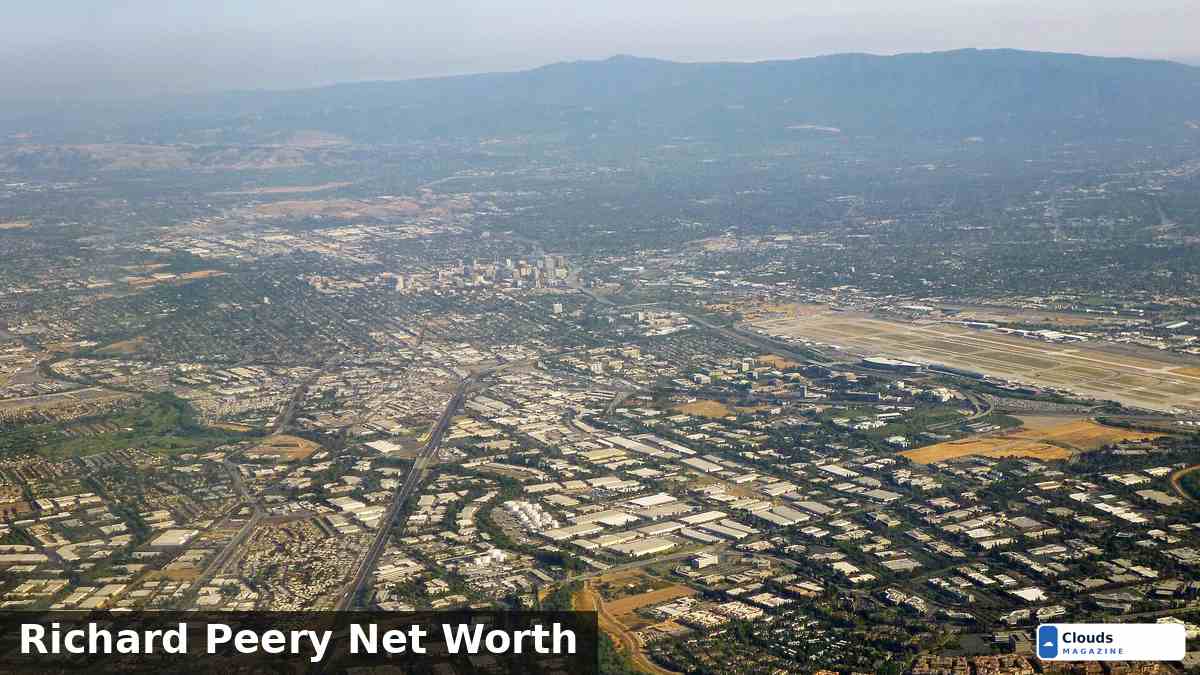
Private property fortunes like his are always approximations, because the land is rarely sold. Trackers face the same problem with Misha Ezratti’s net worth in Florida homebuilding, where the assets are companies rather than traded shares.
Akio Toyoda Net Worth
Toyoda’s net worth is not officially disclosed, and he owns well under one percent of Toyota. Celebrity Net Worth estimates it at about $1 billion, based on roughly 4.75 million ADR-equivalent shares.
Other trackers land nearby. MarketScreener values his disclosed shareholdings at about $836 million, while one executive-wealth tracker lists $1.2 billion, so a fair summary is a spread between roughly $0.8 billion and $1.2 billion.
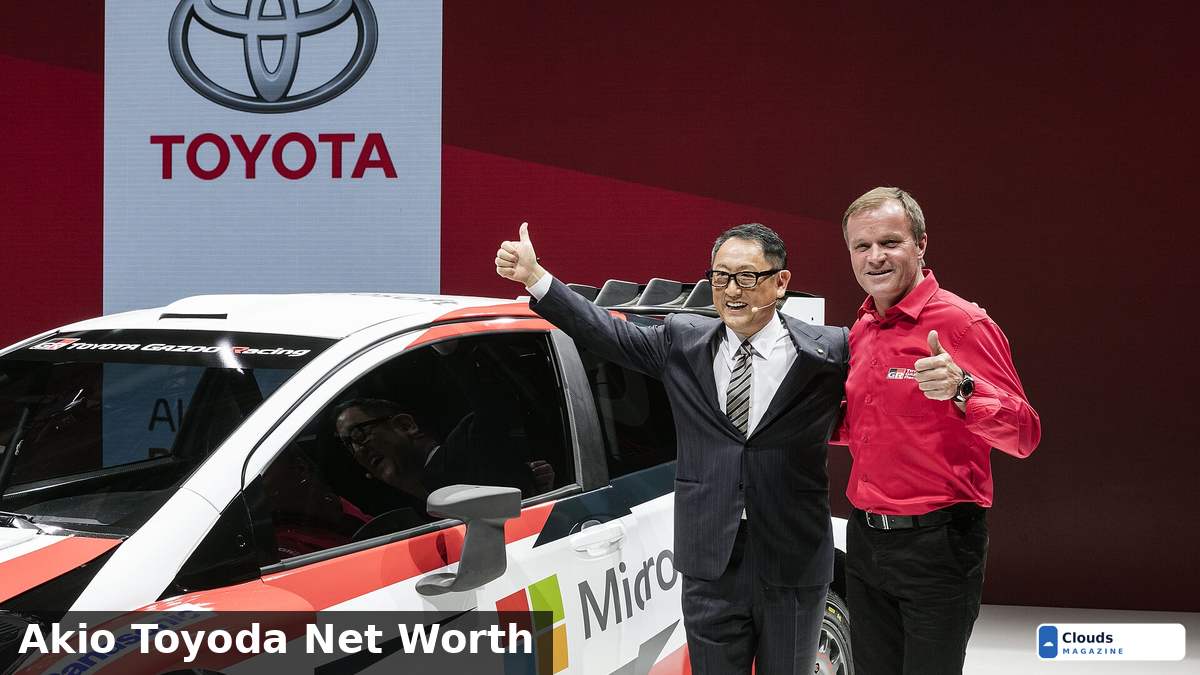
His pay underlines the difference from Peery. Toyoda’s salary in his final full year as chief executive was about ¥685 million, roughly $5 million, a large wage but not an ownership fortune.
A Business Lesson From Richard Peery
Peery’s career teaches the value of seeing an asset’s future before the market does. He bought orchards at farm prices because he understood what the young electronics industry would eventually need.
The lesson is not simply to buy land. It is to study the economic engine next door, then position yourself quietly in its path years before the crowd arrives.
A Business Lesson From Akio Toyoda
Toyoda’s leadership shows that adaptation does not require abandoning identity. Toyota changed its products, its technology mix and even its chief executive without stopping being Toyota.
He stayed close to the product throughout. A chairman who still test-drives prototypes sends a message no strategy document can: the work itself matters more than the org chart.
Why Long-Term Thinking Matters
Both men’s biggest results took years to appear. Peery’s farmland needed a technology boom to become valuable, and Toyoda’s hybrid strategy needed two decades to be vindicated.
Short-term thinking rarely builds lasting value. The compounding in both stories came from decisions held steady while markets, critics and competitors changed their minds around them.
Leadership Under Changing Markets
Silicon Valley transformed completely during Peery’s career, from orchards to the centre of the world economy. His response was consistency: keep the land, keep the tenants, keep the horizon long.
Toyoda faced electrification, software-defined cars and a recall crisis that threatened Toyota’s name. His response was similar in spirit: fix the problem openly, then keep building better cars.
Strategic Patience Versus Slow Decision-Making
Patience is not the same as slowness. Peery made aggressive purchases when land was cheap, then waited. Toyoda made fast decisions in the recall crisis, then waited for his technology bets to mature.
The skill both men share is knowing which phase they are in. Decide quickly when the facts are clear, then give the decision the years it needs to pay off.
Innovation Does Not Always Mean Reinvention
Peery practised a traditional business, land and buildings, while innovation happened all around him. He profited from reinvention without needing to perform it himself.
Toyoda innovated inside a century-old manufacturer. The GR performance line, the multi-pathway engine strategy and the Woven City experiment all grew from Toyota’s existing strengths rather than replacing them.
The Role of Location in Business Success
Location is the whole story for Peery. The same farmland in a declining region would have stayed farmland; beside Stanford and the new chip firms, it became some of America’s priciest dirt.
Location shapes Toyoda’s world differently, through footprint. Toyota builds cars on six continents, and decisions about where factories sit have defined his tenure as much as any model launch.
The Role of People in Long-Term Success
Neither man succeeded alone. Peery had Arrillaga for fifty years, one of the great two-man operations in American business, plus family members who now run his foundation.
Toyoda depended on thousands of engineers and factory workers, and on lieutenants like Koji Sato and Kenta Kon, who let him hand over the presidency twice without the company wobbling.
Common Misconceptions About Richard Peery
The common misconception is that Peery simply got lucky with geography. Luck explains buying one good parcel; it does not explain five decades of buying, building, leasing and holding through recessions.
He also was not a passive heir. The portfolio he took over in his twenties was modest beside what Peery Arrillaga became, and the gumball-machine story suggests the instincts were his own.
Common Misconceptions About Akio Toyoda
The mirror misconception is that Toyoda inherited the presidency. In fact he joined Toyota at 27, worked twenty-five years in unglamorous postings, and reached the top only in 2009.
Another is that he resisted electric cars out of stubbornness. His multi-pathway strategy kept hybrids and hydrogen alive alongside battery cars, a hedge that protected Toyota when electric demand wobbled.
What Entrepreneurs Can Learn From Both
Combined, the two careers offer a simple model. Find an asset or a capability the world will need more of tomorrow, commit early, and organise everything around holding that position.
Richard Peery and Akio Toyoda also show the value of temperament. Neither man panicked in a downturn, chased a fashion, or sold the core position at the first tempting price.
What Investors Can Learn From Richard Peery
Investors can learn to price the engine, not the asset. Peery’s land was never really about dirt; it was about the industry growing on top of it and the rents that followed.
His record also argues for concentration with patience. He knew one valley deeply rather than many markets shallowly, and that local knowledge compounded for fifty years.
What Executives Can Learn From Akio Toyoda
Executives can learn to stay close to operations. Toyoda drove the cars, visited the plants and apologised in person when things failed, habits that kept his information honest.
His succession handling is a second lesson. He prepared Sato, then Kon, and stepped aside in stages, leaving Toyota’s leadership younger each time while he kept the chairman’s long view.
Their Different Approaches to Risk
Peery managed risk through time. Holding assets across full property cycles meant recessions became pauses rather than disasters, because the land and the leases underneath it endured.
Toyoda managed risk through spread. Multiple drivetrains, multiple regions and multiple brands meant no single technology bet, market collapse or currency swing could sink the company at once.
A Quote About the Broader Philosophy
Toyoda’s phrase about making ever-better cars captures the philosophy both men lived by. Improvement is a direction, not a destination, and it applies to a property portfolio as much as a production line.
Peery never gave the idea a slogan, but fifty years of holding and improving the same land says it for him. The buildings changed; the commitment to the valley never did.
How Their Legacies Differ
Peery’s legacy is geographic and philanthropic. A large part of Silicon Valley’s physical map is his work, and his foundation will keep funding self-reliance long after the buildings change hands.
Toyoda’s legacy is industrial and organisational. He leaves Toyota profitable, technologically hedged and led by successors he trained, with a racing programme that reconnected the company to its own products.
Richard Peery and Akio Toyoda in a Modern Business Context
Both careers still matter because the modern economy runs on things built slowly. Data centres need land like Peery’s, and the electric transition needs manufacturing depth like Toyota’s.
Their stories also answer a current fashion. In an era of quick flips and faster exits, Richard Peery and Akio Toyoda are evidence that the largest fortunes and companies are usually built by staying.
Why Their Stories Continue to Attract Interest
Readers stay curious about careers that lasted half a century. Most business fame is brief; Peery and Toyoda kept compounding long after their contemporaries retired, sold out or were forgotten.
The contrast helps. A man almost nobody can picture stands beside one of the most photographed executives alive, yet the underlying method, patience with a system, turns out to be the same.
The Broader Meaning of Business Legacy
Legacy is what remains usable by other people. For Peery that means buildings, endowments and a foundation; for Toyoda it means a company, a supplier network and a generation of trained leaders.
Wealth is the scoreboard, not the legacy itself. Both men’s real output is infrastructure, physical in one case and industrial in the other, that strangers will build on for decades.
Richard Peery and Akio Toyoda: Key Takeaways
First, no documented connection links the two men; the value of the pairing is the comparison. Second, both built their results from accumulated decisions rather than one dramatic moment.
Third, their wealth works differently: Peery owns appreciating land, while Toyoda holds a small stake and a salary. Fourth, patience, properly understood, is an active strategy in both stories.
Frequently Asked Questions
Who is Richard Peery?
Richard Peery is an American real-estate developer, born in 1938 or 1939, who co-founded Peery Arrillaga with John Arrillaga. The firm turned Silicon Valley farmland into office parks housing major technology companies.
Who is Akio Toyoda?
Akio Toyoda is a Japanese executive born on 3 May 1956 in Nagoya. He was Toyota’s president from 2009 to 2023 and is now its chairman, as the grandson of the company’s founder.
Are Richard Peery and Akio Toyoda related?
No. They come from different families, countries and industries, and no business or personal relationship between them is documented. The pairing exists because their careers reward comparison, not because they worked together.
What is Richard Peery famous for?
Peery is famous for developing Silicon Valley office space with John Arrillaga. Their firm built more than 12 million square feet and sold nearly half its portfolio to Deutsche Bank for $1.1 billion in 2006.
What is Akio Toyoda famous for?
Toyoda is famous for leading Toyota through the recall crisis and the industry’s electric transition. He is also known as a racing driver under the name Morizo and for the phrase about making ever-better cars.
What industries are associated with Richard Peery and Akio Toyoda?
Peery belongs to commercial real estate, specifically Silicon Valley land development and office leasing. Toyoda belongs to the automotive industry, through Toyota’s manufacturing, technology and global sales operations.
Did Richard Peery work with John Arrillaga?
Yes. Peery and Arrillaga became partners in the 1960s and ran Peery Arrillaga together for over fifty years, until Arrillaga’s death in January 2022 at the age of 84.
When did Akio Toyoda become Toyota president?
Toyoda became president on 23 June 2009. He stepped down on 1 April 2023 to become chairman, and Kenta Kon has been president and chief executive since 1 April 2026.
What can entrepreneurs learn from Richard Peery and Akio Toyoda?
Entrepreneurs can learn to commit early to a position the future will reward, then hold it calmly. Both men also show the value of deep local or product knowledge over chasing trends.
Why are Richard Peery and Akio Toyoda interesting to compare?
They represent two opposite models of success: the private owner who stays invisible, and the public executive who leads in full view. Comparing them shows how much the method, patience and timing, is shared.
Conclusion
Richard Peery and Akio Toyoda never built anything together, and no record ties their names outside comparisons like this one. What they share is a method: commit early, hold steady, and let decades do the heavy lifting.
Peery’s valley of office parks and Toyoda’s global car company are different kinds of monuments to the same idea. For the documented record on the developer himself, the biography of Richard Peery is the natural next read.
