
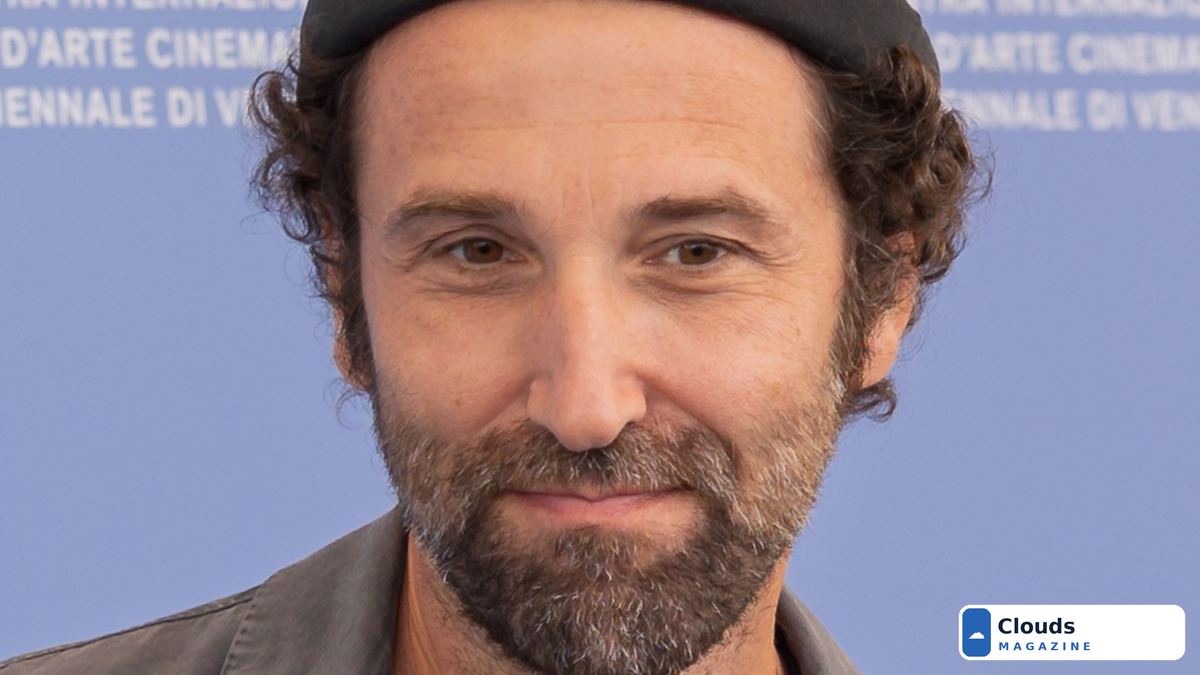
Type thomas bangalter into a search engine and half the results misspell him as “Bankalter” — a fitting quirk for a man who spent 28 years famous behind a robot helmet. He is the Paris-born half of Daft Punk, and at 51 he is writing ballet scores.
The documented spine is unusually clean for a pop star. A cited birth date, January 3, 1975, a marriage, two sons, four Daft Punk albums and a public split in 2021. Our Jackson William Murray profile followed a quieter celebrity; Bangalter’s record, by contrast, is loud, long and checkable.
What follows traces the schoolboy friendship that became Daft Punk, the bedroom recordings that reshaped dance music, the helmet years, and the unmasked second act — orchestral premieres, film scores and surprise DJ sets — that nobody predicted in 2021.
Quick Answer
Quick Answer: Thomas Bangalter, born January 3, 1975 in Paris, is a French musician, producer and composer, best known as one half of Daft Punk alongside Guy-Manuel de Homem-Christo. He is 51, married to actress Élodie Bouchez, and now writes ballet and film scores.
Who Is Thomas Bankalter?
Thomas Bangalter is a French musician, record producer, DJ and composer. He co-founded Daft Punk in 1993 and, with Guy-Manuel de Homem-Christo, turned French house music into a global pop force.
The “Bankalter” spelling in this heading is the internet’s most persistent typo of his name. Reference works, his record labels and his own album credits all use Bangalter, and so does the rest of this profile.
Since Daft Punk ended in 2021, he has worked under his own name: an orchestral ballet score, film music, dance installations and production work for younger artists who grew up on his records.
Thomas Bangalter: Quick Facts
| Information | Details |
|---|---|
| Full name | Thomas Bangalter |
| Common misspelling | Thomas Bankalter |
| Date of birth | January 3, 1975 |
| Birthplace | Paris, France |
| Nationality | French |
| Age | 51 years old (2026) |
| Profession | Musician, composer, DJ, record producer |
| Famous for | Daft Punk |
| Musical genres | House, electronic, disco, French house, orchestral |
| Former musical partner | Guy-Manuel de Homem-Christo |
| Record labels | Roulé (founder); Alberts & Gothmaan (solo label) |
| Notable projects | Daft Punk, Stardust, Mythologies, Mirage |
Read the age line carefully: born in the first days of 1975, he turned 51 in January 2026 and turns 52 in January 2027. Most of his Daft Punk landmarks were already behind him before he turned 40.
The quick facts also hide a family trade. His father wrote disco hits, his mother danced professionally, and the piano lessons started at six — the next sections show how directly that upbringing fed the career.
Thomas Bangalter at a Glance
| Detail | Information |
|---|---|
| Born | January 3, 1975, Paris, France |
| Age | 51 (turned 51 on January 3, 2026) |
| Father | Daniel Bangalter, professionally Daniel Vangarde |
| Mother | Thérèse Thoreux, classical dancer and choreographer |
| Spouse | Élodie Bouchez (married 1996) |
| Children | Two sons, Tara-Jay (born 2002) and Roxan (born 2008) |
| Groups | Darlin’, Daft Punk, Stardust, Together |
| Honour | Chevalier of the Ordre des Arts et des Lettres (2010) |
| Solo label | Alberts & Gothmaan, an anagram of Thomas Bangalter |
| Net worth | Estimated at $90 million by Celebrity Net Worth |
Two details in that snapshot frame everything after them. The first is the anagram label, a private joke turned public identity. The second is the honour: France made him a knight of arts and letters at 35.
He has also spent three decades controlling his own catalogue. The Roulé label, the robot image and the refusal to chase trends are one long argument for creative independence, made patiently and in public.
Thomas Bangalter’s Early Life and Family Background
Thomas Bangalter was born in Paris on January 3, 1975, into a household where music was a trade, not a hobby. His father, Daniel Bangalter, worked professionally as Daniel Vangarde.
Vangarde wrote and produced disco and dance records for acts such as the Gibson Brothers, Ottawan and Sheila B. Devotion. Studios, sessions and songwriting royalties were ordinary dinner-table subjects in the Bangalter home.
His mother, Thérèse Thoreux, was a classical dancer and choreographer. Between a producer father and a dancer mother, the boy grew up around both halves of his future work: recorded sound and choreographed movement.
How His Family Influenced His Career
Bangalter started piano at six, taking lessons from a staff member of the Paris Opera. His parents insisted the practice continue, strictly at times, and he later said he was grateful they had.
Yet he resisted the obvious path. “I never had any intention to do what my father was doing,” he recalled — a rebellion that makes the eventual family resemblance funnier, because he became a producer anyway.
What the home really gave him was fluency. He learned how records were built, how arrangements worked and how the industry paid people, years before he needed any of it. Daft Punk’s famously shrewd contracts start here.
How Thomas Bangalter Met Guy-Manuel de Homem-Christo
The partnership began in 1987 at the Lycée Carnot, a Paris secondary school, where Bangalter met Guy-Manuel de Homem-Christo. The two teenagers bonded over 1960s and 1970s films and music.
Their shared canon was, by their own account, basic cult-teenager material: Easy Rider, the Velvet Underground, the era’s rock and soul records. They started making music together almost immediately.
With a third friend, Laurent Brancowitz, they formed an indie rock trio called Darlin’. Bangalter played bass guitar. The band was a schoolboy project, but it put the future duo in a room, writing.
The Formation of Daft Punk in 1993
Darlin’ ended in a joke that named its successor. A Melody Maker review dismissed the trio’s music as “a daft punky thrash” — and Bangalter and de Homem-Christo kept the insult as a banner.
Brancowitz drifted toward guitar pop and later joined Phoenix. The other two, not yet 18, fell for electronic music: Chicago house, Detroit techno, disco and funk, heard in clubs and on pirate radio.
In 1993 they presented a demo to Stuart Macmillan of the Scottish duo Slam, whose Soma label released Daft Punk’s first single, “The New Wave,” in 1994. Daniel Vangarde advised them on how the record business actually worked.
What Made Daft Punk Different?
They treated the studio as an instrument. Samples were not decoration but raw timber, chopped and filtered until a four-second loop became a song’s entire emotional engine.
They also thought visually from the start. Sleeves, videos, stage design and eventually the robot costumes were composed with the same care as the tracks, so the project read as one artwork.
And they changed direction on every album. House, then disco-pop, then abrasive rock-electronica, then live-band funk: the catalogue refuses to sit still, which is why it still sounds current.
Homework (1997): Daft Punk’s Breakthrough Album
Daft Punk’s debut album, Homework, arrived in January 1997, and it was quite literally homework: much of it was recorded in Bangalter’s bedroom. He has recalled moving his bed into another room to make space for the gear.
The sound was raw French house — drum machines, filtered loops and basslines that circled until they became hypnotic. It carried the underground’s energy without sanding off its edges.
His father is thanked in the liner notes, a small printed bridge between the Vangarde disco era and the bedroom producers who replaced it.
Famous Songs From Homework
Five tracks still anchor any account of the record:
- Da Funk: the squelching 1995 single that first carried the duo beyond the clubs.
- Around the World: a single repeated phrase over a bassline that walks in circles, and a Michel Gondry video of dancing mummies and robots.
- Revolution 909: a dancefloor track with an anti-rave-crackdown message folded into its title.
- Burnin’: a tribute to the Chicago house producers the duo idolised.
- Alive: the closing surge, built from their first single’s bones.
Why Homework Was Important
Homework proved a world audience existed for French house. It exported a Parisian club dialect — filtered disco loops, side-chained kick drums — to charts and festivals everywhere.
It also modelled a new kind of career. Two anonymous producers, working from a bedroom on modest equipment, could out-sell studio acts. Bedroom production as a route to fame starts, commercially, here.
Discovery (2001): The Album That Transformed Daft Punk
Discovery, released in March 2001, swapped the raw loops for melody. Where Homework was a club record, Discovery was a pop record wearing a club record’s clothes.
The duo built it from samples of disco, funk and soft rock, pitched and polished until the sources glowed rather than showed. It became their most loved album and their commercial breakthrough worldwide.
Sessions had begun back in 1998, in the same home-studio setup, which makes the leap in finish remarkable: the budget stayed small while the ambition became orchestral.
Most Popular Songs From Discovery
- One More Time: Romanthony’s auto-tuned celebration, the duo’s defining single and a number one in France and Canada.
- Digital Love: a wistful dream of a song, built on a Wurlitzer-style electric piano figure.
- Harder, Better, Faster, Stronger: the robotic workout chant later sampled by Kanye West.
- Aerodynamic: baroque guitar fireworks over a funk groove.
- Something About Us: the slow, tender closer, Daft Punk’s quietest hit.
- Face to Face: a chopped collage of soft-rock samples with Todd Edwards singing.
The Emotional Side of Electronic Music
Discovery’s real argument was emotional. Dance music in 2001 was supposed to be functional; this record was nostalgic, romantic and melancholy, sometimes inside a single track.
Bangalter’s piano training shows in the chord choices. The loops resolve like pop songs, not DJ tools, which is why the album crossed over to listeners who never entered a club.
Discovery and Interstella 5555
The album also became a film. Interstella 5555, released in 2003, animated the whole record as a dialogue-free science-fiction story, drawn with the legendary manga artist Leiji Matsumoto.
The film completed the era’s logic: the music, the robot characters and the visuals were one continuous artwork, and Bangalter was credited across all of it.
Why Did Daft Punk Wear Robot Helmets?
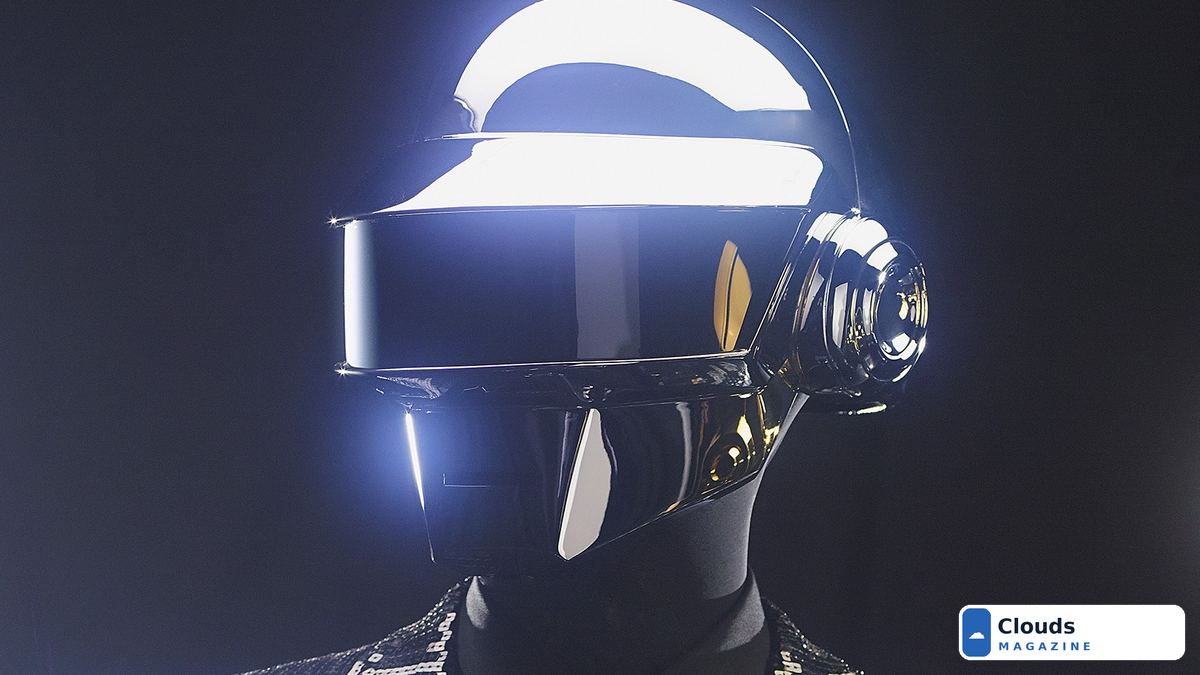
Around the Discovery era, Bangalter and de Homem-Christo stopped appearing as themselves. In their place stood two robots — Bangalter in silver, his partner in gold — with leather jackets and perfect posture.
The costumes began as a shy duo’s practical solution and hardened into the most recognisable silhouette in electronic music. Fans who could not pick either man out of a line-up could draw both helmets from memory.
The Meaning Behind the Robot Identity
The stated idea was a fascination with the line between humans and machines. The robots let two private men perform the very public theatre of pop stardom without surrendering their faces.
There was also an artistic discipline to it. With personalities hidden, nothing competed with the music and the staging; the characters could age, rust and upgrade while the men simply went home.
Bangalter eventually tired of the device. Promoting his solo work in 2023, he told an interviewer: “As much as I love this character, the last thing I would want to be, in the world we live in, in 2023, is a robot.”
How the Helmets Strengthened Their Brand
Commercially, the helmets were flawless design. Two shapes, endlessly reproducible — on sleeves, toys, advertisements and festival screens — and immune to fashion, scandal or ageing.
The anonymity also created scarcity. Every unmasked photograph became news, which kept attention high while the duo released nothing for years at a time.
Human After All (2005): Exploring Technology and Repetition
The third album, Human After All, released in March 2005, stripped everything back. Distorted guitar-like synths, blunt repetition and a cold, mechanical palette replaced Discovery’s warmth.
Tracks such as “The Prime Time of Your Life,” “Robot Rock” and “Technologic” sounded like the robots malfunctioning on purpose. Critics were divided; many found it harsh and underwritten.
Bangalter and de Homem-Christo stood by the concept. The record was about mass media and technology pressing on human life, and its discomfort was the point.
Why Human After All Matters
Time rehabilitated it. On the duo’s 2006–2007 tour, these stark tracks became the raw material for their celebrated live mash-ups, where “Robot Rock” and “Technologic” hit hardest of all.
It also protected the catalogue from formula. Having refused to repeat Discovery, the duo earned the right to surprise listeners again — which they did, completely, eight years later.
Alive 2007: Reinventing Electronic Live Performance
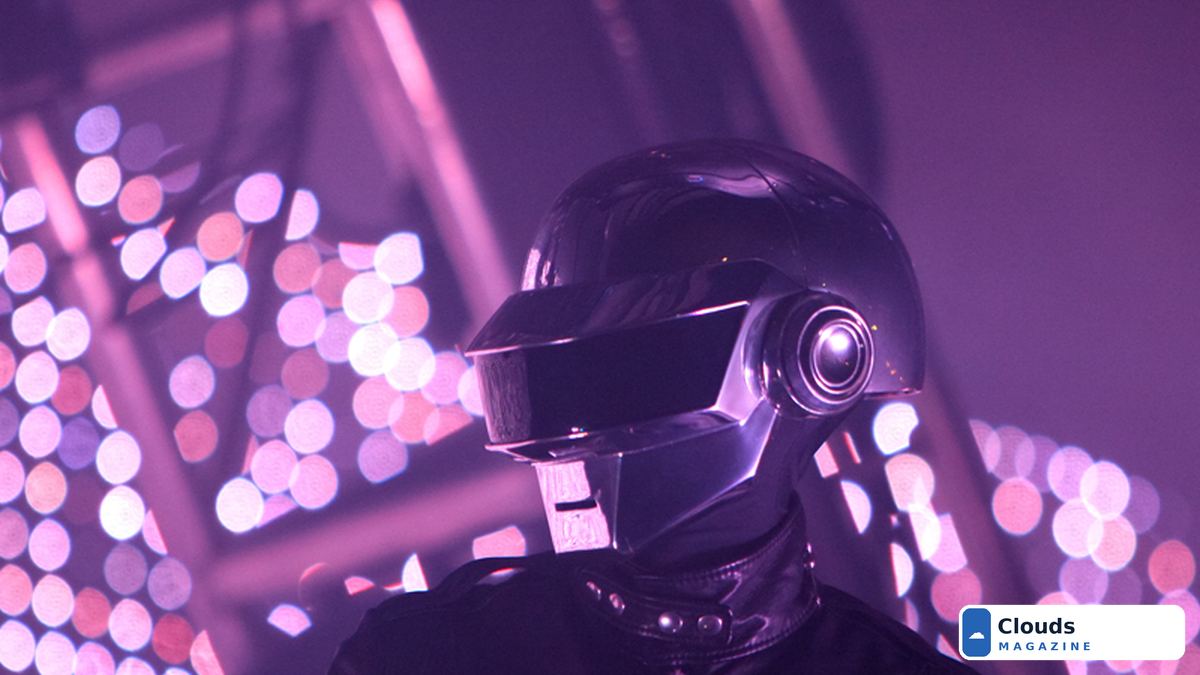
Daft Punk barely toured, so the 2006–2007 shows became legend. The duo performed inside a glowing pyramid, re-editing their catalogue live into continuous mash-ups that fused songs from all three albums.
“Harder, Better, Faster, Stronger” collided with “Around the World”; “Technologic” rode over “Robot Rock.” The set treated the whole discography as raw material for one long composition.
The live album, Alive 2007, won the Grammy Award for Best Electronic/Dance Album, and the tour’s pyramid staging reset expectations for what an electronic act could present on stage.
What Made Alive 2007 Special?
Most live electronic shows of the era were playback with theatre. This one was musicianship: two men in a pyramid, hands on the machines, rebuilding familiar songs differently every night.
The recording also solved the Human After All problem in public. Heard in collision with the earlier hits, the third album’s tracks sounded like precision parts in a bigger machine.
Random Access Memories (2013): Daft Punk’s Greatest Commercial Triumph
After eight years without a studio album, Random Access Memories arrived in May 2013 and reversed every electronic instinct. The duo hired live session musicians and recorded like a 1970s funk band.
The collaborators were the music’s own ancestors: Nile Rodgers, Giorgio Moroder, Paul Williams, plus Pharrell Williams and Julian Casablancas from the generation Daft Punk had raised.
It became their biggest success — a worldwide number one that carried electronic music’s founding tricks back into the centre of pop.
Get Lucky: A Global Hit
“Get Lucky,” with Pharrell Williams singing over Nile Rodgers’ guitar, was the summer of 2013 in most of the world. It topped charts in dozens of countries and never really left the radio.
At the 2014 Grammy Awards, the single took Record of the Year, while the duo/group performance prize also went its way. The album, separately, collected the night’s biggest honour — Album of the Year — alongside the dance/electronica album award.
Other Important Tracks
“Instant Crush,” sung by Julian Casablancas, became the album’s slow-burning fan favourite. “Lose Yourself to Dance” reunited the Pharrell and Rodgers pairing for a second single.
“Giorgio by Moroder” built a track around the disco pioneer narrating his own life, while the nine-minute closer, “Contact,” sampled an Apollo 17 transmission for lift-off.
Grammy Awards and Recognition
The 2014 ceremony made Daft Punk, briefly, the biggest act in the world: four Grammy Awards in one night, collected in full robot costume, in silence, while Paul Williams spoke for them.
Across their career the duo won six Grammy Awards in total, including the 2009 honours for Alive 2007 and a live recording of “Harder, Better, Faster, Stronger.”
France had decorated them earlier: in 2010 both men were admitted to the Ordre des Arts et des Lettres at the rank of Chevalier, or knight.
Thomas Bangalter’s Solo Career
Bangalter’s name appears outside Daft Punk from the very beginning. While the duo was still a bedroom act, he was pressing solo twelve-inches and building a label of his own.
The solo thread runs parallel for thirty years: club EPs in the nineties, a film score in 2002, production for other artists in the 2010s, then the full solo career after 2021.
Reading that thread separately matters, because it explains the split. Daft Punk ended; the solo work simply became the main line. Our Wil Bakula profile traces a comparable path — a musician building a durable career in a famous family’s shadow and on his own terms.
The Roulé Record Label
Bangalter founded Roulé — French for “rolled” — in 1995, and ran it as his personal outlet for two decades. Its catalogue mixed his own tracks with singles by Romanthony, Roy Davis Jr. and others.
His solo EPs Trax on da Rocks (1995) and Trax on da Rocks Vol. 2 (1998) appeared on the label, all vinyl, all aimed at DJs rather than charts.
He also briefly joined the 1996 DJ collective Da Mongoloids, alongside Armand Van Helden and Junior Sanchez, under the Strictly Rhythm umbrella.
Why Roulé Was Important
Roulé was a control mechanism disguised as a label. It let Bangalter release experiments without a major label’s permission, and it kept his publishing and masters close when Daft Punk negotiated from strength.
The label was wound up in 2018, its work done. When he needed an outlet again after the split, he repeated the trick with a new imprint — Alberts & Gothmaan, an anagram of his own name.
Stardust and Music Sounds Better With You
In 1998 Bangalter teamed up with Alan Braxe and singer Benjamin Diamond as Stardust. One single resulted: “Music Sounds Better with You,” built on a loop of Chaka Khan’s “Fate.”
Recorded in Bangalter’s home studio, the track became a worldwide club anthem and reached number two on the UK Singles Chart. It remains the definitive French house one-off.
The same year brought a stranger footnote: Bangalter co-produced Bob Sinclar’s “Gym Tonic,” which sampled a Jane Fonda workout tape. Fonda refused permission, blocking an official release — and a British cover, Spacedust’s “Gym and Tonic,” topped the UK chart instead.
What Made the Song Special?
The loop is the song. A few seconds of disco guitar, filtered and repeated, carry five minutes of music, with Diamond’s yearning vocal floating on top like a memory of a night out.
It demonstrated Bangalter’s core skill in its purest form: finding the four seconds inside an old record that contain a whole new one.
Why Stardust Did Not Release an Album
Stardust was a one-off by design. The three musicians returned to their separate projects, and the single was left to stand alone rather than be diluted by a rushed album.
Two decades later the trio revisited it properly, releasing a remastered edition for the song’s twentieth anniversary in June 2019 — the closest thing to a second Stardust release that exists.
Thomas Bangalter’s Film Soundtracks
Cinema was in the duo’s canon from the Lycée Carnot days, and Bangalter moved into film music earlier than most fans realise. His scores favour texture and dread over melody.
The film work also kept him employed between Daft Punk’s long silences, and it trained the orchestral patience that his post-2021 career now depends on.
Irréversible (2002)
His first score accompanied Gaspar Noé’s Irréversible in 2002, a film told in reverse and scored to feel like a headache: low pulses, grinding loops and sudden silence.
A soundtrack album followed, carrying his tracks alongside the classical and pop pieces used in the film. It announced that Bangalter’s range ran well past the dancefloor.
He returned to Noé as sound effects director on Enter the Void (2009), supplying drones and ambience while the Tron: Legacy score consumed the duo’s main attention.
Tron: Legacy (2010)
Tron: Legacy was Daft Punk’s own commission, and a perfect fit: the original Tron had shaped their robot aesthetic, and Disney hired the duo to score the sequel.
The result blended their electronics with a full orchestra, and it remains the most commercially successful film work of Bangalter’s career — the one score casual listeners own without knowing his name.
Other Film Collaborations
With Noé again, he contributed two tracks to Climax (2018), including the previously unreleased “Sangria.” He also scored Richard Phillips’ short film First Point (2012), starring Lindsay Lohan.
In 2011 he had stepped behind the camera entirely, directing and choreographing a short fashion film for the label Co, featuring his wife, Élodie Bouchez.
The Dupieux collaboration Daaaaaalí! belongs to the later chapter below; its score arrived in 2024, after the ballet work had reset his reputation.
Why Did Daft Punk Break Up in 2021?
On February 22, 2021, Daft Punk uploaded an eight-minute video titled “Epilogue.” It reused a scene from their film Electroma: one robot self-destructs in the desert; the other walks into the sunset.
No press conference followed. Bangalter instead released a handwritten note quoting the duo’s song “Touch,” beside a clip from Chaplin’s Modern Times in which two characters smile and walk away together.
Twenty-eight years after a Paris bedroom, the most influential electronic act of its generation ended with a film reference and a shrug — entirely in character.
Did Thomas Bangalter Retire From Music?
No — and he said so quickly. Collaborator Todd Edwards clarified within weeks that both men remained active separately, and that Bangalter was exploring solo projects in particular.
The two still share a studio and equipment. What ended was the duo as a recording and performing unit, not the friendship, the catalogue or either man’s working life.
His schedule since — ballet premieres, film scores, production credits, an acting role and surprise DJ sets — is the opposite of a retirement diary.
Mythologies (2023): Thomas Bangalter’s Classical Music Transformation
His first major solo project was announced in July 2021: a score for Mythologies, a 90-minute ballet by choreographer Angelin Preljocaj, presented by Ballet Preljocaj.
The ballet premiered at the Grand Théâtre de Bordeaux in July 2022. The album followed in April 2023 on the classical label Erato, launched alongside his new solo imprint, Alberts & Gothmaan.
The music is fully orchestral — no drum machines, no samples, no helmet. It was the largest possible statement that the second career would not be Daft Punk with the serial numbers filed off.
What Is Mythologies About?
The ballet draws on founding myths — the deep stories cultures tell about creation, desire and violence — and Preljocaj’s choreography stages them through the body rather than narration.
Bangalter’s score answers with traditional orchestral forces: strings, brass and woodwind writing that develops themes the way his loops once did, patiently and by accumulation.
Why Mythologies Was a Major Career Milestone
The promotion was as significant as the music. Bangalter gave interviews unmasked, posed for a press release that carried a drawn portrait of his actual face, and explained the change plainly.
Speaking to the New York Times in April 2023, he framed the robot as a finished chapter, citing unease about artificial intelligence and the blurring line between people and machines.
A dance-music producer premiering an orchestral ballet score at 48, to serious critical attention, is a rare second debut. Mythologies made the post-Daft Punk career real.
Chiroptera and Bangalter’s Contemporary Dance Projects
In November 2023 he worked with the artist JR and choreographer Damien Jalet on Chiroptera, staged in front of the Place de l’Opéra in Paris to mark the reopening of the Théâtre de la Ville.
Inside a cavernous scaffold structure, more than 150 dancers performed his music; the show was given free to the public twice on the evening of November 12, 2023.
The soundtrack album arrived in June 2024 with a typically excessive companion: a nearly six-hour track of raw music from the sessions. Dance kept calling — he had contributed to Hofesh Shechter’s score for En Corps (2022), and in July 2024 another Jalet ballet, Apaches, premiered with his music.
Mirage (2026): A Return to Experimental Electronic Composition
Bangalter’s music for Mirage, the ballet he created with Damien Jalet, was released as a solo album in June 2026. The project began on stage in 2024, where the score existed only inside the performance.
Meeting designer Kunihiko Morinaga through Mirage led further afield: Bangalter went on to compose original music for the Anrealage fashion house’s fall 2025 and spring 2026 Paris shows.
What Makes Mirage Different?
Where Mythologies renounced electronics entirely, Mirage lets the two halves of his training meet: composed, theatrical music from a man who no longer needs to choose between the orchestra and the machines.
It also arrived in a crowded solo season — a remix of a Mythologies track for a Chanel film in May 2026, anniversary events for Electroma, and festival DJ appearances shared the same months.
Why Mirage Matters
Mirage matters because it closes the argument of the split. Five years after “Epilogue,” Bangalter is not a former robot doing novelties; he is a working composer with a catalogue still growing in two directions at once.
Thomas Bangalter’s Music Production Techniques
Producers study Bangalter the way guitarists study Hendrix: not for the gear, which was often modest, but for the decisions. Five habits recur across the whole catalogue.
1. Creative Sampling
His samples are arguments, not shortcuts. A Chaka Khan guitar figure becomes Stardust; a Barry Manilow-era disco record becomes “One More Time.” The source is chosen for its emotional charge first.
The craft lies in the edit: pitch it, filter it, loop the two bars where the original band was happiest, and a new song stands up inside the old one.
2. Filter Automation
The French house signature — a loop swelling from muffled to bright as a filter opens — is practically his handwriting. Whole arrangements are built from that single slow gesture.
It creates drama without new notes. The listener’s ear supplies the excitement as frequencies return, which is why the records feel alive on cheap speakers and huge rigs alike.
3. Repetition and Groove
Bangalter trusts repetition the way minimalists trust stone. A phrase repeats until it stops being a phrase and becomes a physical environment the listener lives inside.
The discipline is in the micro-changes: a hi-hat shifted, a bass note dropped, a filter nudged. Nothing “happens,” yet the track never stands still.
4. Combining Human and Electronic Sounds
Random Access Memories pushed this furthest, hiring the session players his younger self would have sampled. The robot voices then sang over human funk, and the contrast became the album’s subject.
Even earlier, the pattern held: Romanthony’s very human voice inside “One More Time,” Todd Edwards’ collage of soft-rock voices on “Face to Face.”
5. Minimalism and Musical Arrangement
Homework was made in a bedroom after the bed was moved out, and it sounds like it — in the best way. Few elements, each one essential, arranged with empty space left in.
The lesson travelled: a generation of laptop producers learned from these records that arrangement is subtraction, and that two perfect loops beat twenty good ones.
Thomas Bangalter’s Personal Life
Bangalter married the French actress Élodie Bouchez in 1996, before Daft Punk had released an album. They have two sons, Tara-Jay (born 2002) and Roxan (born 2008), and moved to Beverly Hills in 2004 for Bouchez’s Hollywood career and his film interests; by 2013 they were based in Paris again, with the duo’s creative offices remaining in Los Angeles.
An early health scare shaped his working life: in 2002 it was reported he had stopped DJing in clubs after developing tinnitus, though Slam’s Orde Meikle later said he had recovered sufficiently. The anonymity question followed him too — he has explained that staying hidden began to feel pretentious, attracting more attention than presence would.
These days he is photographed like any other cultural figure: at Venice in 2025, where his first real acting role, in Cédric Jimenez’s Chien 51, premiered out of competition at the film festival — a long way from the pyramid.
Thomas Bangalter’s Net Worth
No audited figure exists, and Bangalter has never discussed his finances. The estimate most often cited comes from Celebrity Net Worth, which puts Thomas Bangalter’s net worth at $90 million.
Treat the number as an informed estimate, not a measurement: it is built from public information on sales, touring and publishing, and the site itself notes its figures are estimates. The earning power beneath it is real enough — a continuously selling catalogue, a global phenomenon in “Get Lucky,” and publishing shares across Stardust, the duo’s albums and outside productions.
His structure helped: owning his label, writing his own material and keeping the duo’s brand uncompromised for 28 years is how musicians actually keep money. For a contrasting fortune built and partly spent in public, see our Johnny Depp net worth breakdown.
Thomas Bangalter’s Awards and Achievements
Major Career Achievements
- Six Grammy Awards with Daft Punk, including Album of the Year and Record of the Year in 2014.
- Chevalier of the Ordre des Arts et des Lettres (2010), France’s arts knighthood, awarded to both members.
- Four era-defining albums with Daft Punk: Homework, Discovery, Human After All and Random Access Memories.
- A Billboard Hot 100 number one as producer and co-writer of the Weeknd’s “Starboy” (2016) — the duo’s first US chart-topper.
- An orchestral second career: Mythologies (2023), Chiroptera (2024) and Mirage (2026) as a solo composer.
- The Tron: Legacy score (2010), among the most successful electronic film scores ever released.
Add the cultural honours that carry no trophy: a pyramid stage that redesigned festival production, a helmet silhouette recognised worldwide, and a farewell video studied like a short film.
How Thomas Bangalter Influenced Modern Electronic Music
Making Electronic Music Mainstream
Daft Punk’s arc — bedroom singles to Album of the Year — is the template modern electronic stars still follow. Bangalter’s half of that arc proved a producer could be the headline act, not the hired help.
The Weeknd collaboration completed the loop in 2016: the underground duo produced the pop mainstream’s biggest single, “Starboy,” on their own terms. Today’s producer-led pop, down to rappers like the subject of our BigXthaPlug age profile, works in a market this career helped normalise.
Changing Expectations for Live Shows
After the pyramid, a DJ behind a laptop looked unfinished. Alive 2007’s live re-editing and architectural staging pushed electronic performance toward spectacle with musicianship inside it.
Festival production budgets — and audiences’ demands — have never come back down.
Connecting Music With Visual Identity
The robots taught branding to a generation: a fixed silhouette, total consistency, no face required. Masked and helmeted acts across pop and electronic music are working Bangalter’s playbook.
Crucially, the identity served the art rather than replacing it. The helmets are famous because the records justified staring at them for 28 years.
Encouraging Artistic Reinvention
His boldest influence may be the ending. Walking away at the top, then re-emerging as an orchestral composer, gave younger artists a map for the rarest move in pop: the genuine second act.
Practical Lessons Musicians Can Learn From Thomas Bangalter
Develop a Recognizable Sound
Two bars of a Bangalter production identify themselves: the filtered loop, the patient build, the human voice inside the machine. That recognisability took years of subtraction, not addition.
Experiment With Different Genres
Rock band, house duo, disco-pop, film scores, ballet: the catalogue is a refusal to be filed. Each genre change arrived before the market demanded it, which is why none of them read as desperation.
Prioritize Musical Ideas Over Equipment
A bedroom, a moved bed and second-hand samplers produced Homework. The constraint was the aesthetic — and a permanent rebuttal to the idea that the next purchase unlocks the music.
Build Meaningful Collaborations
From Romanthony to Nile Rodgers to Lil Nas X — whose 2024 single “Light Again!” Bangalter wrote and produced — his collaborations pair generations. He borrows authority from elders and lends it to the young.
Protect Creative Independence
Labels of his own, masters kept close, a farewell on his own terms: the business structure is the quiet masterpiece. Independence is what made every artistic risk in this profile affordable.
Best Thomas Bangalter Songs and Albums to Explore
Recommended Listening Order
- Homework (1997): start where the world started — “Da Funk” and “Around the World.”
- Discovery (2001): the emotional peak; play it whole, as the film Interstella 5555 intended.
- “Music Sounds Better with You” (1998): the Stardust single, French house in five perfect minutes.
- Alive 2007: the catalogue rebuilt live; the best single document of the duo on stage.
- Random Access Memories (2013): the Grammy sweep, and “Get Lucky” in its natural habitat.
- Mythologies (2023): the unmasked composer, orchestral and unhurried — the essential solo record.
That sequence takes an evening and covers 26 years: a bedroom in Paris to a ballet stage in Bordeaux, with a pyramid in between.
Thomas Bangalter: A Timeline of the Documented Record
| Year | Event |
|---|---|
| 1975 | Born January 3 in Paris, son of Daniel Vangarde and Thérèse Thoreux |
| 1987 | Meets Guy-Manuel de Homem-Christo at the Lycée Carnot |
| 1993 | Daft Punk forms; demo reaches Stuart Macmillan of Slam |
| 1995 | Founds the Roulé label; Trax on da Rocks EP; “Da Funk” released |
| 1997 | Homework released; recorded largely in his bedroom |
| 1998 | Stardust’s “Music Sounds Better with You” becomes a global hit |
| 2001 | Discovery released; the robot era begins |
| 2002 | Irréversible film score; first son, Tara-Jay, born |
| 2005 | Human After All released to divided reviews |
| 2007 | Alive 2007 tour and live album redefine electronic performance |
| 2010 | Tron: Legacy score; made Chevalier of the Ordre des Arts et des Lettres |
| 2013 | Random Access Memories; the duo’s commercial peak |
| 2014 | Four Grammy Awards in one night, including Album of the Year |
| 2016 | Produces the Weeknd’s “Starboy,” a US number one |
| 2021 | Daft Punk ends with the “Epilogue” video, February 22 |
| 2023 | Mythologies album released on Erato; unmasked solo career begins |
| 2024 | Daaaaaalí! score and the Chiroptera soundtrack released |
| 2025 | Acting role in Chien 51 premieres at Venice; first public DJ set since 2009 |
| 2026 | Mirage solo album released; surprise festival DJ appearances |
Read down the years and a pattern emerges: roughly one reinvention per decade, each announced by the work itself rather than by publicity. The gaps between rows are as deliberate as the rows.
Frequently Asked Questions About Thomas Bankalter
1. Who is Thomas Bankalter?
“Thomas Bankalter” is the common misspelling of Thomas Bangalter, the French musician born January 3, 1975 in Paris. He is one half of Daft Punk and, since 2021, a solo composer for ballet and film.
2. Why did Thomas Bangalter leave Daft Punk?
He did not leave a band so much as close a shared project. Daft Punk ended by mutual decision, announced in the February 2021 “Epilogue” video, after 28 years; both members remain active separately and still share a studio.
3. Is Thomas Bangalter still making music in 2026?
Yes. His Mirage album appeared in June 2026, a Mythologies remix soundtracked a Chanel short film that spring, and he played surprise DJ sets — including a Paris appearance in October 2026 — alongside festival and fashion commissions.
4. What is Thomas Bangalter’s most famous song?
By reach, “Get Lucky” is the biggest single attached to his name, with “One More Time” and “Music Sounds Better with You” close behind. As a producer for others, the Weeknd’s “Starboy” is his largest hit.
5. What is Thomas Bangalter’s net worth?
Celebrity Net Worth estimates $90 million. No official figure exists; the estimate is calculated from public information about his sales, touring and publishing, and should be read as an informed approximation.
Conclusion: Thomas Bangalter’s Enduring Influence on Music
Thomas Bangalter’s career is really two careers sharing one set of ears. The first put two robots on the pyramid and rewired dance music; the second took the helmet off and walked into the orchestra hall.
The through-line is control — of samples, of image, of contracts, of endings. He decided what the work would be at every stage, and the work outlasted every trend it touched.
At 51, with a ballet catalogue growing and the robots safely legendary, he looks less like a retired pop star than a composer mid-career. For the full reference record behind this profile, start with the encyclopedia entry for Thomas Bangalter.
