
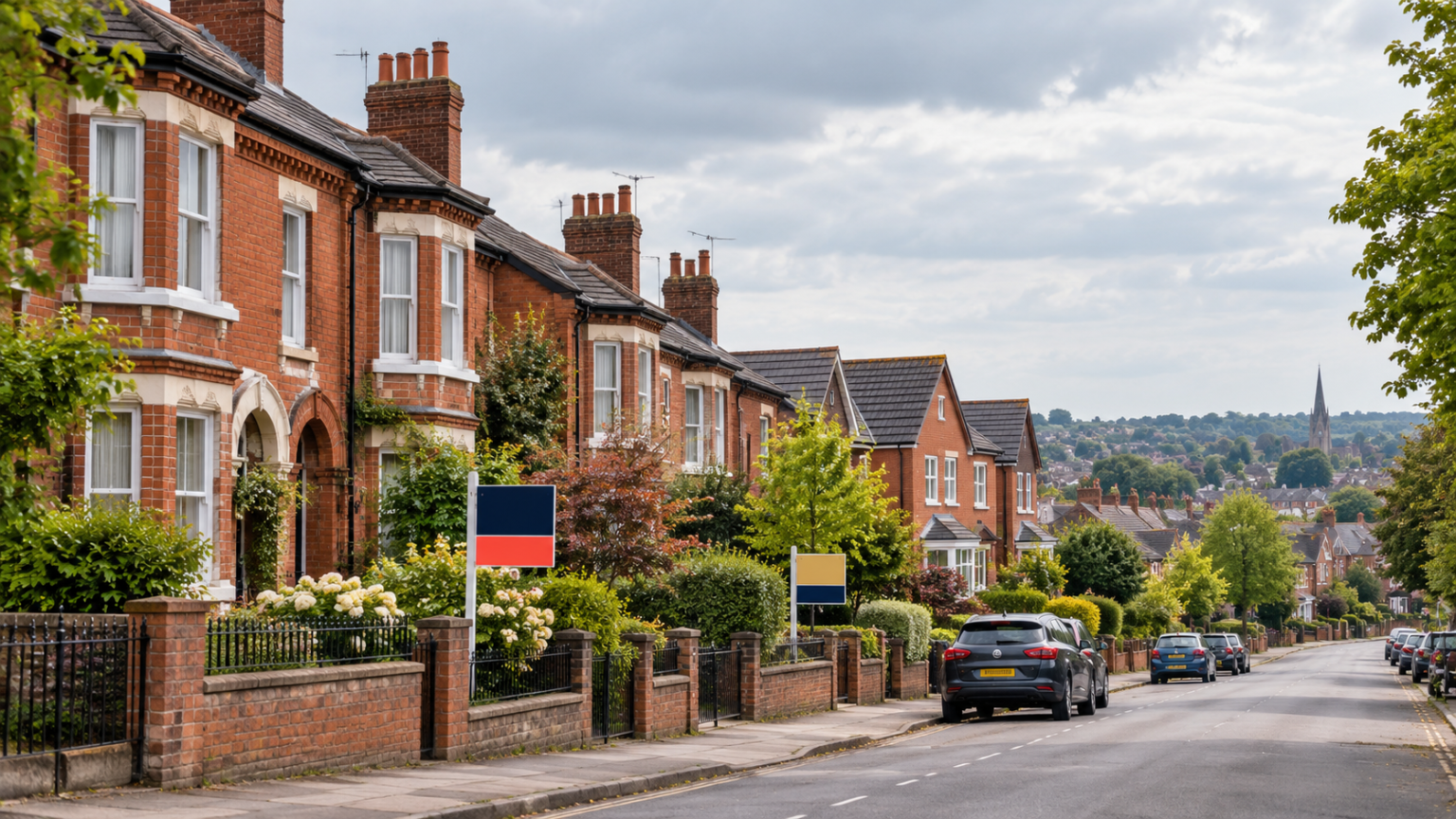
People who don’t know Crewe tend to sum it up in two words, railway town, and then stop thinking about it. I’ve covered Cheshire property for long enough to know that’s a mistake, because the homes here have been selling in ways that don’t quite fit the national story. Anyone thinking seriously about a move would do well to talk to estate agents in Crewe for property valuations early on, since the local numbers often surprise people who’ve only followed the headlines.
And the headlines have been loud. Since 2022, mortgage rates have swung buyer confidence up and down across the country, with plenty of predictions about falling prices that didn’t fully arrive. Crewe felt some of that, of course, but it reacted in its own way, and the reasons for that say a lot about what kind of place it actually is.
The Station Still Does the Talking
Start with the trains, because almost every buyer conversation here eventually does. Crewe sits on the West Coast Main Line, and you can be at London Euston in around an hour and a half, with Manchester, Liverpool and Birmingham all reachable in under an hour. There aren’t many towns this size in England that can say the same, and commuters have noticed.
So the cancellation of HS2’s northern leg in October 2023 landed hard, at least emotionally. I remember the mood at the time being fairly bleak among people who’d bought with that future in mind. But the knock on effect for ordinary sales was smaller than a lot of commentators expected, mainly because the town’s existing connections were already the thing buyers were paying for.
What changed was the long term pitch. Crewe can’t really sell itself as a town on the brink of transformation anymore, and honestly, I think that’s healthier for buyers. You’re paying for a commute that works now, not a speculative one.
Who Turns Up to the Viewings
If you want to understand a local market, look at the people walking through the front doors. In Crewe, a good number of them work locally. Bentley Motors at Pyms Lane is the name everyone mentions, but Leighton Hospital employs a huge number of people too, and there’s a steady layer of rail engineering and logistics work around the M6 junctions that rarely gets talked about.
First time buyers are a big part of the picture. Compared with Nantwich or Sandbach, never mind Wilmslow or Knutsford, Crewe generally gives you noticeably more house for your money. A couple renting in south Manchester can look at a three bedroom home here rather than a flat, and for most of them that’s the deciding factor, the commute being a fair price for the extra room.
There’s a catch to that, though. Because so many buyers are stretching a budget, the town reacts quickly when borrowing gets more expensive. During the worst of the rate rises, homes sat on the market longer and offers came in lower; since lending has settled, a lot of that caution has faded, although buyers still haggle harder than they did before 2022.
Three Very Different Kinds of Home
Drive across Crewe and you’ll pass through what feel like three separate housing markets in about fifteen minutes. Close to the centre, the roads around Nantwich Road and Edleston Road are full of Victorian terraces originally built for railway families. They’re usually the cheapest way in, which is why you’ll see young buyers and landlords competing for the same properties.
Wistaston and Willaston are another story entirely. You’ve got quieter roads, semis and detached houses, decent gardens and primary schools that parents actively seek out. People buying there are mostly moving up rather than starting out, and they’ll pay a premium for that settled feel, sometimes a fairly hefty one.
Then come the newer estates. Leighton, Basford and the land around Shavington have absorbed a lot of new building over the past decade, and it’s changed the edges of the town quite a bit. Is new always better? I’d argue not. These homes are usually far cheaper to heat, which counts for something with energy bills where they are, but selling one later can mean competing against brand new houses going up on the same road.
Older properties come with the opposite problem. A Victorian terrace might need new windows, better insulation or a modern boiler, and those costs add up faster than people budget for. Even so, I’ve seen well looked after terraces hold their value better than estate houses bought at the peak, so the age of a home matters less than its condition and how long you intend to stay.
Property condition can matter just as much as location, particularly when comparing older terraces with modern developments. Renovation costs, insulation and long-term maintenance all deserve attention before making an offer. Home renovation programmes such as Property Brothers, featuring Jonathan Scott, have also helped bring property improvement decisions into the public eye. Readers interested in his background can explore the story of Kelsy Ully and her connection to Jonathan Scott.
The Centre, and Why It Matters More Than You’d Think
Ask locals what they’d change about Crewe and many will point straight at the town centre. It’s had a tired reputation for years. Things have started to move, slowly, with the refurbished Market Hall and the long discussed plans around the Royal Arcade site, though progress has come in fits and starts, which is pretty normal for regeneration in towns like this.
You might wonder why someone buying in Wistaston should care. The reason is that how people feel about a town centre quietly affects how they value the whole place, even if they hardly ever shop there. A centre that keeps improving could eventually help the terraced streets around it, which have always sold at a discount partly because of what’s nearby.
I’d still be cautious about buying on the strength of regeneration plans alone. These schemes take years, sometimes decades, to show up in prices. Buy a home that suits your life as it is today, and if the centre does turn a corner, you’ll benefit without having bet on it.
Final Thoughts
What strikes me most about Crewe lately is how little it now depends on one big promise. HS2 was the story for a long time, and losing it pushed everyone, agents, buyers and sellers alike, towards a more honest look at what the town offers. That turned out to be a lot: a fast rail connection, employers that aren’t going anywhere soon and homes that still look reasonable next to the rest of Cheshire.
The next few years will probably be shaped by quieter things, like a slowly improving centre, continued investment at the big local employers and newer estates settling into proper neighbourhoods. None of that makes for exciting headlines. But for buyers who are willing to study Crewe street by street instead of judging it by reputation, that slow, unglamorous progress might be exactly what makes it a sound place to put down roots.
